
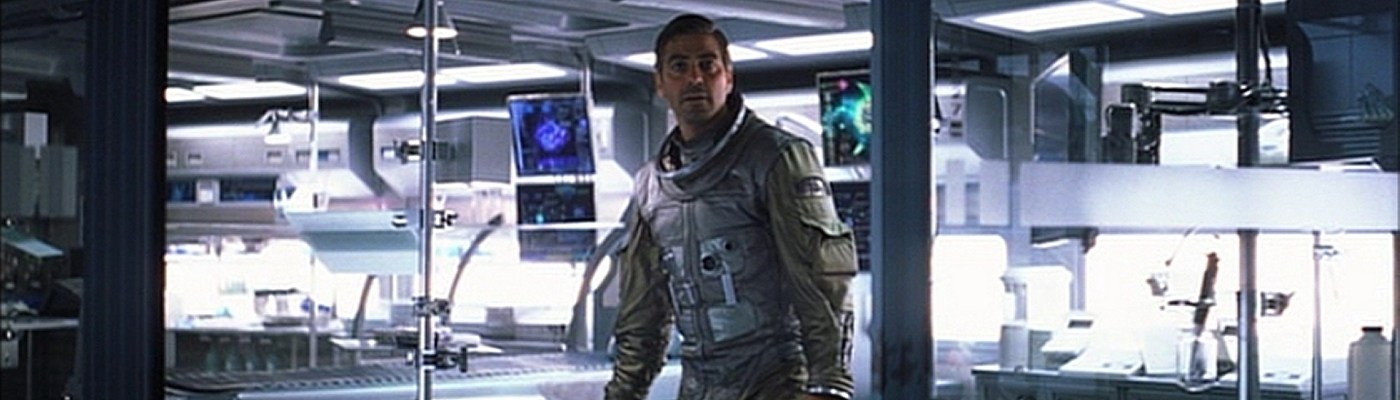
Even coming off the huge trifecta of back-to-back hits Erin Brockovich, Traffic, and Ocean’s Eleven, Steven Soderbergh seemed an unlikely choice to helm a big science fiction film in 2002. The director had spent most of his earlier career making small, arty dramas, and frankly has never come across as the kind of guy who’d be interested in outer space movies. Perhaps that’s not a fair assessment, but the perception stuck with him, and still does. That Soderbergh would further want his sci-fi debut to be a remake of Russian filmmaker Andrei Tarkovsky’s famously challenging three-hour opus Solaris also felt like the makings of a disaster. Somehow, no less than James Cameron had enough faith to back the project as producer anyway
As it turned out, Soderbergh’s Solaris was something of a disaster after all. At its release, the film received middling reviews from critics and lousy word of mouth from audiences. It was a box office flop that was almost immediately forgotten. Even its director appears to have written if off as a failed experiment. For all that, the movie’s actually pretty good overall and deserved a better reception. If not a masterpiece, I think it’s fair to say this Solaris should be more approachable to Western viewers than the Tarkovsky version.
| Title: | Solaris |
| Year of Release: | 2002 |
| Director: | Steven Soderbergh |
| Watched On: | Fandango at Home |
| Also Available On: | DVD Various VOD rental and purchase platforms |
I’m sure Steven Soderbergh would prefer not to classify Solaris as a remake at all, but rather a new adaptation of the original novel by Polish author Stanislaw Lem. Nevertheless, Soderbergh and Cameron never would have considered adapting the Lem novel if Tarkovsky hadn’t previously done it to a lot of acclaim in 1972. Their new Solaris wouldn’t exist if not for Tarkovsky’s.
Solaris also has ties to Soderbergh’s fascination with creating his own fan-edits of other famous movies, including Psycho, Raiders of the Lost Ark, and most relevantly here, 2001: A Space Odyssey. My belief is that he wanted to take the same raw elements that Tarkovsky had used and mold them into something his own, to see what would happen. Would it be better, worse, or just different?
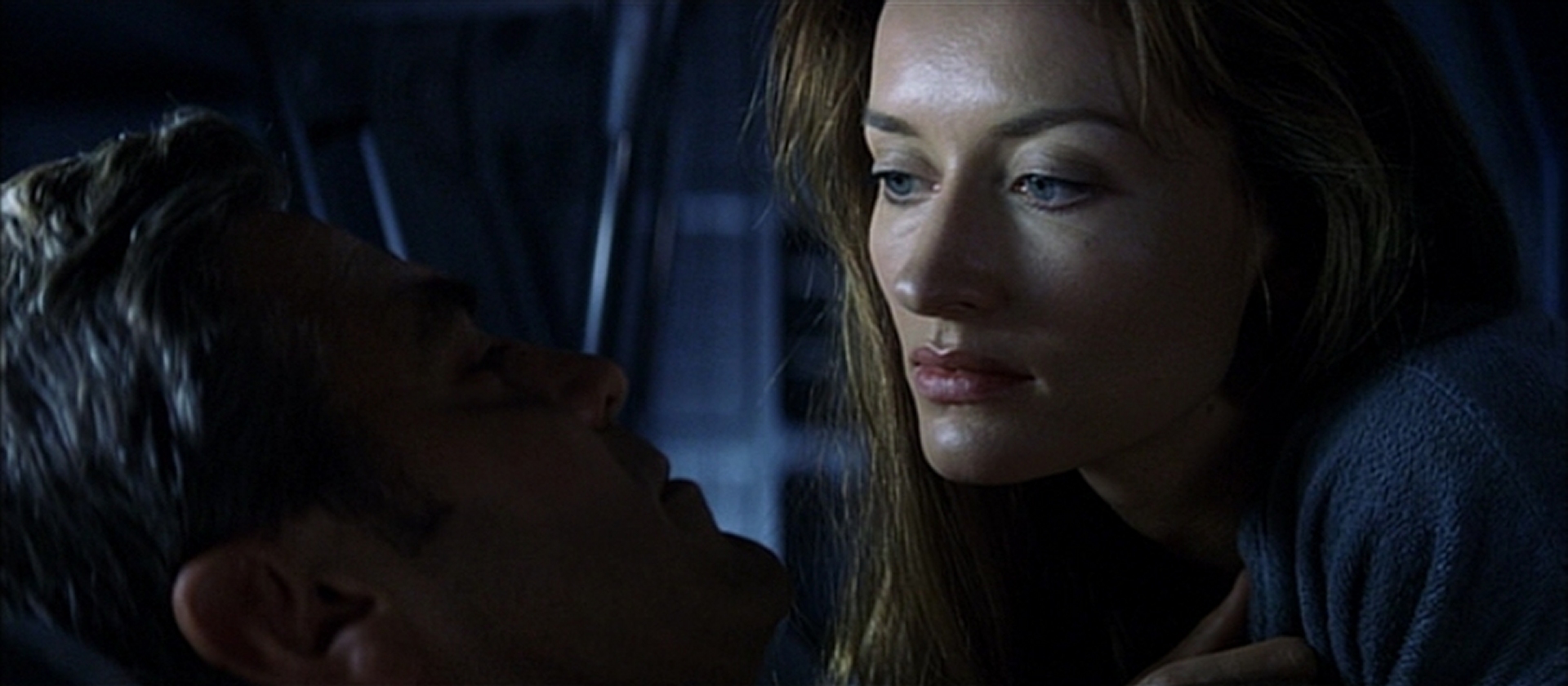
The basics of the plot are similar between the two films. Sometime in the future, psychologist Chris Kelvin (George Clooney here) receives a message from a friend asking him to travel to a space station orbiting a strange planet called Solaris, for vague reasons the friend can’t articulate. When he gets there, Kelvin finds the station’s crew reduced to only two people, and his friend dead, allegedly by suicide. The survivors behave oddly and can’t tell him what’s going on until Kelvin experiences it himself. That happens soon enough when his wife Rheya (Natascha McElhone), dead for some time back on Earth, shows up on the station from out of nowhere. Kelvin then learns that the remaining scientists have experienced similar “visitors,” as did the rest of the prior crew, who all died, either by suicide or other mysterious circumstances. The planet itself is believed to be the cause of this, inexplicably creating physical embodiments of human memories.
Soderbergh’s different approach to the material is apparent immediately. Although the pace might still be described as a little slow by most Western sci-fi standards, the film practically moves like a rocket compared to Tarkovsky’s. Kelvin lands on the space station within the first ten minutes, compared to 45 in the earlier version. The entire movie clocks in at a brisk 99 minutes, just a little over half of Tarkovsky’s, and loses almost none of the plot for it. If anything, the story and character motivations are vastly clearer here.
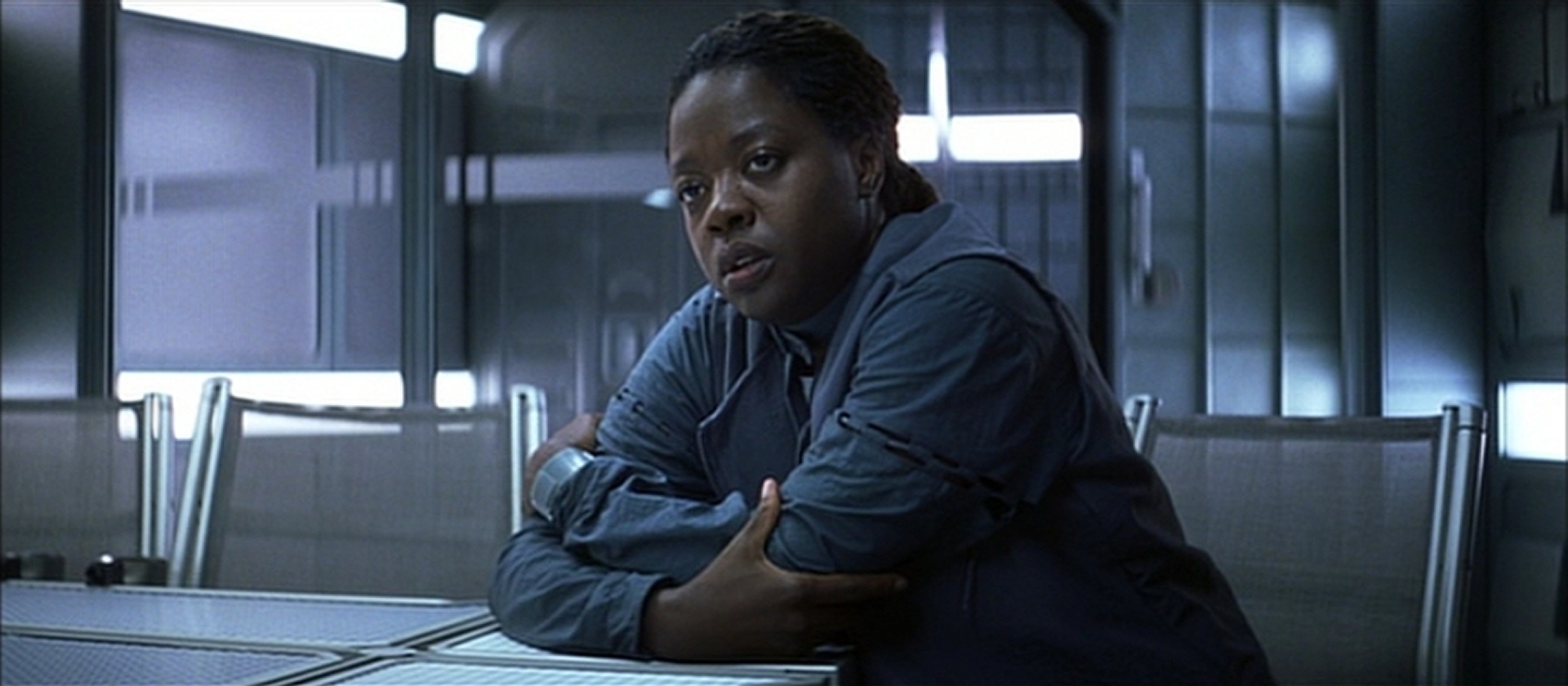
The characters (well, at least two of them) behave like actual human beings, and have what can be considered natural human reactions to the extraordinary events happening to them. Kelvin is shocked at his wife’s appearance, and panics in his first response. Dr. Gordon (Viola Davis) is terrified of the visitors and believes they should be destroyed. Admittedly, Snow (Jeremy Davies in full quirk mode) is an eccentric oddball, but even that makes some sense for a man losing his mind when confronted by an existential crisis.
Mind you, Tarkovsky never had any interest in telling a clear or rational story, nor in placating audiences who might want movies to actually move. Tarkovsky thrived in ambiguity and enigma, and forcing viewers to meet him on his terms, not theirs. At times, Soderbergh may have a similar reputation for making his own experimental and even alienating films (Schizopolis, Full Frontal, Bubble), but he also knows how to deliver a more traditionally entertaining movie when he wants to, and he’s mostly on his best behavior here. I’m sure Tarkovsky would have loathed this remake of his work, for many of the same reasons he hated Stanley Kubrick’s 2001.
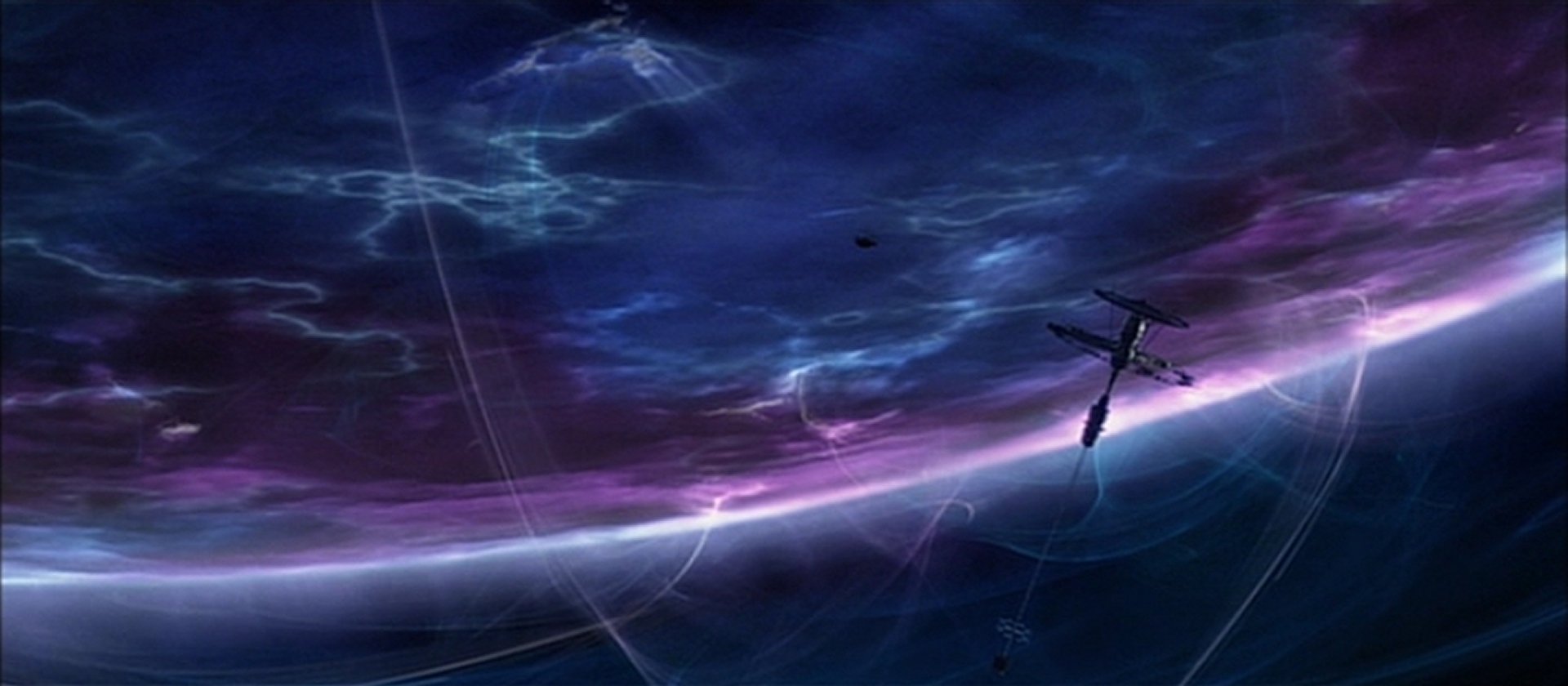
Soderbergh’s Solaris is a more overtly science fiction film than Tarkovsky’s. It has some striking visual effects (courtesy of James Cameron’s help, no doubt), production design with a focus on scientific and mechanical hardware, and a spacesuit or two. The characters speak to one another quite a lot, and make some attempt to figure out what’s going on around them in as logical a manner as they can. These are all things Tarkovsky went out of his way to ignore or avoid.
Yet Soderbergh’s version still maintains most of the philosophical underpinnings of the story. While believing he loves the new Rheya as he did the original, and that this experience gives him a chance to start over and correct the mistakes he’d made in the past, Kelvin is haunted by the fear that he remembers his wife incompletely, or outright wrong. This Rheya will never be the woman he first fell in love with, because he never fully knew her.
These are complex ideas beyond those found in a typical Hollywood sci-fi flick. Can a person love another who may not be real? Can that doppelganger have its own life and consciousness if it was created as a reflection of a man’s memories of someone else? Honestly, that’s a really fascinating question to explore in a film that is itself a reflection of another film.
Unfortunately, as a movie that cost around $50 million to make and had a studio expecting a return on that investment, Soderbergh’s remake has to provide some sort of answer to those questions, which Tarkovsky would find abhorrent. This Solaris also falls victim to a bunch of conventional sci-fi tropes, including the need to pack in an action and suspense climax that doesn’t fit the rest of the material. The movie plays up the romance aspect too much in a bid to keep viewers interested, and ultimately ends with an unsatisfying conclusion that’s almost as confusing as Tarkovsky’s, but feels less intentionally so.
The film’s marketing didn’t help matters any by depicting it as a sweeping interstellar love affair between Clooney and McElhone, like Titanic in space. Trailers were wildly misleading about the picture’s tone and attracted the wrong audience, who left disappointed when they found the movie wasn’t what they were promised, while at the same time driving away the type of viewers who might have wanted to see a serious and thoughtful science fiction drama. Even original author Stanislaw Lem, who didn’t much care for Tarkovsky’s adaptation of his work, outright refused to watch Soderbergh’s based on what it looked like in the ads.
At the end of the day, I can’t say that Soderbergh’s Solaris is as good as Tarkovsky’s, but I do believe it’s a worthy attempt to tackle the same basic story from a different angle. Had it been promoted more accurately, it might have done decent business and come to be considered a respectable, if imperfect, remake of a classic.
Video Streaming
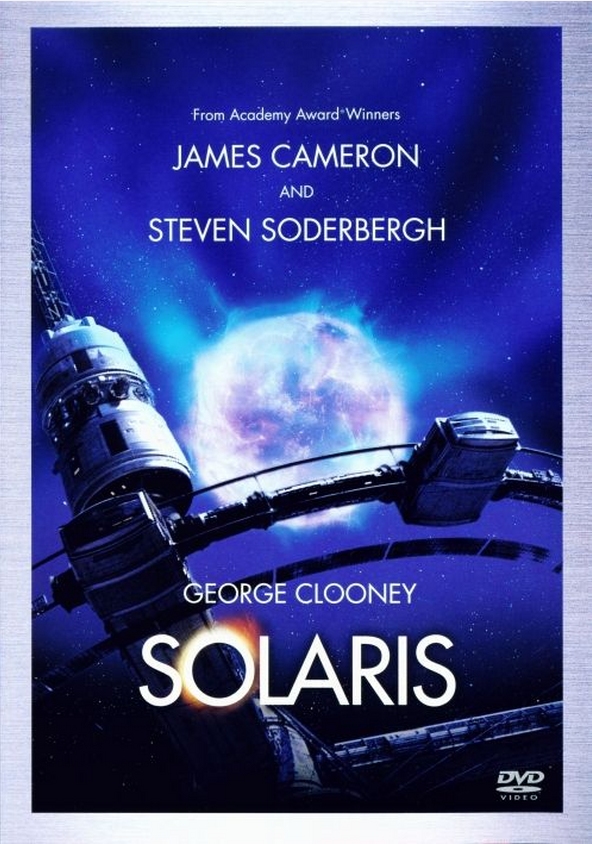
Twentieth Century Fox released Steven Soderbergh’s remake of Solaris on DVD in 2003. I held out a little bit until 2004 for a Japanese release with a DTS soundtrack, because that seemed terribly important to collectors in the early 2000s. I still have that disc. I thought it looked pretty good at the time, but a fresh skim through it today reveals that it has aged terribly.
Unfortunately, Fox never bothered to follow up with a Blu-ray upgrade. However, a high-definition transfer for the movie became available on purchase and rental streaming platforms at some point, I don’t know exactly when. I think I purchased it in a sale at VUDU (now Fandango at Home) and quickly forgot about it. Doing some research, it seems that a German label called FilmConnect licensed the movie and put it on Blu-ray in that country around 2017. I don’t know anything about that disc, but assume it must come from the same HD master I have on streaming. To my knowledge, neither Fox nor anybody else has remastered the movie. That’s a shame.
I knew from the opening Twentieth Century Fox logo that I was about to be disappointed. Even at that point, Digital Noise Reduction was clearly evident, causing mushy and smoothed-over surfaces. That carries through for most of the movie. This is a very dated transfer, likely the same one struck for DVD. Detail is pretty weak due to the DNR, and the studio tried to compensate for that using a lot of edge enhancement. The 2.35:1 picture has ugly edge halo artifacts in many scenes and generally harsh textures.
The end credits text is super jaggy, as if it were poorly upscaled from standard-definition. However, for all its faults, the rest of the movie is an actual high-def picture and looks much better than the fuzzy and over-processed DVD edition. Of course, that’s not saying much. Colors and contrast also look pretty nice, though. I’ll give it that.
The streaming copy has basic, lossy Dolby Digital 5.1 audio, but it sounds pretty good. The movie’s sound mix makes very nice use of ambience and spreads music around the room, creating an immersive atmosphere. The way the Cliff Martinez score bounces through the surround channels is a lot of fun. This isn’t a particularly bombastic soundtrack, but that score also has some decent bass strum.
I sampled the DTS track on the DVD I imported so long ago. It’s set for a louder default volume than the Dolby option, of course. The higher bit rate may possibly improve fidelity a tiny amount, but the track is still lossy and it simply can’t compensate for the really crummy video on the disc. All things considered, I’ll stick with streaming for this movie until it gets properly remastered, hopefully in 4K.
Related
- Solaris (1972)
- Steven Soderbergh
- George Clooney
- Film from Z to A Article Index
Note: Screenshots on this page were taken from the DVD edition of the film and are used for illustration purposes only.

