
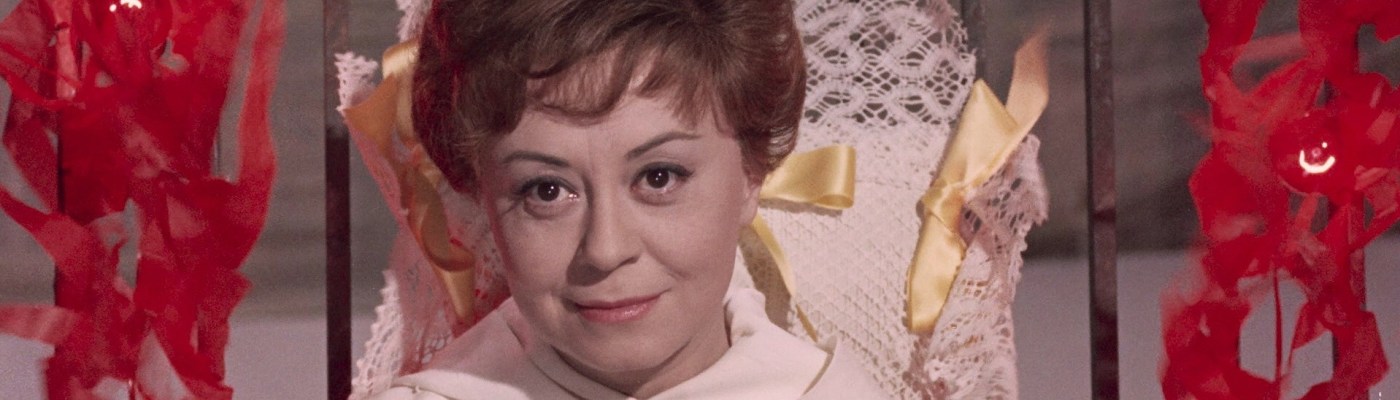
Federico Fellini’s 1963 masterpiece 8 ½ is remembered, rightly so, as a defining work of Surrealist cinema. Part of that film’s genius is the way its fantastical elements are rooted in an autobiographical confession for the director’s own personal flaws, self-absorption, and lousy treatment of the women in his life. Attempting at least somewhat of an apology, Fellini’s follow-up project, Juliet of the Spirits, would tell that part of the story from the opposite perspective, that of the woman most affected by his bad behavior.
The film was designed as a starring vehicle for Giulietta Masina, Fellini’s longtime wife, creative muse, and frequent victim of his philandering ways. Fellini and Masina had been married for more than two decades by the time they made this movie, and would stay married for another three decades more. In all those years, the woman must have put up with a lot, and Juliet of the Spirits was meant to expose some of it. Exactly how much or how fully it does so, fans and other viewers outside the relationship can only speculate.
| Title: | Juliet of the Spirits (a.k.a. Giulietta degli spiriti) |
| Year of Release: | 1965 |
| Director: | Federico Fellini |
| Watched On: | Blu-ray |
| Also Available On: | Criterion Channel HBO Max Kanopy Various VOD rental and purchase platforms |
By the filmmaker’s own counting, 8 ½ was literally his eighth-and-a-half movie. That would naturally make Juliet of the Spirits his ninth. The latter also marked his transition from black-and-white photography into full color, a new tool at his disposal that he would embrace enthusiastically.
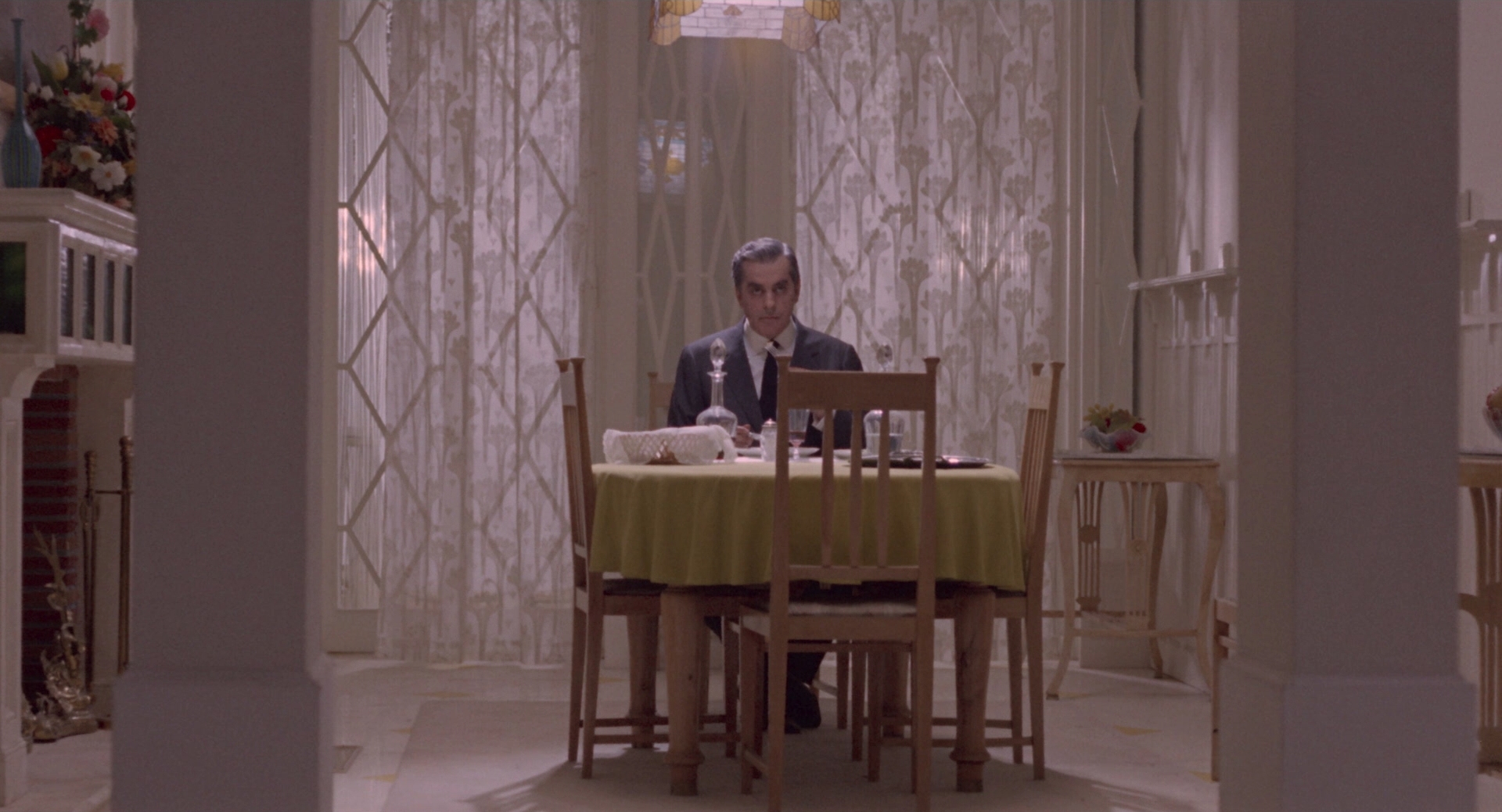
Masina plays a woman not at all coincidentally named Giulietta, the wife of a wealthy man who keeps her comfortable in a lifestyle free of responsibility and lacking for almost nothing, except her husband’s attention. Giorgio (Mario Pisu, a near lookalike for Marcello Mastroianni and an obvious stand-in for Fellini himself) is aloof at best, hardly ever home, and constantly jetting off to various parts of the world, allegedly for business. In what little time he spends with Giulietta, he’s emotionally distant. Frankly, the character is away so much of the movie that he’s barely in it at all. Unlike 8 ½ , this isn’t the husband’s story. He gets no say in how it’s told.
Giulietta is surrounded by a gaggle of supposed friends who don’t understand nor show much interest in knowing her feelings. They keep her occupied with frivolous activities like astrology, tarot cards, séances, and other such nonsense to connect with the spirit world, a concept she may or may not believe. Their non-stop, grating chatter is at odds with Giulietta’s quiet calm.
Always primping and fussing with a collection of wigs (that mostly look the same) and elaborate hats, Giulietta puts on the face of a happy person, wearing a smile to mask her sadness. She tries not to think about what Giorgio is really up to, because she doesn’t want to know. She wants to be content in her life. She wants to believe that everything is fine. Unfortunately, his muttering another woman’s name in his sleep finally breaks that façade, pushes her too far, and forces her to confront the reality of her situation.
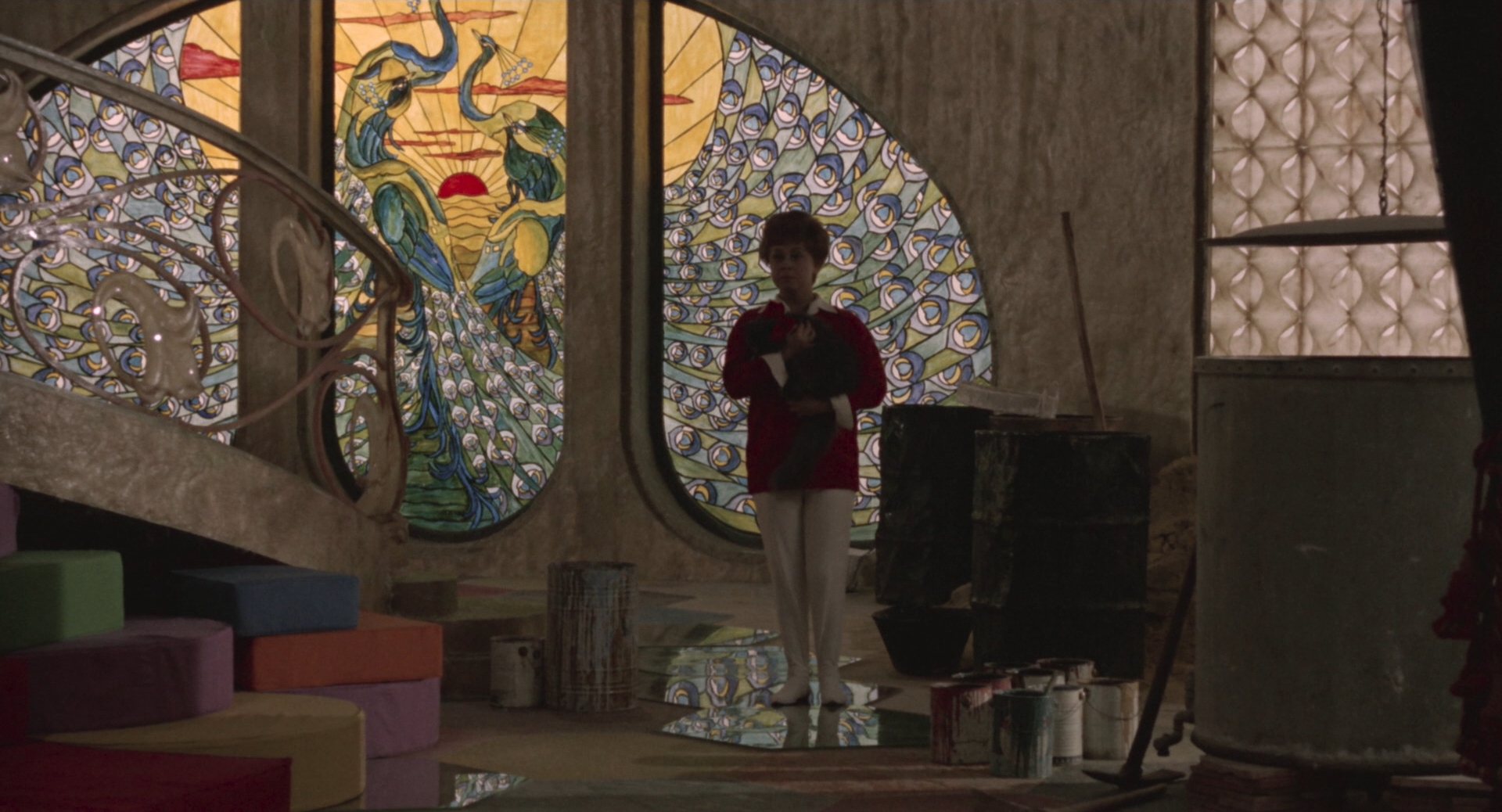
As in 8 ½, the narrative frequently branches off to a series of memories, dreams, and fantasies, the divisions between them and the real world often elusive. The adult Giulietta steps right into and interacts with an exaggerated reminiscence of a humiliation suffered in her youth. While the past mingles with the present, Giulietta experiences visions of persecution and redemption. Voices in her head, perhaps spirits from beyond or perhaps something else entirely, guide and sometimes bully her about what to do.
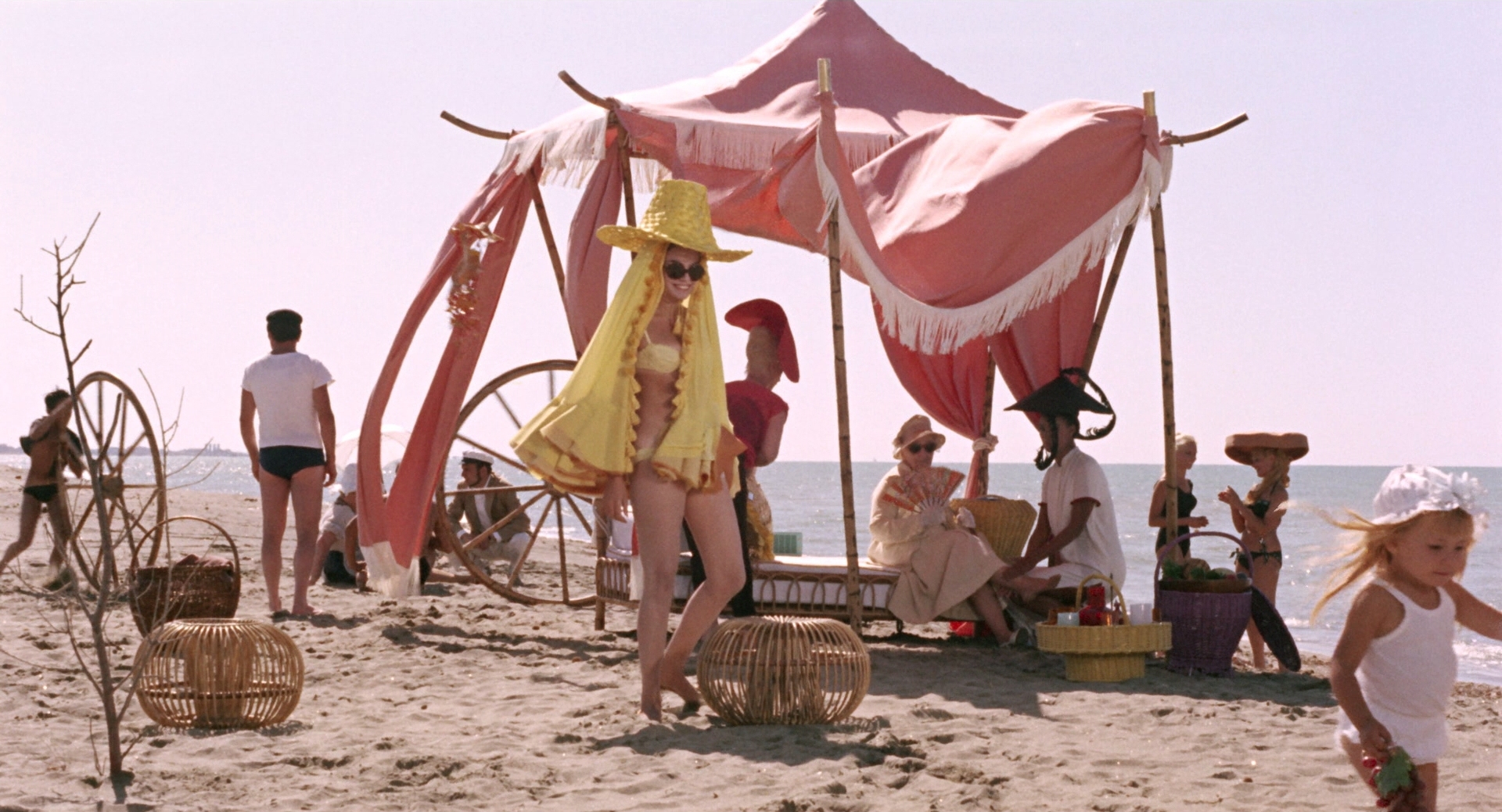
A new neighbor named Susy (Sandra Milo) meets Giulietta for the first time, immediately declares that they’re best friends, and tries to lure Giulietta into having an affair with a young stud she’ll provide. Much like the Saraghina character in 8 ½, Susy is an avatar of temptation. However, unlike Saraghina’s earthy, almost monstrous sexuality, Susy is a figure of pure glamour and luxury. Bedecked in expensive furs and living in a huge mansion designed like an enormous playground for adults, with no trace of a husband or other commitments beyond physical indulgence, she’s everything Giulietta thought she wanted to be: seemingly perfect in every way, happy, and carefree. Could such a person possibly be real, or is she a projection of Giulietta’s insecurities, a reminder of what she’ll never live up to?
Ultimately, Giulietta can’t follow through on Susy’s offer. She comes to understand that’s not the person she really is. Yet she keeps up the charade of normalcy, keeps that smile on her face as her life increasingly falls apart and she struggles to distinguish the difference between reality and illusion.
This may sound like the story of a woman suffering a mental breakdown, and maybe it is, but Fellini had an enormous talent for infusing even the darkest subject matter with joy and love for life. Juliet of the Spirits is very nearly the opposite of Ingmar Bergman’s Persona (released a year later). It’s a work of optimism, not pessimism. Giulietta never breaks. She never gives up hope, not a hope that her husband will change his ways, but rather that she’ll come through the other side of it. She’ll be okay, with or without him.
Judging the performances in a Fellini film can be a difficult task, as whatever the actors may have spoken on set will typically differ greatly from the dialogue he’d later write for them to dub over. Nonetheless, Masina was a gifted performer and is radiant here. She always understands the emotion of a scene, if not the specific words she’s supposed to say. This is her film, a thinly disguised excerpt from her life, gifted to her by a husband acknowledging the damage he’d inflicted on their marriage. Rather than let him off the hook, she uses the role to show how strong and resilient a person she was, and how little she needed him.
Juliet of the Spirits may not be as accessible a film for Fellini newcomers as 8 ½ was. The chaotic tone of the first half can be overwhelming and the narrative difficult to follow. Most of the supporting characters are annoyingly shrill and superficial. As the story goes on, those traits are revealed to be deliberate, and the tone shifts to something quieter and more complex. Like the best of Fellini’s output, Juliet of the Spirits is filled with many wondrous images running with a deeper subtext that may require a few viewings to unpack.
The Blu-ray
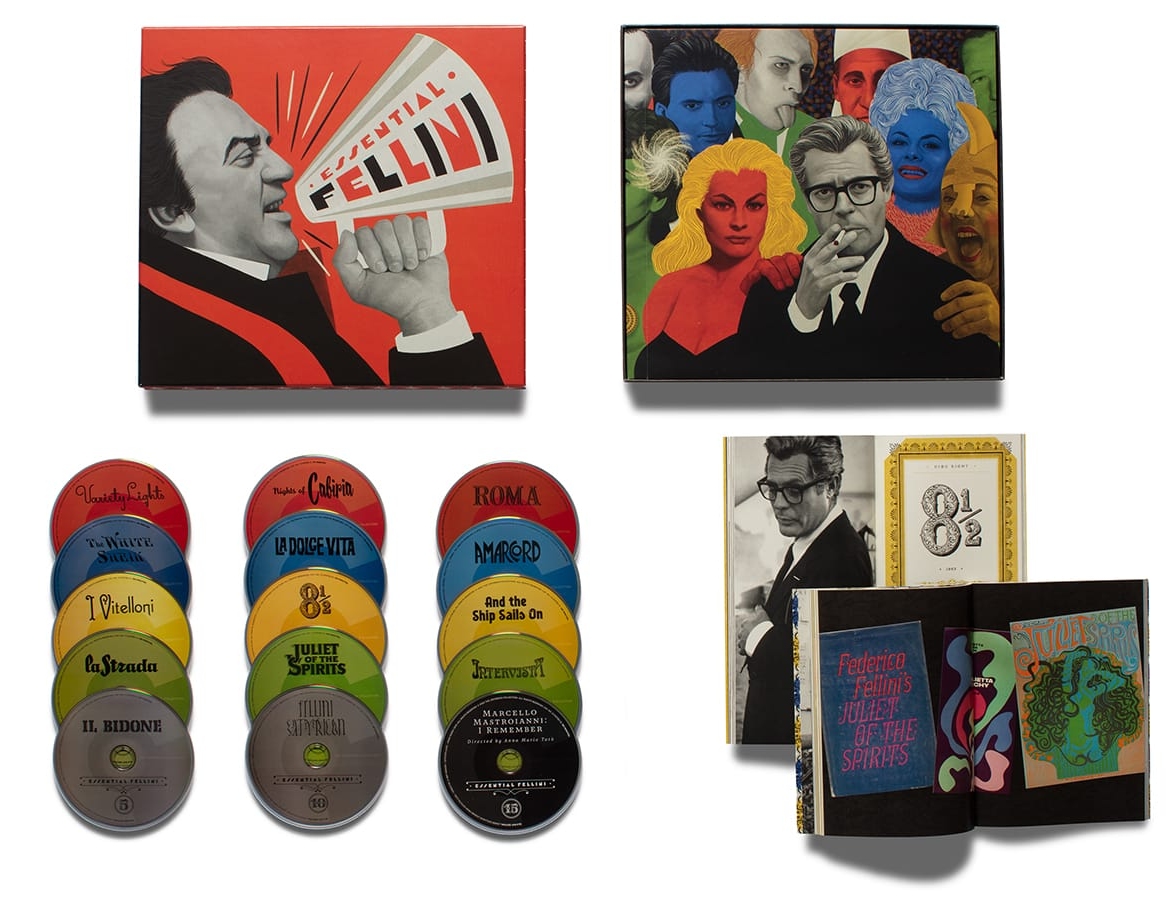
The Criterion Collection first licensed Juliet of the Spirits for a DVD release back in 2002, issued at that time on its own. In the high-definition era, the film is only available as part of Criterion’s 2020 Essential Fellini box set, a massive 15-disc compilation of 14 Fellini movies plus a feature documentary (not directed by Fellini) about his favorite leading man, Marcello Mastroianni. The box set has the shape and approximate size of a vinyl LP record, or perhaps one of Criterion’s Laserdisc releases from back in the day, except that it’s a little short for some reason. Juliet of the Spirits is Disc 9 in the set. A couple books are also packed inside, one a guide to the films and the other a grouping of essays about Fellini.
Annoying, the Blu-ray opens with a restoration credit screen, as if that were supposed to be part of the movie itself. The text claims that the video master was created in 2015 based on a scan “from the original 35mm picture and optical soundtrack negative,” and that, “A few sections affected by severe decay were replaced with interpositive materials.” Restoration work was performed by Centro Sperimentale di Cinematografia – Cineteca Nazionale.
For an OCN scan, the image is a little soft, with sometimes questionable encoding of film grain. Although specific scenes have striking use of shadows and contrast, the picture seems a little too bright on the whole, which mostly leaves colors flatter than I might like. I have no idea as to the accuracy of any of this. In general, it’s a good-looking transfer, and certainly very watchable, but I see room for improvement should a 4K upgrade with HDR ever happen in the future.
The picture is also mildly letterboxed to 1.85:1. The last act in particular looks quite cramped at the top of the frame, with a few hairs visible at the bottom, as if that reel of film were possibly misaligned in the scanner.
The PCM mono soundtrack is quite disappointing, but I don’t know if it were always that way, or if it’s simply the state of the currently-available materials. Even setting aside the fact that all the ADR dialogue is way out of sync with the actors’ faces (simply the way Fellini worked) and sounds very canned, the music is strident and the dialogue is scratchy. Note that the musical score continues for another minute over a black screen after the end credits have finished. Google tells me this is called a “postlude” (opposite of a prelude or an overture).
The highlight of the bonus features on this disc is Toby Dammit, Fellini’s segment from the 1968 film Spirits of the Dead, an omnibus compilation of three shorts (by Fellini, Louis Malle, and Roger Vadim) adapted from Edgar Allen Poe stories. After that are an hour-long documentary call Fellini Director’s Notebook, a 1964 TV special called Zoom on Fellini, a 1966 interview called Familiar Spirits, and a trailer.

