
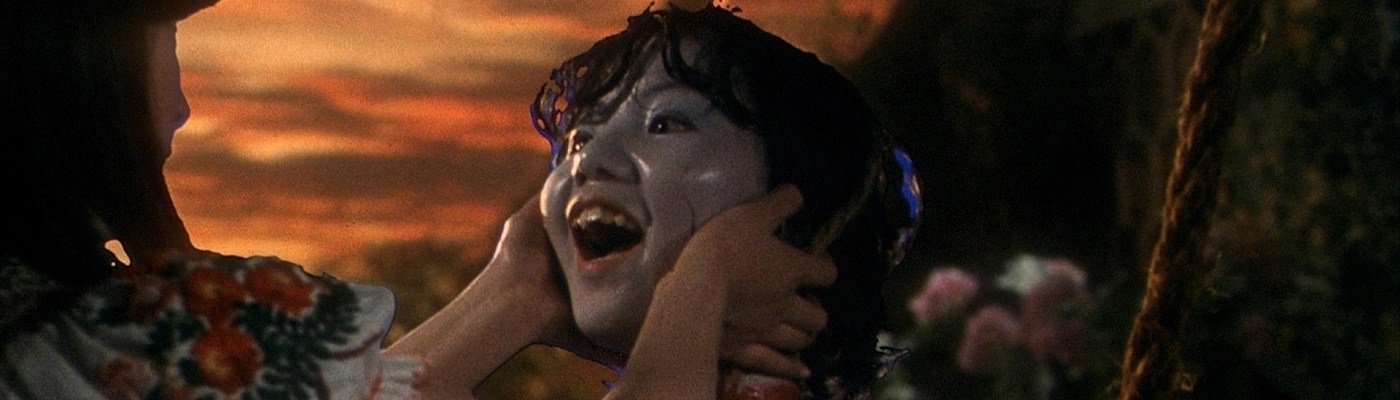
I’ve liked, loved, disliked, or hated countless movies over the years. I’ve felt indifferent to many others. Never before have I had an experience like watching House (or Hausu if you prefer), the 1977 Japanese cult film about a group of annoying teenage girls who get trapped in a haunted or demon-infested mansion. I’m left simply baffled by what I’ve just been exposed to. What is this thing? How am I supposed to feel about it? Did I enjoy it, or loathe every second of it? Honestly, I have no idea.
Not to be confused with the 1980s American horror franchise of the same title, much less the long-running Hugh Laurie TV medical drama, this House can barely be called a movie. Technically, it meets the criteria for a motion picture, in that it’s comprised of pictures in some form of motion. I’m not even sure I’d call it an art piece, as that implies some evident artistic form or purpose. House is simply a thing that exists in the world and can be watched in 88 minutes. Whether that’s actually worth doing, I may not be qualified to say. I doubt anyone is.
| Title: | House (A.K.A. Hausu) |
| Year of Release: | 1977 |
| Director: | Nobuhiko Ōbayashi |
| Watched On: | Blu-ray |
| Also Available On: | Criterion Channel HBO Max Tubi Various VOD rental and purchase platforms |
In the ledger column for possibly being an actual movie, House does have some vague sketch of a plot, mostly cribbed from other sources. Describing it may make the result sound like it has a coherent story. Trust me when I tell you that it does not.
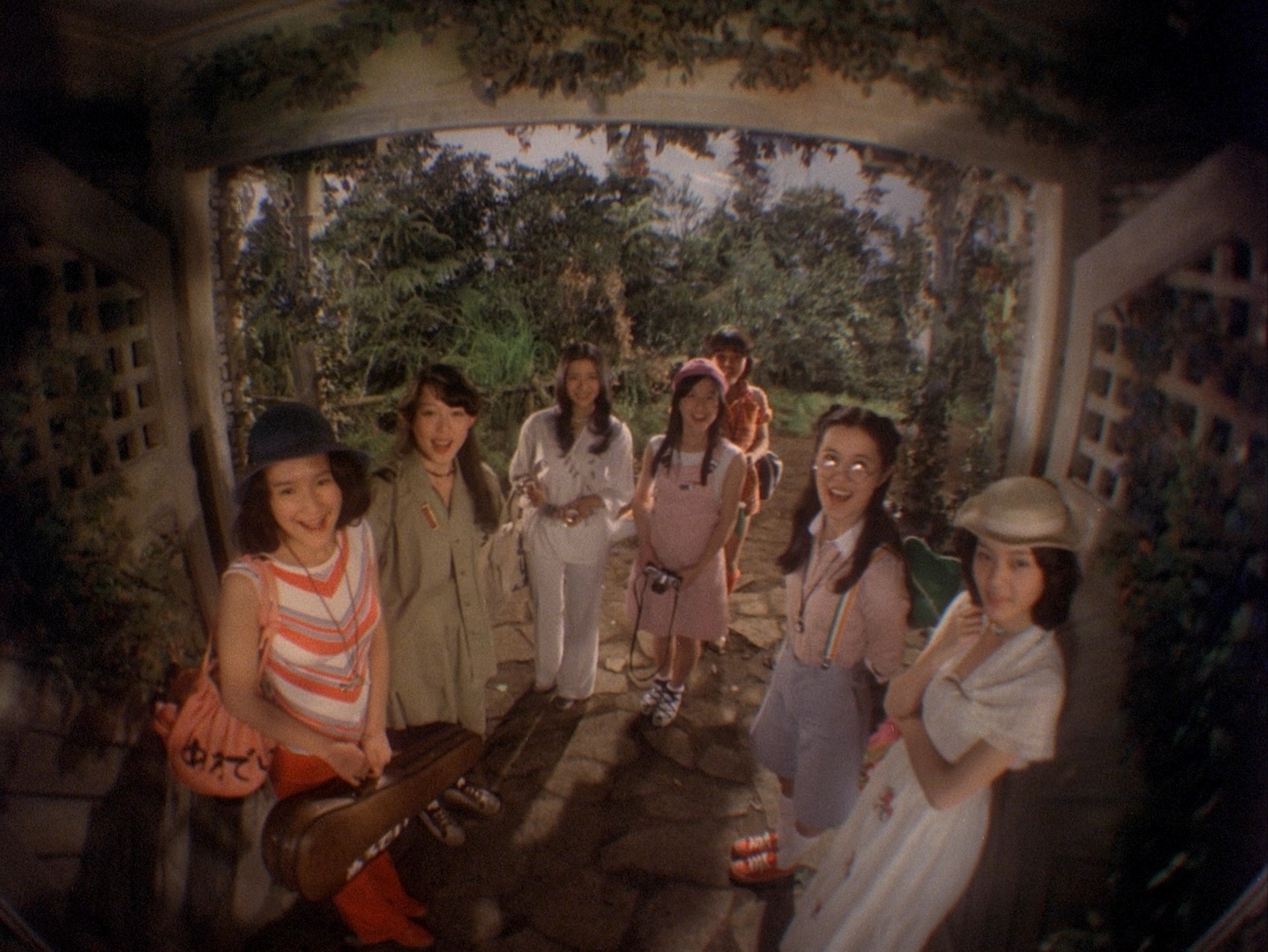
At the end of their school term, a group of seven young girls find their summer vacation plans abruptly canceled or disrupted and must find some other activity or excursion to while away the coming months. The girls all have blunt, archetypal names to identify their personalities: Gorgeous the pretty one, Melody the music student, Kung Fu the athletic martial artist, and so forth. In a last-minute change, they’re invited to visit Gorgeous’ beloved aunt, who lives in a far-away mansion in the countryside. A schoolteacher is meant to follow along as chaperone, but gets waylaid and never makes it there.
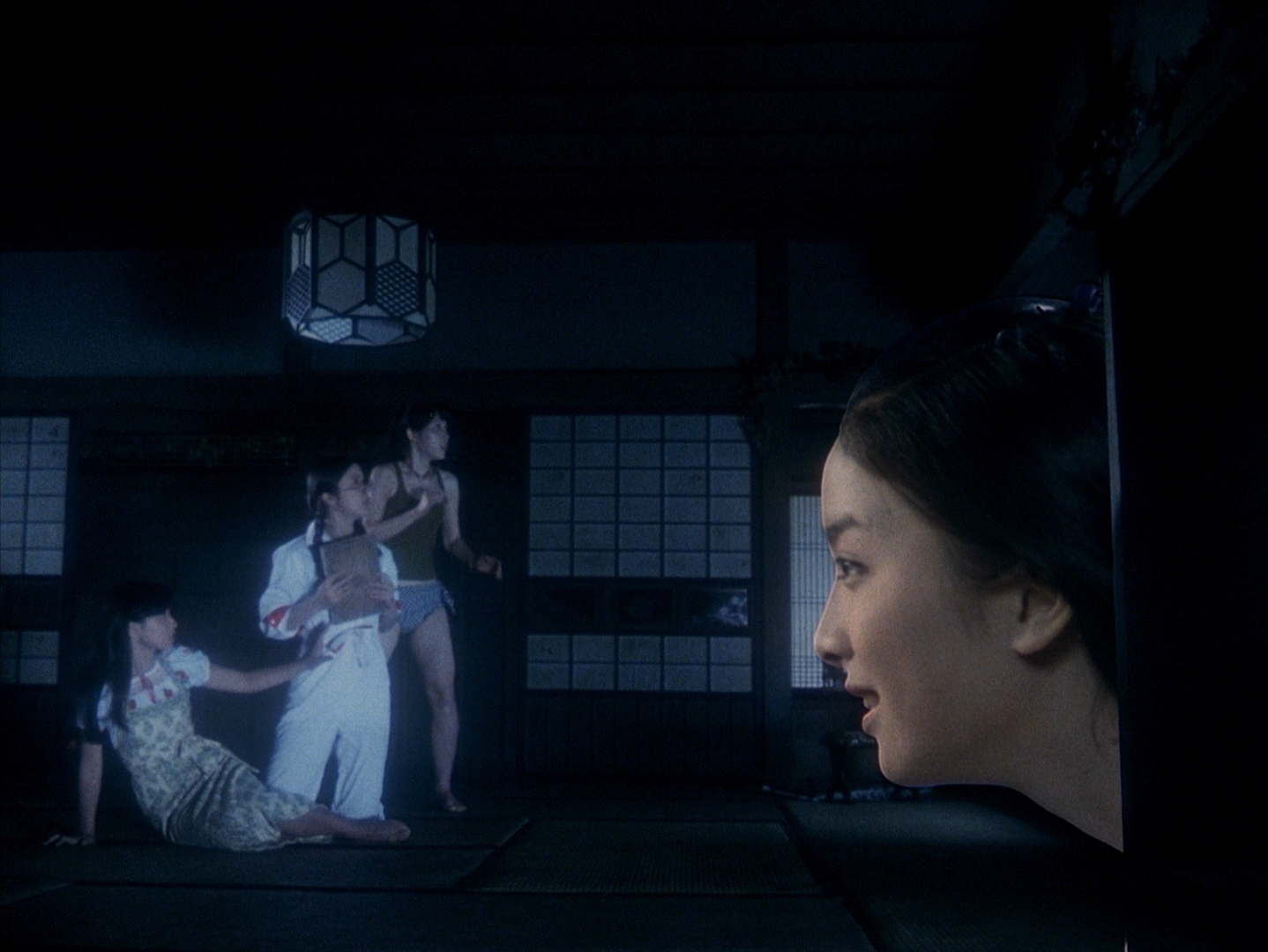
Upon their arrival, Auntie greets her niece and friends as a warm and welcoming host. Viewers will immediately recognize that she’s also incredibly creepy and evil, but the girls are too oblivious to notice. Shortly thereafter, the morons get locked into the house and picked off one-by-one in a series of inexplicable supernatural occurrences.
So far, this may sound like the makings of a textbook slasher movie. However, even the early setup scenes are a confounding collage of bizarre images aggressively edited to an audio bombardment of random noises, a saccharine musical score on a repeat loop, and the girls’ shrill and endless giggling. The production design is obviously meant to call attention to its artifice, with painted backgrounds that sometimes expose the edges of the sets. The performances are exaggerated to cartoonish (specifically, anime-ish) proportions with no resemblance to real human behavior, and basically nothing at all ever tries to make sense.
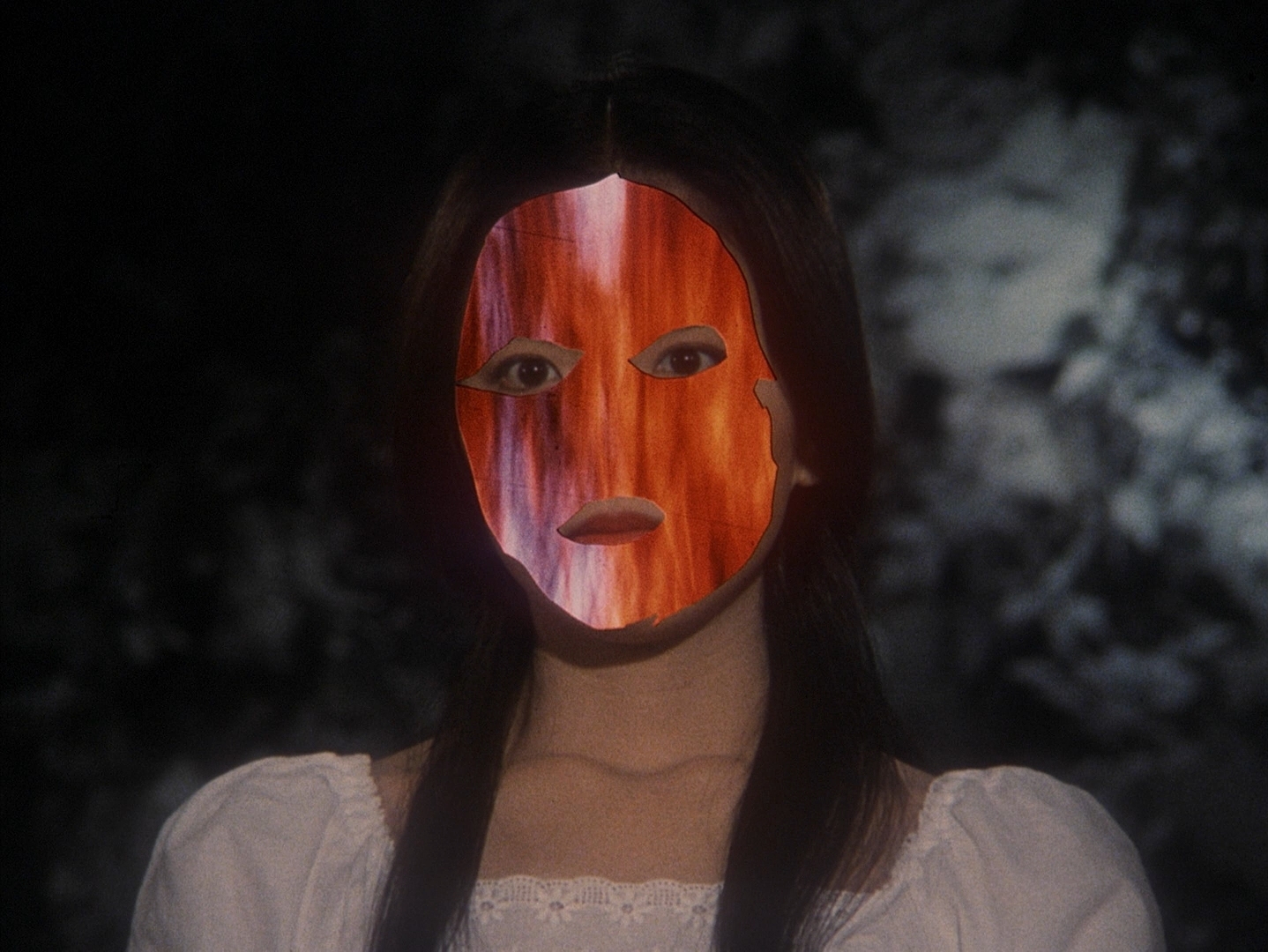
Once the girls enter the mansion, all bets are off for trying to understand what’s happening. Cartoon animation is overlaid onto the screen. Severed body parts that are still alive float in the air. A plastic skeleton dances in the background while a piano eats a girl and chomps her to bits. Some girls seem to be possessed, but maybe they’re not, and then maybe they are again. The girl named Kung Fu gets chopped in half, but her legs still leap into the air to do a flying kick that causes a painting of a cat to explode while vomiting gushers of blood.
When the girls’ missing chaperone finally makes it as far as a nearby village, I’m pretty sure he gets turned into a pile of bananas off-screen.
It’s all a bit much, is what I’m saying.
Director Nobuhiko Ōbayashi uses every filmmaking technique available at the time, sometimes all at once: split-screen, dissolves, rapid-fire editing, stop motion, frame skipping speed-up, forward-and-reverse shuttling of footage, and more. The blue-screen and other “special effects” are mostly terrible, but I think that may be intentional, possibly? For exploitation purposes, Ōbayashi also throws in several bits of nudity from actresses who (at best) skirted legal age at the time of the movie’s release.
I know nothing about the filmmaker and don’t mean to accuse the guy of anything, but what he created feels like someone just binged a whole bunch of anime, Italian giallo movies, and Alejandro Jodorowsky’s The Holy Mountain on separate screens simultaneously while dropping a full blotter of acid followed by a chaser of cocaine.
I’d first heard of House many years ago, most likely in the pages of the dearly-missed Video Watchdog magazine. My recollection is that it was described as a surreal horror extravaganza, or something along those lines. That didn’t remotely prepare me for the sheer insanity of this thing.
Fascinating and often incredibly irritating at the same time, House surely must be one of the cultiest of all cult movies ever made. Is it a brilliant deconstruction of the cinematic form? Is it an incompetent mess made by a lunatic? Something else entirely? Damned if I can tell you.
The Blu-ray
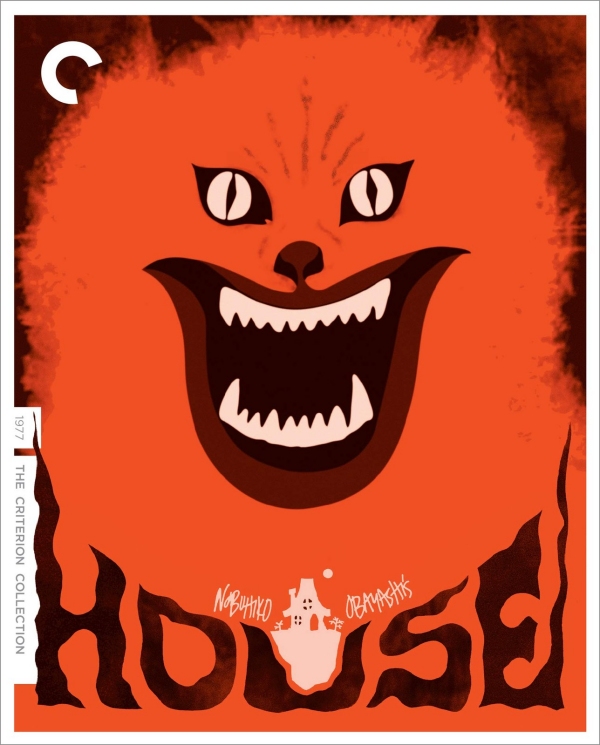
The vaunted Criterion Collection picked up House for distribution on Blu-ray in 2010. Intrigued by the film’s reputation, I purchased a copy during a sale, whereupon it sat on my shelf unwatched until now.
The Blu-ray is presented at a pillarboxed aspect ratio of 1.33:1, which is pretty odd for a theatrical feature from 1977, but this is a pretty odd movie so I’ll take Criterion’s word that it’s correct. Transfer notes in the enclosed booklet state that the video master was created “from a 35 mm low-contrast print struck from the original camera negative.” In other words, it didn’t come from a direct scan of the negative itself, but from a source one generation removed from it. In any case, that’s better than any theatrical print at the time ever looked.
Video quality is very difficult to judge due to the nature of the film, which is highly variable from shot to shot. Just about every scene has a ton of optical composites several layers deep. In general, the picture is rather soft and hazy, with moderate speckling on the source print. On the other hand, detail is resolved well enough to see the seams of the matte lines. That may or may not be a good thing depending on your perspective.
The PCM mono audio is thin, brittle, and very scratchy. The score and the very cluttered sound design lapse into distortions on many occasions. However, something makes me doubt it ever sounded much better than this.
I’m unsure whether I really want to watch any of the bonus features on the disc or if I’d prefer to leave the movie a mystery. For what it’s worth, contents are stated to include a video piece featuring interviews with the filmmaker and others, a 1966 experimental film by Ōbayashi, an appreciation video by House of the Devil director Ti West, and a trailer. The booklet offers an essay by critic Chuck Stephens.


You probably won’t be surprised to hear that I love House, and it’s one of those “I have to show this to everyone I know” movies. I remember bringing it and my Moogs on a trip to see a friend, and we recorded the main theme on a couple different synthesizers. It’s one of my most-listened to soundtrack albums as well.
I think you’d find Obayashi’s life and career interesting reading even if you aren’t much interested in his body of work. House was his first proper film in his very late 30s, hyperprolifically working on TV commercials prior to that. Shortly after House, he was considered to write and direct a Godzilla movie, which involved psychic communication with the brain of Godzilla’s corpse and would’ve featured music from House’s GoDiego.
What I’ve seen of the remainder of his filmography is very eclectic, mostly hitting home video in the US in the past couple of years. I haven’t seen Labyrinth of Cinema from the short-lived Crescendo House label, but I’ve picked up everything else issued stateside: The Island Closest to Heaven, The Girl Who Leapt Through Time (the first UHD Obayashi), His Motorbike, Her Island, and School in the Crosshairs. (More has been available in the UK via Third Window, but I haven’t imported any of that). Aside from some visual experimentation, most of those are worlds removed from House. I think you’d especially enjoy His Motorbike, Her Island, although the subtitles are a little bit of a mess on Blu-ray. School in the Crosshairs is the only gonzo movie of that lot, and while it is a ton of fun (with psychokinetic powers, an alien invasion, and high school fascism), I’d probably be more likely to rewatch His Motorbike, Her Island or The Island Closest to Heaven.
LikeLiked by 1 person
The only one of those I’d heard of was The Girl Who Leapt Through Time, but I thought it was an anime.
LikeLike
You’re remembering correctly; it’s just that it’s a story that’s been adapted many times. (I think I count 7 on Letterboxd.) I’ve only seen two of ’em — Obayashi’s 1983 film and Hosoda’s 2006 anime — and I personally far and away prefer Hosoda’s.
LikeLiked by 1 person