
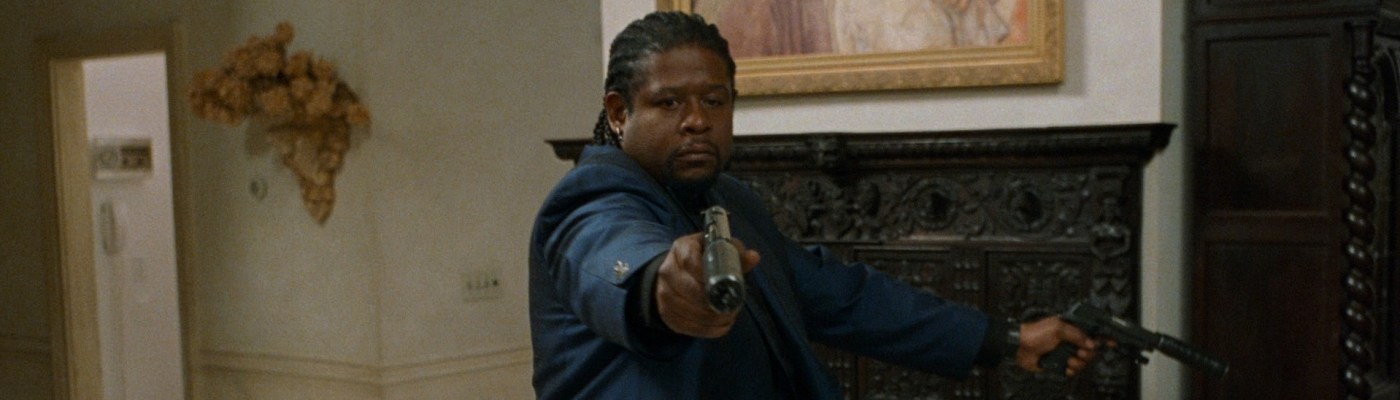
Jim Jarmusch might not be the first name one would consider to direct a hitman thriller. In most of his early work, such as Stranger Than Paradise or Mystery Train, the indie auteur established a very laconic style of character drama mostly lacking much in the way of plot or… well… drama. Today, we’d probably call them hangout movies, though that term hadn’t yet been coined at the time. However, by the 1990s, Jarmusch attempted to spread his wings a little and explore new genres. That resulted in a Western (Dead Man) and a crime picture (Ghost Dog: The Way of the Samurai).
Of course, Jarmusch brought his own idiosyncratic voice to these as well. Neither is a typical example of its genre. While it uses some familiar tropes for the skeleton of a plot, Ghost Dog is really a portrait of an odd and introspective man who happens to kill people for a living. And take care of pigeons. He really likes pigeons.
| Title: | Ghost Dog: The Way of the Samurai |
| Year of Release: | 1999 |
| Director: | Jim Jarmusch |
| Watched On: | Blu-ray |
| Also Available On: | The Criterion Channel HBO Max Various VOD rental and purchase platforms |
Forest Whitaker plays the title character. He has no identity other than his street name. Ghost Dog considers himself a modern day samurai, trapped out of time. He lives in solitude, meditates every day, practices Shaolin martial arts and katana swordsmanship, and endlessly studies Hagakure, an 18th Century guidebook to bushido, the way of the samurai.
Ghost Dog also serves as retainer to a mobster named Louie (John Tormey). Louie is not an honorable man, but Ghost Dog feels indebted to him for saving his life years earlier. As samurai, he functions as warrior and assassin to eliminate anyone Louie needs removed. For his part, Louie considers Ghost Dog one very weird dude and doesn’t understand anything about his strange behavior, but appreciates his effectiveness. When Louie needs a job done, Ghost Dog takes care of it, always thoroughly, professionally and, most critical of all, quietly with no witnesses.
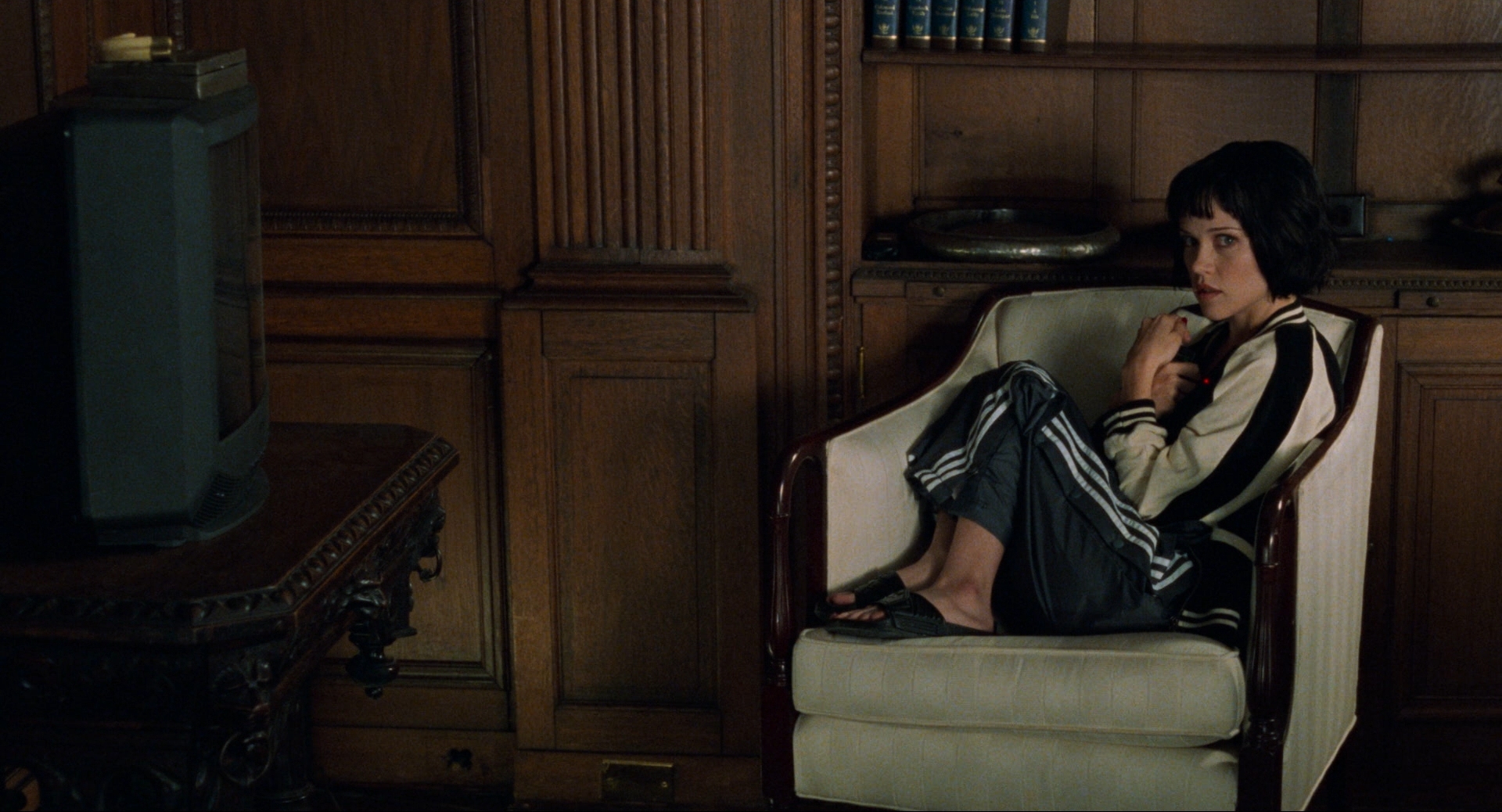
That changes when Ghost Dog is ordered to kill another mobster, a so-called “made man” who’s supposed to be untouchable. Ghost Dog does as he’s instructed, but this time the act has a witness, a girl in the room (Tricia Vessey). A girl who should be on a bus out of town. A girl Ghost Dog had no way of knowing would return to the house. Because he wasn’t instructed to kill her, he doesn’t. He walks away, leaving the girl alive.
Although everyone agrees that this was the best decision to be made in the moment and the girl should not have been killed, Louie’s mob bosses nevertheless consider Ghost Dog a liability and order him whacked to tie up loose ends. Louie protests a little bit, but ultimately knows his place and puts up no serious argument.
Unfortunately, the men sent to kill Ghost Dog are neither equipped nor competent enough to do so. Once he realizes he’s been betrayed, Ghost Dog strikes back at those who wronged him.
If any of this sounds like the makings of an action-packed revenge thriller, the film is anything but. Nor is it a grand Mafia epic on the level of The Godfather. Instead, like most things Jarmusch makes, it’s a very small-scale, very slow and contemplative drama that allows its characters to simply be who they are and exist in a world where they may not entirely belong. What passes for action scenes are methodical and end quickly, without much fuss. Ghost Dog walks or sneaks into a place he’s not expected and takes care of business practically before anyone realizes what’s happening.
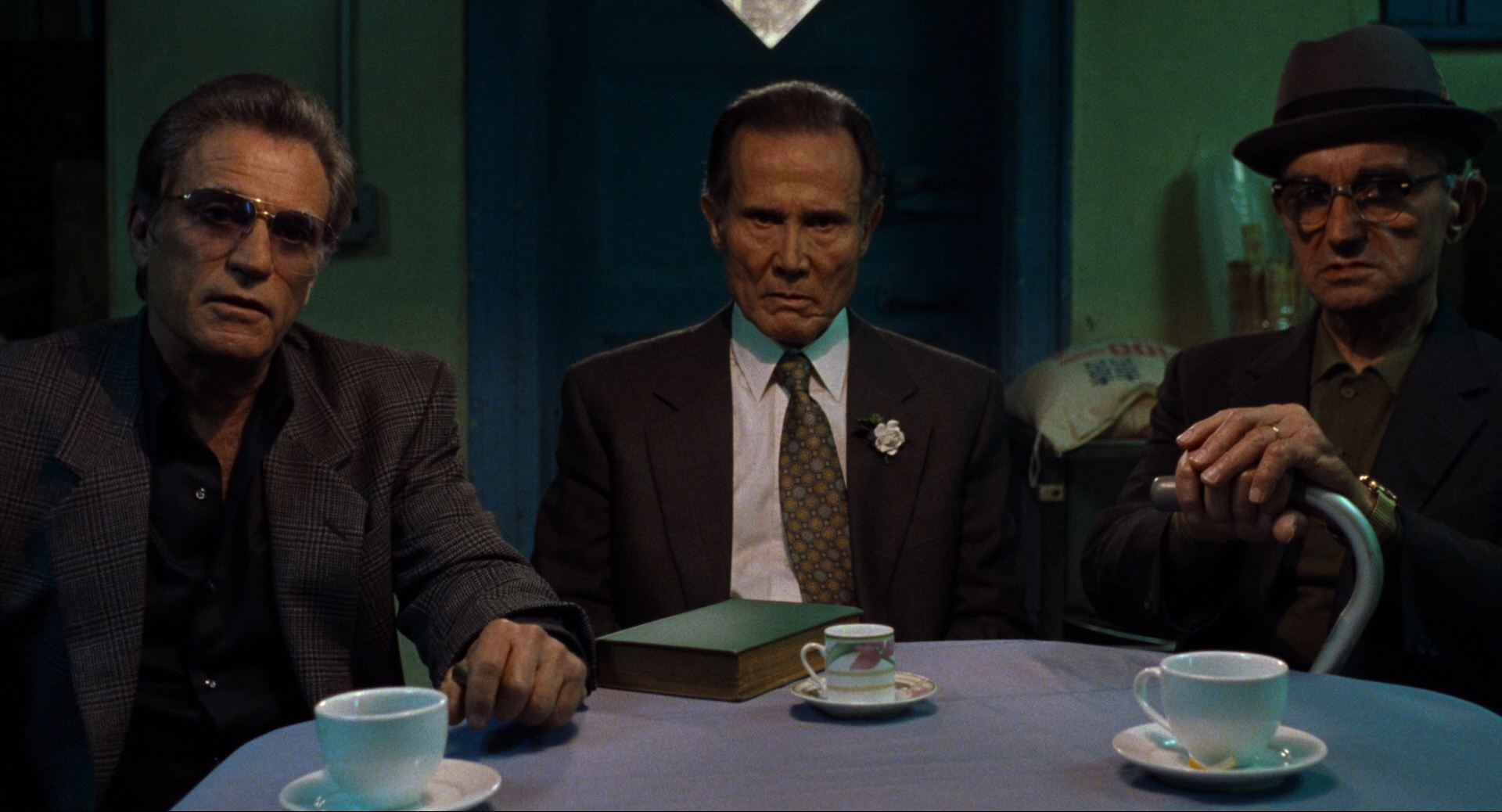
The movie is also filled with quirky, deadpan humor. The mob bosses are mostly caricatures, a bunch of sad old men pretending they’re still big-time mafiosos. They’ve clearly seen Goodfellas a few times too many and took the wrong message from it. Meanwhile, all their illegal businesses are failing and they can’t afford to pay the rent on the crappy building where they sit and play cards all day. Even as criminals, they have no relevance anymore. When they die, no one will mourn or avenge them. They’ll simply fade from memory as if they never existed at all.
Ghost Dog himself, for as interesting or compelling a character as he may be, is likewise play-acting at a role he can never fulfill. He’s not and can’t ever be a real samurai. He’s just a weirdo loner who lives on a rooftop shack next to a pigeon coop. His affectation of swinging his pistols around when holstering them like swords into a sheath is both pointless and ridiculous. His only friend in the world speaks no English and the two can barely communicate, often saying the same thing in their respective languages, each with no idea what the other has said.
As a film, Ghost Dog: The Way of the Samurai is stylish but not flashy. Its languid pacing is hypnotic at times, backed by a moody hip-hop score by RZA. For the story, Jarmusch takes obvious inspiration from Jean-Pierre Melville’s Le samouraï, a similar tale of an assassin with a strict code of honor at odds with his environment. The director also stages one of Ghost Dog’s hits in direct, almost shot-for-shot homage to Seijun Suzuki’s Branded to Kill. Both movies were clearly on his mind as he riffed on their themes in his own distinctive way.
The Blu-ray
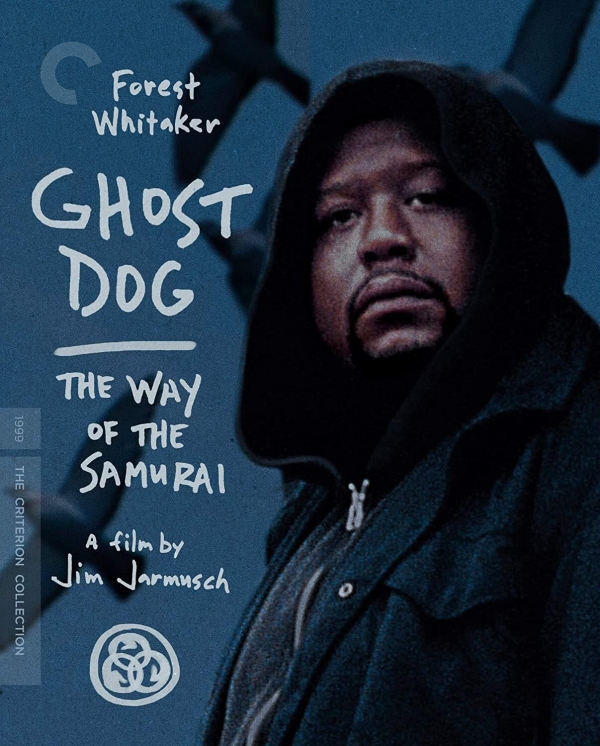
The Criterion Collection released Ghost Dog: The Way of the Samurai on Blu-ray as spine #1057 in 2020. As far as I’m aware, that disc is the only high-definition copy of the movie in the American market to date. However, Studio Canal later released a 4K edition in Europe in 2023. Assuming Criterion still has distribution rights here, the label hasn’t announced an upgrade of its own as of this writing. Whether one is really necessary will be a matter of subjective opinion.
Criterion’s transfer notes state that the Blu-ray was sourced from a 4K scan of the camera negative, which leads me to assume that Criterion and Studio Canal probably worked from the same underlying master. For 1080p, the Criterion disc looks pretty great. The 1.85:1 image has plenty of detail and what appears to be a natural grain texture. Colors and contrast are also very nice, though I’ll note that the opening scene seems overly dark. Whether that’s intentional or not, I can’t say for certain. Street lights and car taillights also bloom during a number of nighttime scenes, but that one at least looks to me like a deliberate stylistic effect.
I won’t argue that an HDR grade might benefit the movie to make it look even better, but I’m pretty satisfied with the Blu-ray and don’t foresee myself jumping at the chance to upgrade.
The DTS-HD Master Audio 5.1 soundtrack also sounds terrific. Right from the opening, the hip-hop score by RZA has a deep bassy beat. Fidelity is also sterling with licensed tracks. Gunshots (those not silenced) crack with authority and a roar of thunder toward the end of the movie rumbles nicely. The surround channels are used very effectively for panning sounds and music expansion.
On-disc supplements consist of an 84-minute audio Q&A with Jim Jarmusch very similar to the one on the Criterion edition of Mystery Train, a half-hour Zoom roundtable with actors Forest Whitaker and Isaach De Bankolé hosted by critic Michael B. Gillespie, interviews with RZA, a Shaolin master, and the film’s casting director, a couple archival interviews, a deleted scene and some outtakes, a trailer, and an alternate music-only track
Inside the case is a booklet with two essays by critics Jonathan Rosenbaum and Greg Tate, and a transcription of an interview with director Jarmusch. Also packaged inside is an adorable miniature pamphlet with excerpts from the Hagakure book the Ghost Dog character reads in the movie.
Related
- Film from Z to A Article Index
- Jim Jarmusch (director)


I remember seeing this when it came out on video (Artisan DVD I think), and after it was done, I went, “Well…that was a movie…”
It didn’t leave much of an impression on 25 year old me outside of slow motion sequences of Whitaker flailing his swords around. I absolutely forgot there was a girl in it. Maybe I need to watch it again…
LikeLike
I too saw this on home video back in the day. I thought it was cool but I don’t remember much else.
Revisiting this small, self-contained film again might be a nice relief from the endless stream of expensive blockbusters. Thanks for the review, especially the bits about the has-been mobsters. I’ll bet that sailed over my head back then.
LikeLiked by 1 person