
Ever since the phrase “auteur theory” was coined in the early 1960s, audiences and film connoisseurs who care to notice such things have typically considered a director to be the main artistic guiding force behind any movie. That thought often applies even in retrospect to older films, but wasn’t always the case, especially not during the studio system of Hollywood’s Golden Age. In those days, a producer might have more creative input and control than the director. In particular, producer Val Lewton had a remarkable string of hits at RKO Pictures throughout the 1940s, each of which bears his distinctive stamp, starting with 1942’s Cat People.
That’s not to say that the director of Cat People, Jacques Tourneur, was merely a technician on the set. Tourneur was a talented filmmaker in his own right, and would direct the seminal film noir Out of the Past, one of the greatest works of that genre, just a few years later. Regardless, Cat People was a Lewton production first and foremost. Its legacy and lasting influence were mainly the producer’s doing.
| Title: | Cat People |
| Year of Release: | 1942 |
| Director: | Jacques Tourneur |
| Watched On: | Blu-ray |
| Also Available On: | Various VOD rental and purchase platforms |
Lewton came to RKO in 1942 and was made head of its horror unit, tasked to create low-budget horror pictures that would each have a sensationalized title provided by the studio and a short running time to accommodate being the B-side of a double feature. His first was Cat People, and the film became RKO’s top money earner for the year, quite unexpectedly. After that success, Lewton was mostly given carte blanche to do what he wanted, so long as he followed the same original mandate: cheap, short, and provocative.
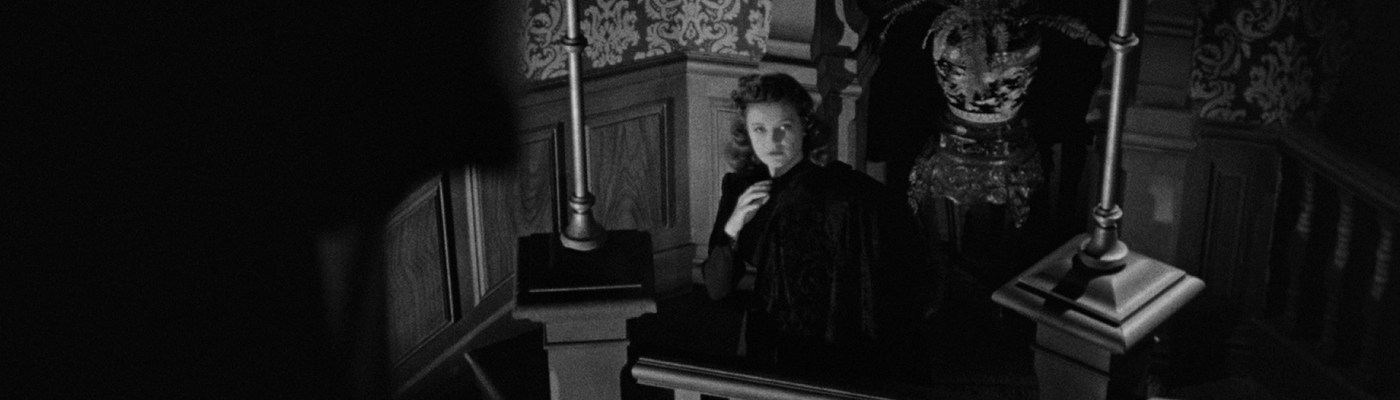
What set Cat People apart from other B-movies of the day was Lewton’s commitment to making the film look and feel like a prestige production, despite its meager budget, lack of major stars, and other constraints. The film’s photography is beautifully expressive, with careful sculpting of light and shadows to belie or hide how little it cost to make. While not outright scary, the tone is very eerie and moody. The movie has no gore to speak of, nor even a clear monster or villain, yet still has an ability to get under your skin.
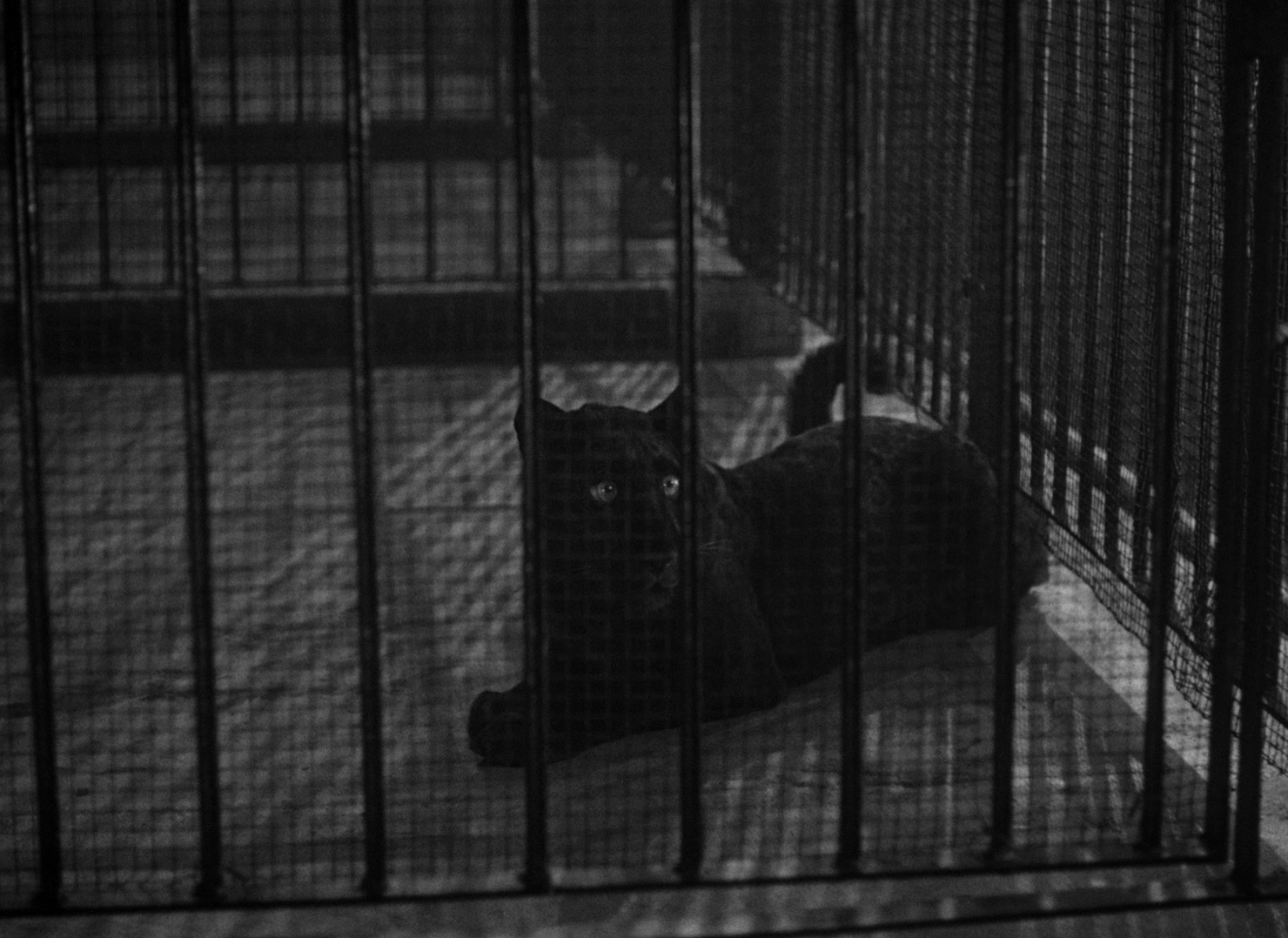
The ostensible lead in the story is Oliver Reed – no, not the actor Oliver Reed from The Three Musketeers and The Devils, but a character of that name played by Kent Smith. An engineer of some sort who works for a ship-building company and likes to walk through the Central Park Zoo, Oliver encounters a beautiful young woman with a sketchbook, drawing pictures of a panther in a cage. Intrigued, he approaches at the first opportunity and introduces himself with all the charm he can muster. Irena (Simone Simon), a Serbian immigrant with a bit of an accent, seems wary at first, not necessarily of Oliver himself, but at the idea of dating a man at all. Nevertheless, they come to spend a lot of time together, fall in love, and quickly get married.
Even upon their wedding, Irena remains hesitant to become too intimate with Oliver, refusing even to kiss him. (Per Hays Code guidelines, of course they must also sleep in separate bedrooms.) The reason for this, she explains, is that she grew up believing stories that all the women of her village were cursed to turn into feline monsters that will kill their mates, and she’s terrified that will happen to her. Initially amused by this, Oliver grows increasingly frustrated the more his wife clings to such a silly fairy tale. Finally fed up with it, he sends her to a psychiatrist (Tom Conway) who attempts to cure her by dubious means, before declaring her insane and recommending she be institutionalized.
Irena herself does wish to be cured, and desperately pines for a normal, happy life, only to become more and more convinced that the curse is true, first by a series of little coincidences and later by more ominous events. Meanwhile, Oliver starts dating a co-worker from his job (Jane Randolph) and making plans to annul his marriage on the grounds that Irena hasn’t fulfilled her wifely duties. What a nice guy, right?
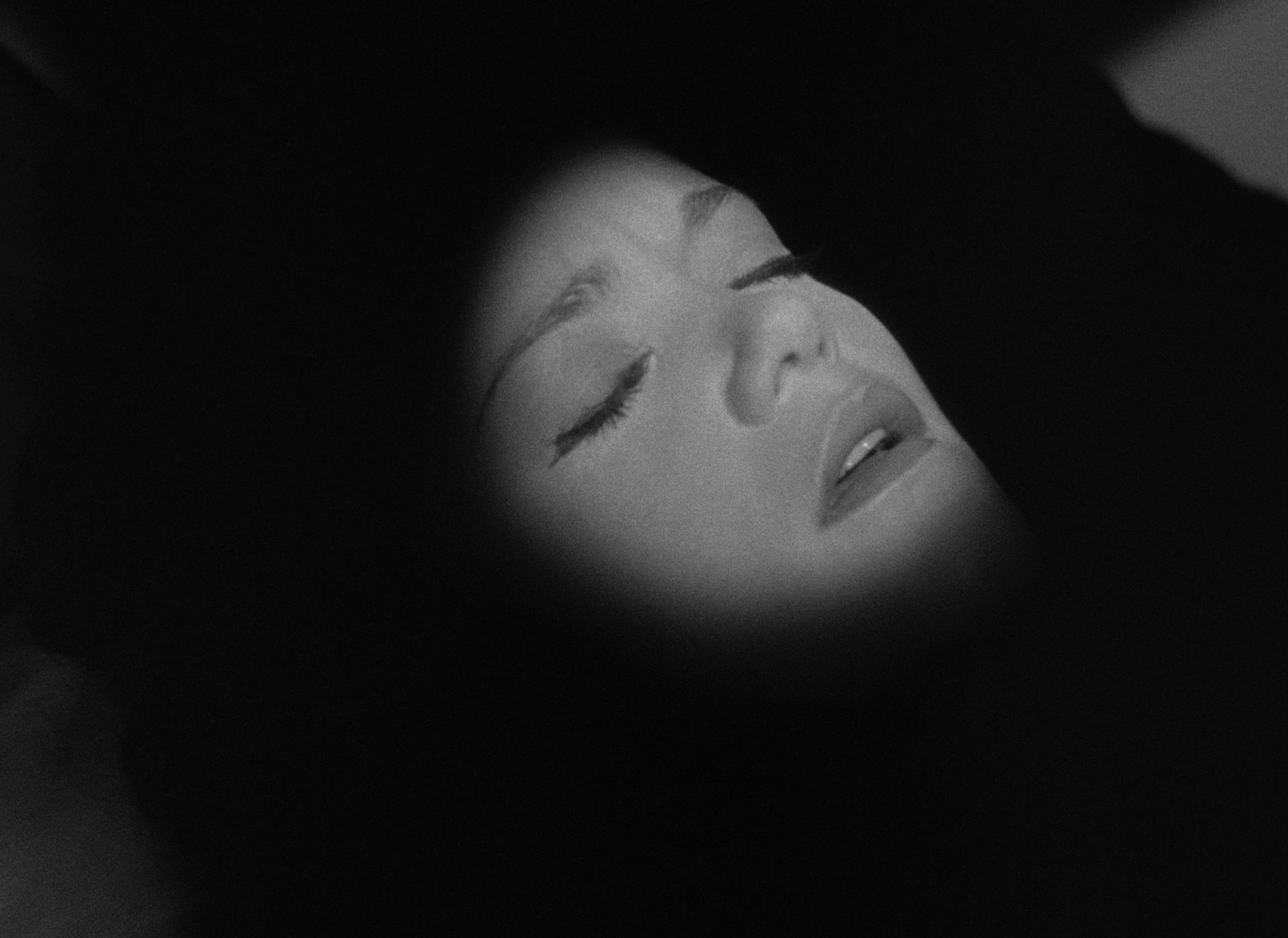
Cat People was made at a time not exactly noted for progressive ideas about feminism, yet Irena is clearly the actual heroine of the story, and Oliver just about the blandest of an average American everyman. He feels entitled to take what he wants, turns into a jerk when the reality isn’t convenient for him, and immediately caves as soon as a more appealing alternative comes his way. Both he and the psychiatrist actively gaslight Irena, Oliver for reasons he at least believes are well-intended (whether truly so or not), but the shrink just turns out to be a creepy lecher.
At the same time, Irena is a complicated puzzle of a woman. As much as she may want to be a dutiful wife who’ll please her husband, the fact is that she doesn’t live up the terms of her marriage contract. It’s a little difficult to blame or fully villainize Oliver for his wife’s irrational and inexplicable behavior. He does make some attempt to console and help her, though ultimately can’t.
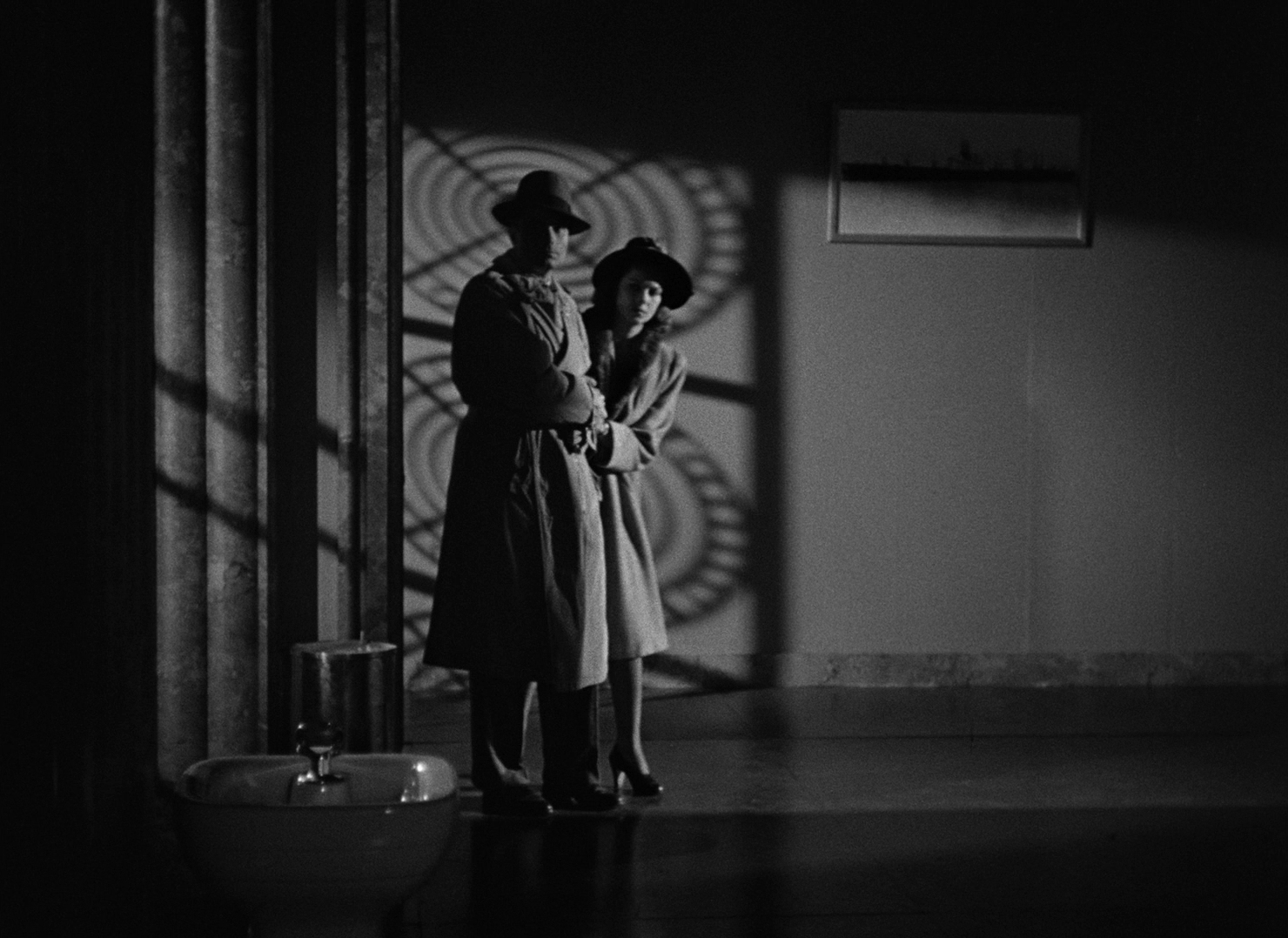
The question of whether Irena is cursed as she believes, or just mentally ill as Oliver does, is left ambiguous. We’re not allowed to fully see the film’s climax, which is viewed only through shadows on a wall. Does Irena turn into a cat monster, or just suffer a psychotic break? Or is the panther that escaped from the zoo responsible? If so, what triggered Irena to release it, and shouldn’t she be held culpable for that in either case? The film deliberately withholds answers to these mysteries.
The reality of the matter is that the movie was made this way simply because Lewton and Tourneur didn’t have enough money to depict a monster attack, so they made do the best they could. Even that being the case, those limitations resulted in a product significantly more psychologically complex than just about any other 1940s B-movie, intentionally planned that way or not.
I won’t claim that Cat People is a masterpiece. It came out the same year as Casablanca, which has a much stronger argument for that title. I have to admit that its short 73-minute length drags a bit, and as a thriller, it lacks much suspense, at least by modern standards and expectations. However, it’s a fascinating artistic work that was highly influential to decades of movies that have followed, and rightfully holds its reputation as a classic.
The Blu-ray
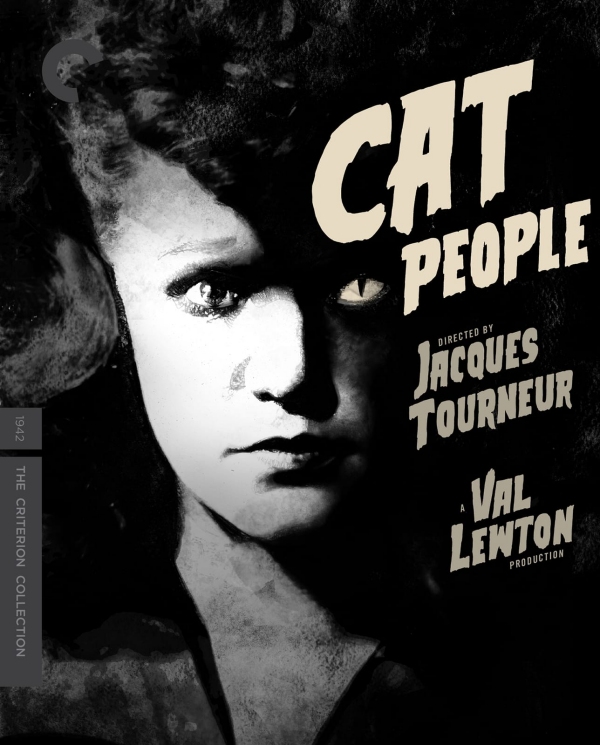
The Criterion Collection brought Cat People to Blu-ray as spine #833 in 2016. To my knowledge, that disc is the only release on the format and no 4K version has been announced. Personally, I doubt one is needed.
Movies from the 1940s rarely have what we might consider “4K” worth of detail today. I say that not just because they’re old, but because camera lenses and film stocks of the era weren’t as sharply resolved as those developed later. In this particular case, it also seems that the camera negative was either lost in the intervening years, or at least wasn’t available when the Blu-ray was created. Liner notes in Criterion’s booklet state that the video transfer was scanned at 2K from a safety fine-grain master. Would a 4K scan from that source make much of a difference? I’m skeptical.
Presented in its original 1.37:1 aspect ratio, the Blu-ray has variable sharpness from scene to scene, or sometimes even shot to shot, some of which were obviously photographed a little out of focus. However, in general, the image is pleasingly sharp, enough to see the fine pattern of lead character Oliver’s tweed suit and reveal the potato flakes dumped on the actors as “snow” a little too clearly than likely intended. Grain is present, but as described, mostly a light presence of texture in the background. No visible speckles or physical damage to the film are evident. The liner notes claim that digital tools were used to remove “thousands of instances of dirt, debris, scratches,” and so forth, but that same boilerplate language can be found in almost every Criterion booklet. How much was actually needed on this element, I couldn’t venture to guess.
The photography in Cat People is famous for its use of shadows, and that aspect is lovely on the Blu-ray. Black levels may be a little elevated, but not inappropriately for a movie of this age. Perhaps an application of HDR might enrich the contrast a little more, but I imagine this is closer to what audience saw on theater screens in 1942.
The uncompressed PCM mono soundtrack has sufficient clarity of dialogue, music, and other sounds. It has a small amount of hiss and some mild distortion on the high end. Neither of those is unexpected. I’m sure the soundtrack went through a fair amount of digital cleansing as well. The result doesn’t sound too obviously manipulated.
For extras, Criterion offers an audio commentary by film historian Gregory Mank recorded for DVD in 2005, a documentary about producer Val Lewton that runs a little longer than the movie itself, a 2010 interview with cinematographer John Bailey (Ordinary People, The Big Chill) offering appreciation for the film’s photography, and a trailer. The booklet contains an essay by critic Geoffrey O’Brien.

