
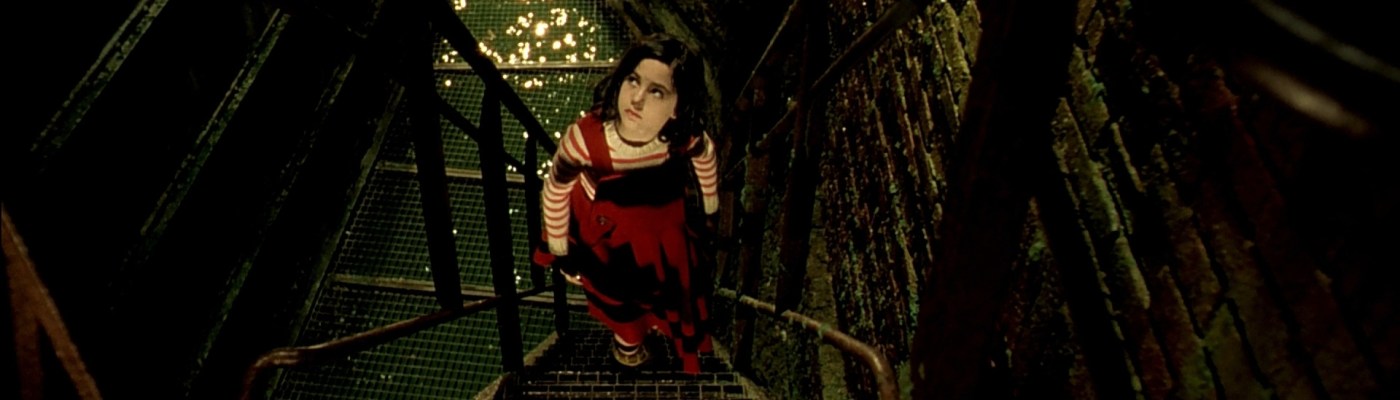
Cyborgs, clones, trained fleas, and a talking disembodied brain in a fish tank are just a few among the countless idiosyncrasies found in The City of Lost Children, a Dickensian tale of societal corruption and decay by way of Jules Verne and Terry Gilliam.
I’ve loved this movie from the first time I saw it, even though, unfortunately, that was also one of the worst theatrical experiences I’ve ever had in my life. Due to its limited release and foreign art film status, the movie’s only showing in my area was at a tiny and notoriously crappy multiplex theater in the middle of a shopping mall. Of course, it also played on the smallest screen there.
The volume in the auditorium was turned down so low I could actually hear other people in the audience breathing louder than the movie’s dialogue. The problem was unbearable enough that I had to leave for a few minutes to go out to the lobby and complain to someone. The only employee I could find was a teenager at the concession stand, who gave me a look like he thought I was the biggest moron on Earth and said to me, I swear to God, “That movie has subtitles. Duh.”
| Title: | The City of Lost Children (a.k.a. La cité des enfants perdus) |
| Year of Release: | 1995 |
| Directors: | Jean-Pierre Jeunet Marc Caro |
| Watched On: | 4K Ultra HD Blu-ray |
| Also Available On: | Blu-ray Various VOD rental and purchase platforms |
That personal anecdote aside, The City of Lost Children is otherwise a delightful concoction of surreal whimsy, sci-fi weirdness, and some social satire as relevant today as it will be forever.
In a Steampunk-adjacent dystopian world trapped somewhere outside both time and reality, young children are kidnapped off the streets by a cult of one-eyed, cybernetically-enhanced goons call Cyclops, who sell them to brilliant but demented scientist Krank (Daniel Emilfork). Tormented by an inability to dream, Krank uses a device of his own invention to extract dreams from children, which should in theory finally allow him a restful sleep. The only kink in this plan is that the terrified children all have nightmares that make Krank’s insomnia even worse. Nevertheless, he keeps trying, hoping to eventually find a perfect child who’ll have only pleasant dreams for him to steal.
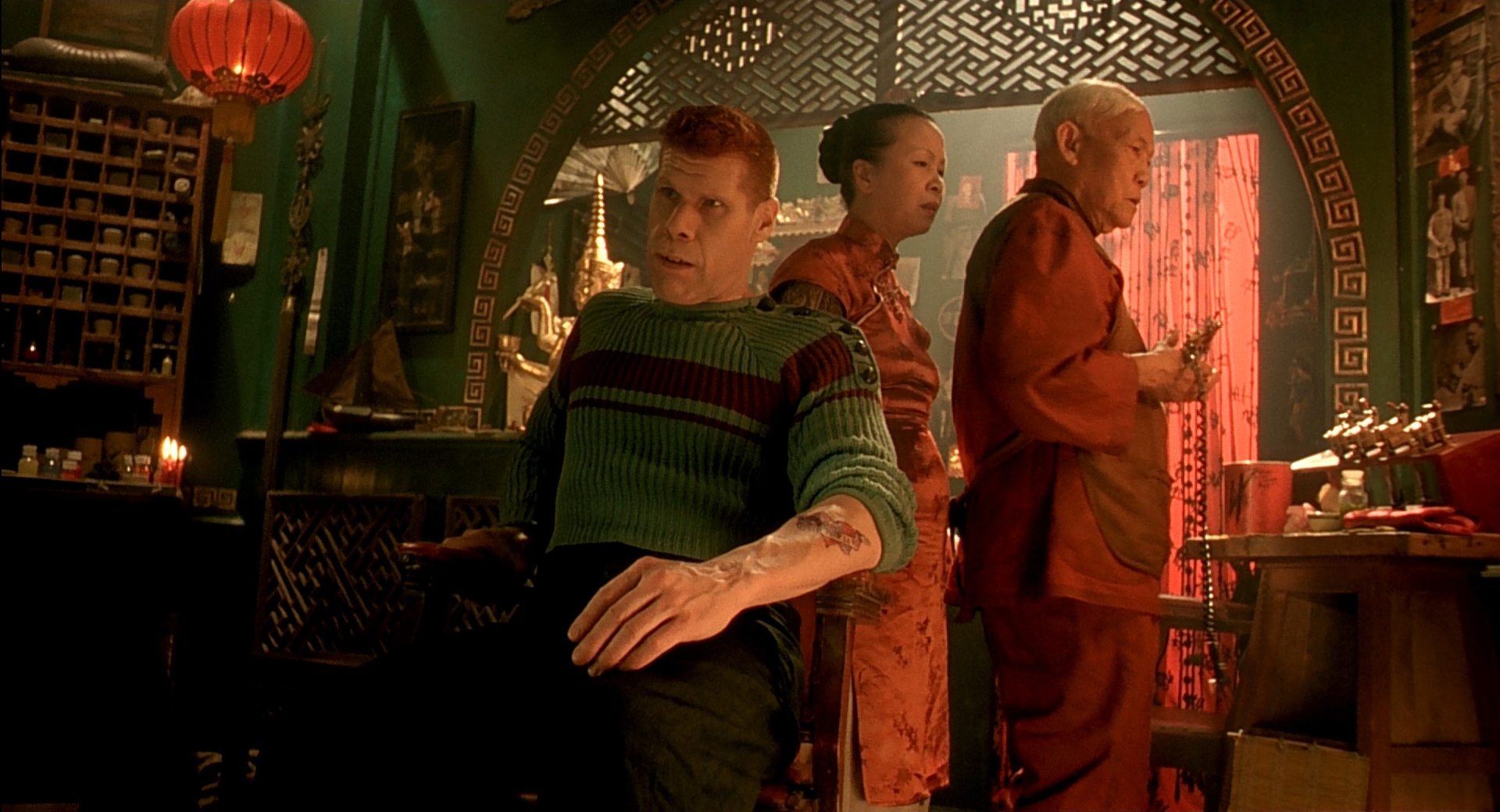
Orphans lucky enough to avoid the Cylops instead find themselves in servitude to a criminal gang and forced to pickpocket change for a pair of ruthless conjoined twins. One such orphan, a headstrong girl named Miette (Judith Vittet) crosses paths with circus strongman One (Ron Perlman), whose younger brother has been abducted by the Cyclops. A convoluted chain of events then leads One and Miette to invade Krank’s headquarters aboard an off-shore oil rig to rescue the boy.
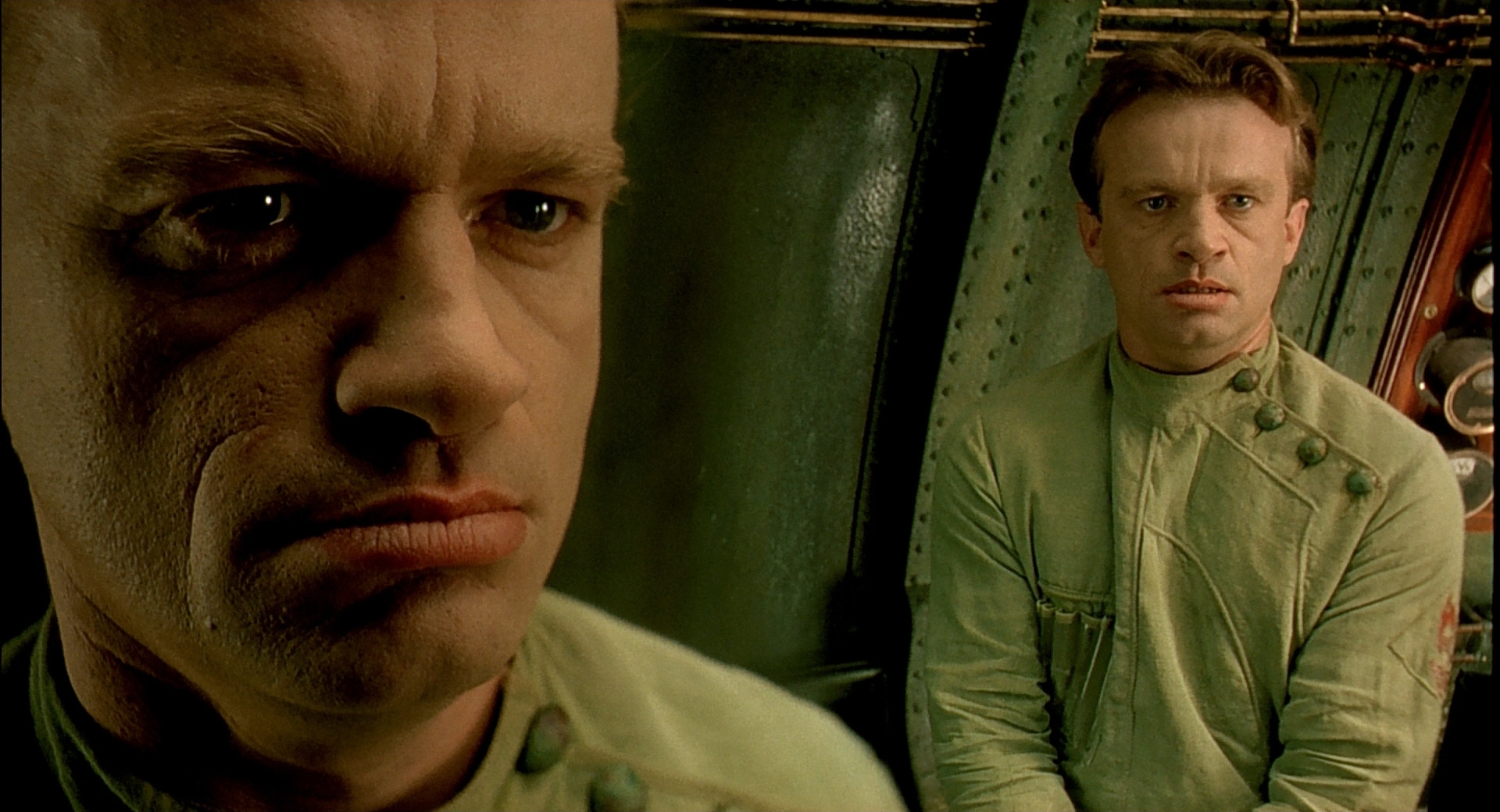
Merely reciting the skeleton of plot like this hardly does justice to the film’s many oddities, the most delightful of which involve the rubber-faced Dominique Pinon playing a gaggle of identical clones not gifted with the strongest of intellects. To describe more would likely feel redundant to those who’ve already seen the movie, and confusing to those who haven’t.
In writing, the film might sound too cluttered with crazy ideas, too disjointed in narrative, and almost insufferably twee in tone. Indeed, it could easily have gone that way, if not for the vision of French fantasists Jean-Pierre Jeunet and Marc Caro, whose Delicatessen had been a cult sensation a few years earlier. The co-directors structure the story as a fairy tale, built off the timeless theme of the wealthy exploiting the underprivileged and treating them as property to do with as they please. This is all told in a hyper-stylized fashion with an abundance of humor, visual imagination, and ingenuously constructed set-pieces.
The City of Lost Children was only the second, but sadly also final, feature film collaboration between Jeunet and Caro. The filmmakers would part company a few years later. Jeunet would go on to great success with his international smash hit Amélie, a movie I also adore, but the combined talent of the two men’s work together, even if only two films, remains something special.
The 4K Ultra HD Blu-ray
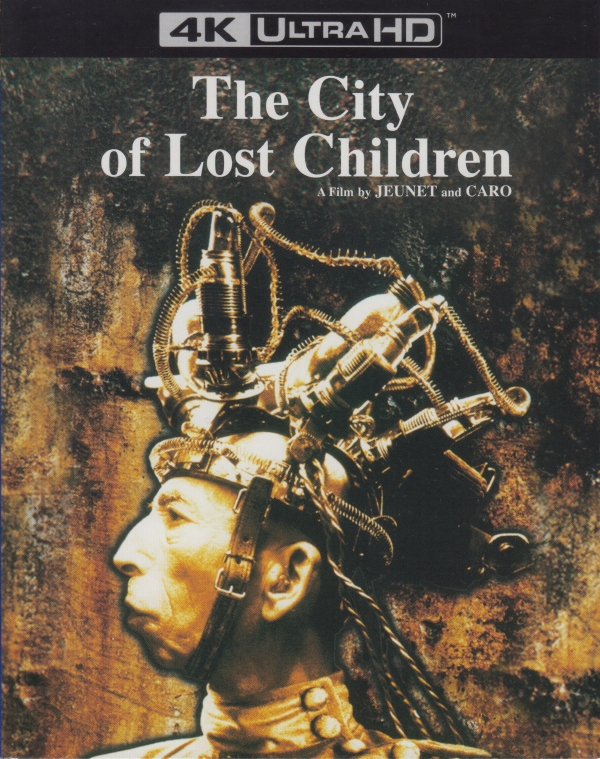
Sony Pictures Classics holds distribution rights for The City of Lost Children in the American market, and brought the film to Blu-ray in 2015. A 4K Ultra HD Blu-ray later followed in 2022. To date, that disc is exclusively available only as part of the 11-film Sony Pictures Classics 30th Anniversary box set. The keepcase inside the box has almost the exact same cover art as the 2015 Blu-ray, but the slipcover over it (seen below) has better art.
A standalone 4K edition was released in Europe by Studio Canal. Import copies of that disc can be purchased from various retailers in the United States. I cannot confirm whether both the American and European versions are sourced from the same underlying video master, but would assume so.
The 1.85:1 image on Sony’s 4K disc has an almost hyper-sharp appearance with an extraordinary amount of detail, so much that I have to question whether A.I. or otherwise artificial detail enhancement was performed on this. It’s known that co-director Jean-Pierre Jeunet used every digital tool at his disposal to clean up, improve, and (in his words) “harmonize grain” on the 4K restoration of Delicatessen. I fully expect he did the same here. I’ve rarely seen a movie shot on 35mm film look this sharp without edge enhancement artifacts. Grain is also minimal without the usual signs of DNR.
However, I can’t complain about it too much, because the picture really does look fantastic. It also has very rich colors and contrast, with HDR that lends a nice sense of depth. I didn’t spot any type of the digital artifacts that plagued, for example, James Cameron’s controversial A.I. upscale for True Lies. Nor does the movie now look like it was photographed with digital cameras (which was Cameron’s intention while remastering his own movies).

Audio is provided in DTS-HD Master Audio 2.0 format, both in the original French or an English dub. I only listened to the French. When decoded with an upmixer (as it was always meant to be), the soundtrack has modest surround presence. The musical score is warm and enveloping, and sound effects are very crisp and clear. The track doesn’t have terribly much dynamic range, except for the deep bellowing of a ship’s horn in one scene near the end.
The 4K disc carries over all the bonus features from the 20th Anniversary Edition Blu-ray released in 2015. These include two audio commentaries, a making-of featurette, an interview with costume designer Jean-Paul Gaultier, 13 minutes of behind-the-scenes footage from Jeunet’s archive, and a couple theatrical trailers.
Related
- Film from Z to A Article Index
- Ron Perlman
- Sony Pictures Classics 30th Anniversary box set
Note: Screenshots on this page were taken from the 2015 Blu-ray edition of the film and are used for illustration purposes only.

