
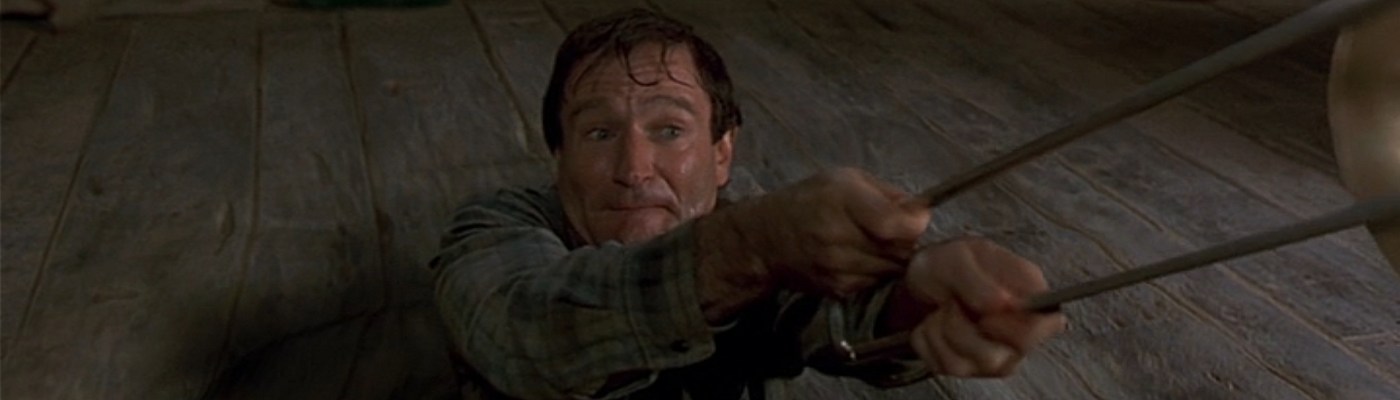
As announced last week, the Film at 11 podcast has now officially been rebranded as Film After 11. It’s the same podcast as before, just with a slightly different title. For the inaugural episode, Joseph and I sit down to watch Robin Williams’ 1995 blockbuster Jumanji.
If you’ve paid any attention, you may have noticed that I’ve been choosing movies for the podcast in alphabetical order this year, starting with Austin Powers in January. We needed a J this week. We’d already done both Jaws and Jurassic Park, and I didn’t want to subject the poor kid to any of the lousy sequels to those. That leaves us here. Joseph had already seen one of the Jumanji reboot/sequels, but not the original.
Jumanji is by no means one of my favorite movies. Frankly, I wouldn’t even rank it in the top half of Robin Williams’ filmography. But it’s enjoyable enough in a family-friendly adventure kind of way, even if most of the visual effects have dated. And boy, have they ever dated.
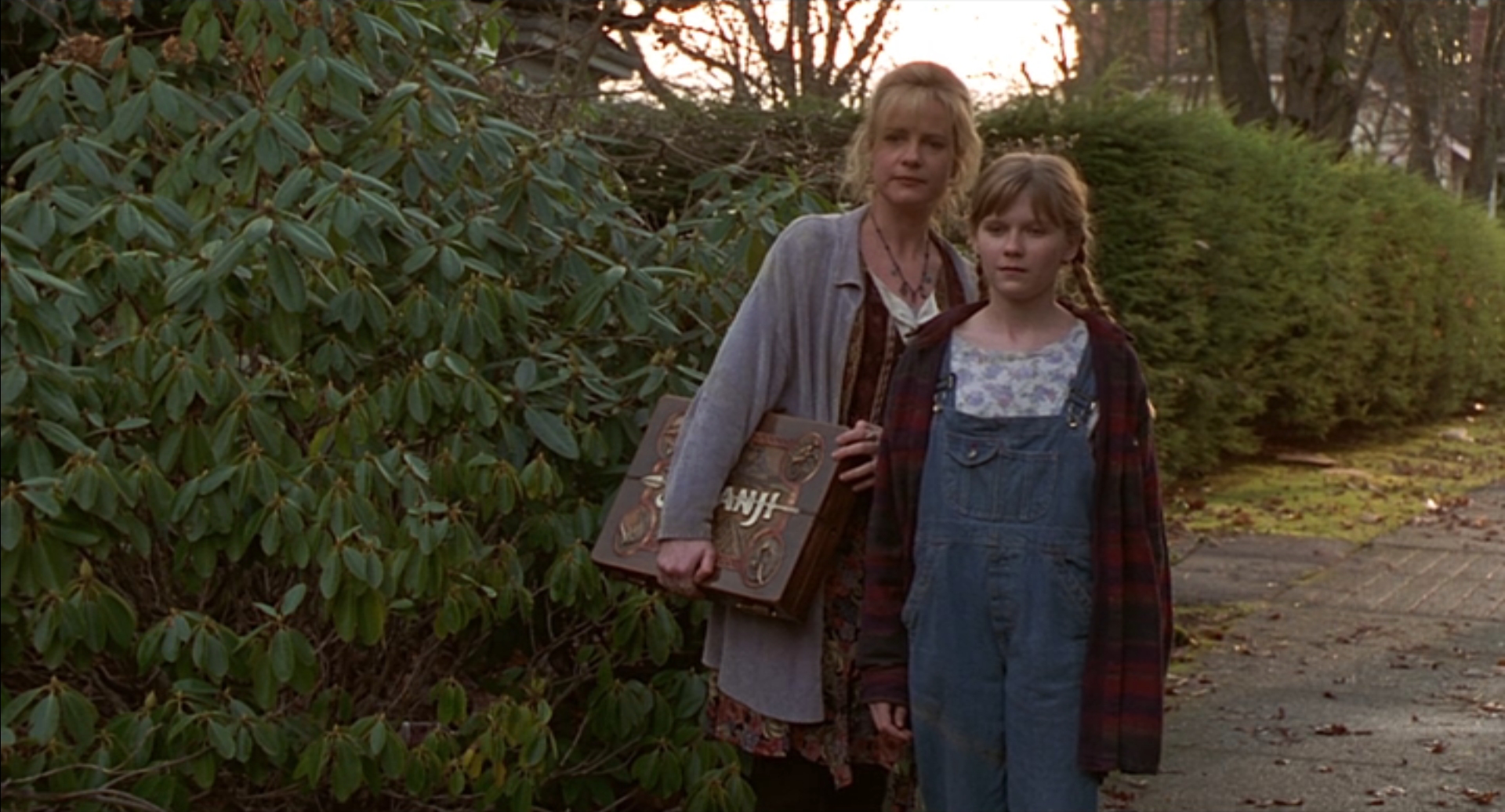
| Title: | Jumanji |
| Year of Release: | 1995 |
| Director: | Joe Johnston |
| Watched On: | Fandango at Home (rental) |
| Also Available On: | 4K Ultra HD Blu-ray Blu-ray Various VOD rental and purchase platforms |
Video Streaming
Jumanji came to Blu-ray in 2011 and to 4K Ultra HD Blu-ray in 2017, both from Sony Pictures Home Entertainment. I don’t own the movie on physical media, so I streamed it in 4K from Fandango at Home. I have every reason to assume the underlying 4K video master is the same one used on disc, just with extra compression.
I don’t believe Jumanji has ever been a great visual stunner, in terms of photography. Although certainly competent enough, the need to composite extensive visual effects onto the film elements meant, at the time, a buildup of additional layers of grain. Some parts of the movie, though not all, are very heavily grainy, and that grain has a harsh and coarse texture in this 4K transfer, at least on streaming. In my viewing, the picture also had instances of grain freezing in place or breaking up into blocky chunks. Those issues I’m sure are exacerbated by the streaming compression and might not occur on the physical disc copy.
Shots with digital effects also would have been composited somewhere south of 1080p resolution before printing out to film. Variances in quality between effects shots and non-effects shots are to be expected.
At its best, in scenes without effects work, the 1.85:1 image is pretty sharp, with decent colors. The HDR grade also adds a pleasing sense of vibrancy. I’ve never seen the movie on Blu-ray, so I can’t make a comparison to that, but even on its own I can tell that this looks better than regular HD. On that mark, the 4K should be a worthwhile upgrade for fans.
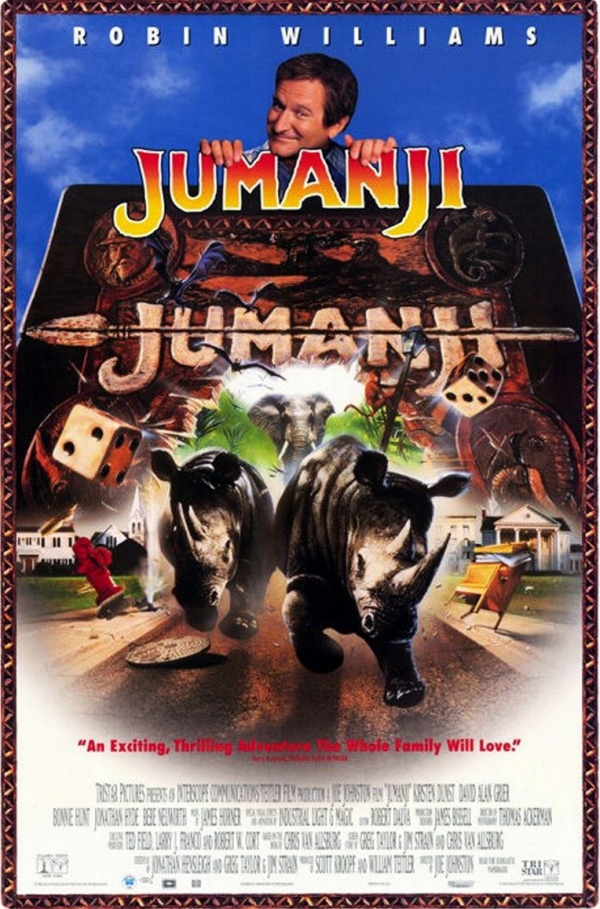
In 1995, Jumanji played theatrically in the relatively-new Dolby Digital 5.1 surround sound format. For 4K, the soundtrack has been remixed into Dolby Atmos, quite effectively so. Right from the start, the beat of drums (supposedly coming from the board game) thump with a nice bass kick. Sound effects are crisp, and dynamic range is impressive throughout, especially in the rumbly lion growl and the boom from the safari hunter’s rifle. The surround channels are almost constantly active with directional effects, and the sounds of bats and giant evil mosquitoes fly into the height speakers.
Related
- Robin Williams
- Kirsten Dunst
Note: All screenshots on this page were grabbed off a web browser, and came out looking much softer than actually watching the movie from a proper streaming device. They are used for illustration purposes only.


One of my top-50 favourite movies of all time!! But yeah, I was 11, I guess you (Josh) were just too old in 1995. No hard feelings.
LikeLiked by 1 person
I remember this being one of the 5 DVDs that came free with my Toshiba DVD player, circa 1998. I think this was the only one of the five titles that was in a jewel box. The film itself, as you said, is decent enough family entertainment.
LikeLiked by 1 person