
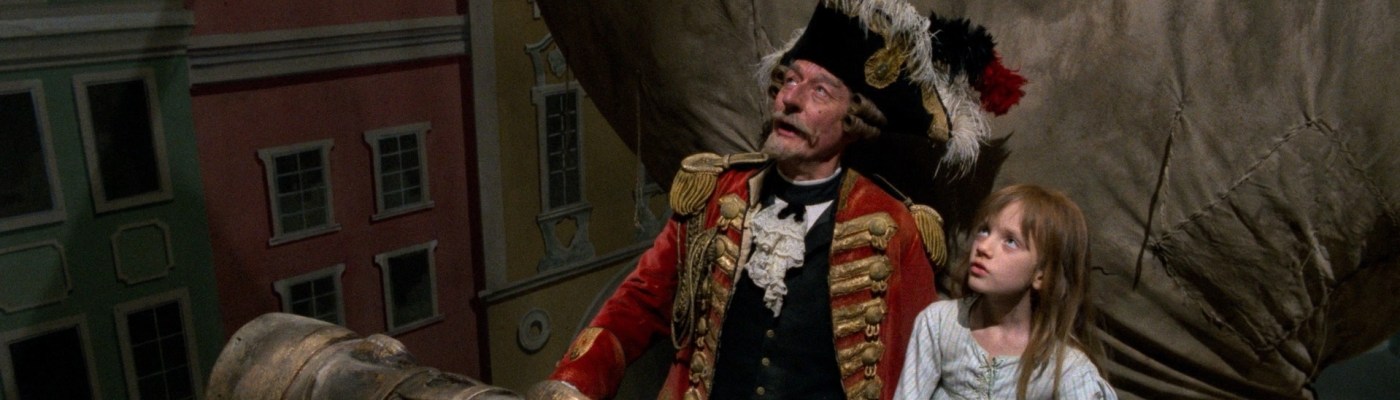
Not even the troubled production and financial failure of his masterpiece Brazil could prevent director Terry Gilliam from embarking on an even bigger and more elaborate project next. His subject: the filmed biography of a man who was, at one time, the most famous and revered individual on the Earth and its moon. As recounted in his own words, the illustrious Baron Hieronymus Karl Friedrich von Münchhausen was an accomplished explorer, soldier, diplomat, and savior of the entire European continent. Tales of his exploits enthralled audiences the world over, and every single word of them was true. Maybe. Well, perhaps a few of them may have been embellished. Just a smidge.
Gilliam’s most ambitious endeavor to that time, The Adventures of Baron Munchausen was, like most of his work, a visually extravagant, satirical, and messy affair. Also like most of his work, it was a tremendous box office flop that, only later, grew as a cult item among his fans.
| Title: | The Adventures of Baron Munchausen |
| Years of Release: | 1988 – West Germany 1989 – United States |
| Director: | Terry Gilliam |
| Watched On: | 4K Ultra HD Blu-ray |
| Available On: | Blu-ray Various VOD purchase and rental platforms |
The film is based loosely on an 18th Century collection of tall tales that were, in turn, a parody of an actual German nobleman and minor celebrity known for telling exaggerated stories of his exploits across the world and his heroics in the Russo-Turkish War. Reportedly, the real Baron Munchausen was very upset about the book mocking him, and called it a huge pack of lies, unlike the very true stories he himself had shared. Over time, after the real baron died, the parody version of him took hold in the public consciousness as a character who would make self-aggrandizing and wildly implausible claims about the deeds he’d accomplished – essentially, the ultimate bullshitter. As the legend grew, newer, more outrageous, and more fantastical stories were invented and attributed to Munchausen, the fictional version having long since eclipsed the real one. Even a genuine psychiatric condition relating to a person who fakes a medical illness was named after him.
This, obviously, seemed like fertile ground for Terry Gilliam to play in. The filmmaker was already famed for his grand imagination, inventiveness, and wit, all originally honed in the Monty Python comedy troupe. He’d demonstrated a gift for fantasy in Time Bandits and Brazil, and was eager to expand it to the largest canvas possible. Unfortunately, the studio paying for all this had a change of heart and only barely let him finish it.
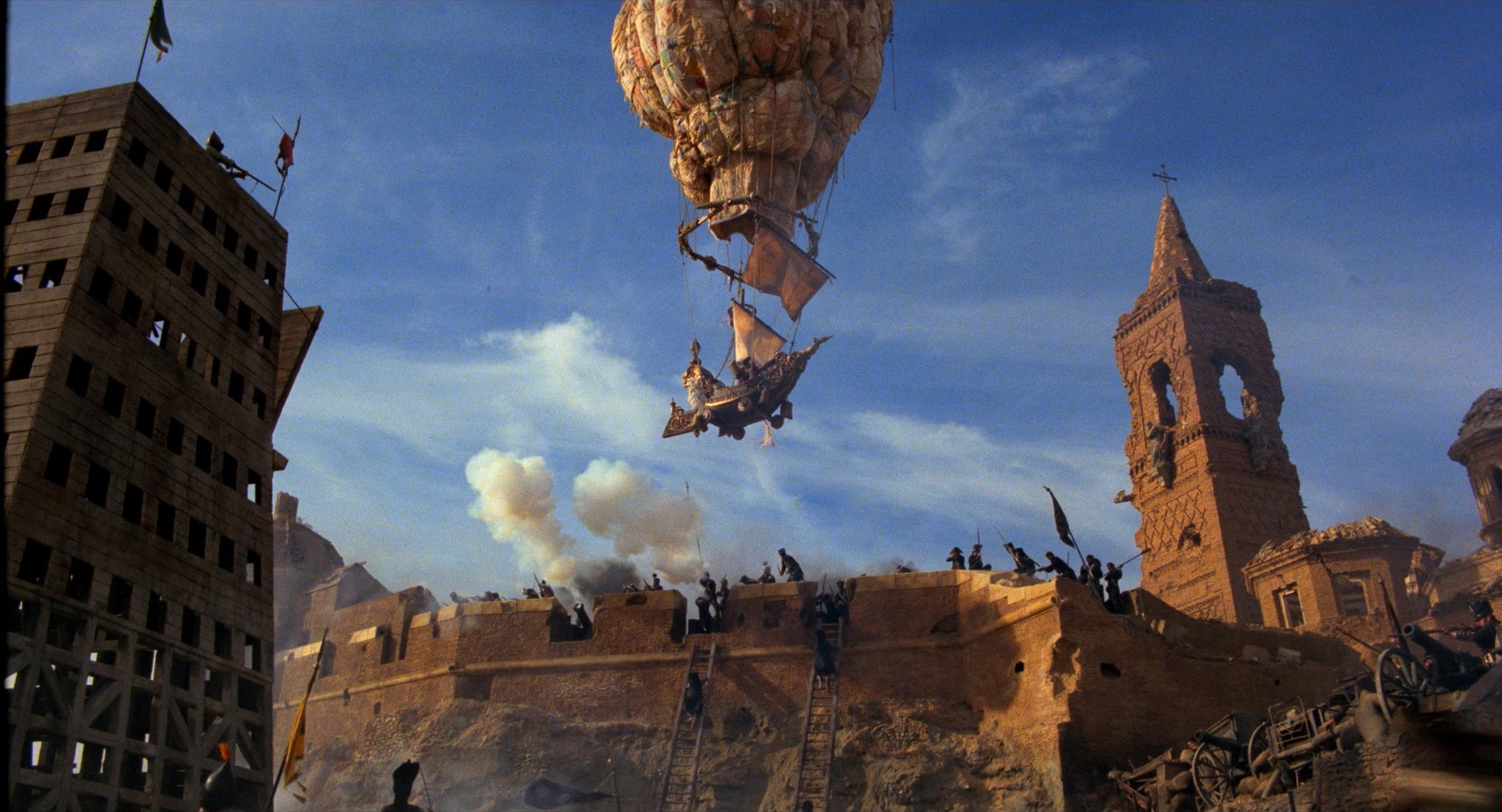
Still set in the late 18th Century, Gilliam’s Baron Munchausen movie opens in a European city (exactly where is unclear) besieged by an army from the Ottoman Empire. In the midst of this, a prissy bureaucrat (played by Jonathan Pryce) insistent that the official rules of war stipulate no fighting on Wednesday, orders the populace to go about their daily routines despite savage troops attempting to break through the city’s walls. A theatrical play is staged, a comedy about the fanciful ramblings of a silly old man, upon which the supposed real Baron Munchausen (John Neville) storms into the theater, interrupts the play, and declares it an offensive affront to his noble character, much as the original historical figure had done regarding the book about him.
Munchausen then proceeds to describe the “true” story of his adventures, into which the film proceeds, the baron accompanied by a young girl named Sally (Sarah Polley) who tricks him into letting her tag along with him. Among many other extraordinary and unbelievable things, the tale involves a hot air balloon trip to the moon, a visit to the underworld, the baron and Sally getting swallowed by a sea monster, and of course a return back to where they started so that the baron can defeat the Turks and save the city, thus merging the fantasy and real worlds into one.
Notably, as everything comes full circle, we realize that the baron’s own story is almost exactly the same as the one from the play he called a lie.
The cast of characters includes the fastest man in the world (Gilliam’s Monty Python partner Eric Idle), the disembodied head of the King of the Moon (Robin Williams in one of his more manic performances), the hot-tempered god of fire Vulcan (Oliver Reed), and his wife Venus, the goddess of love (an early role for Uma Thurman, making one hell of an impression). Sting appears for a brief cameo as a war hero ordered to be executed for too much bravery, not given a single word of dialogue to speak.
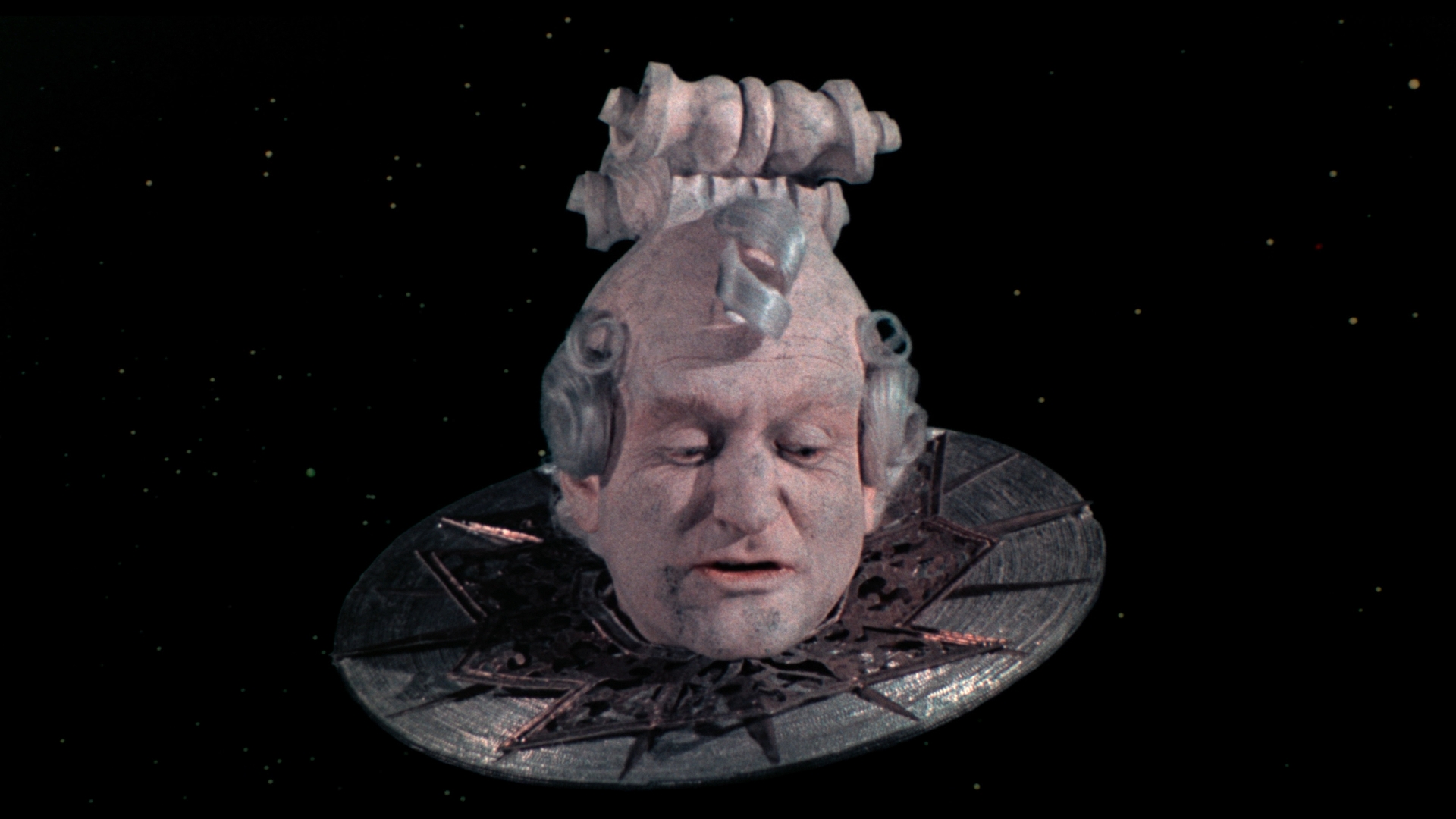
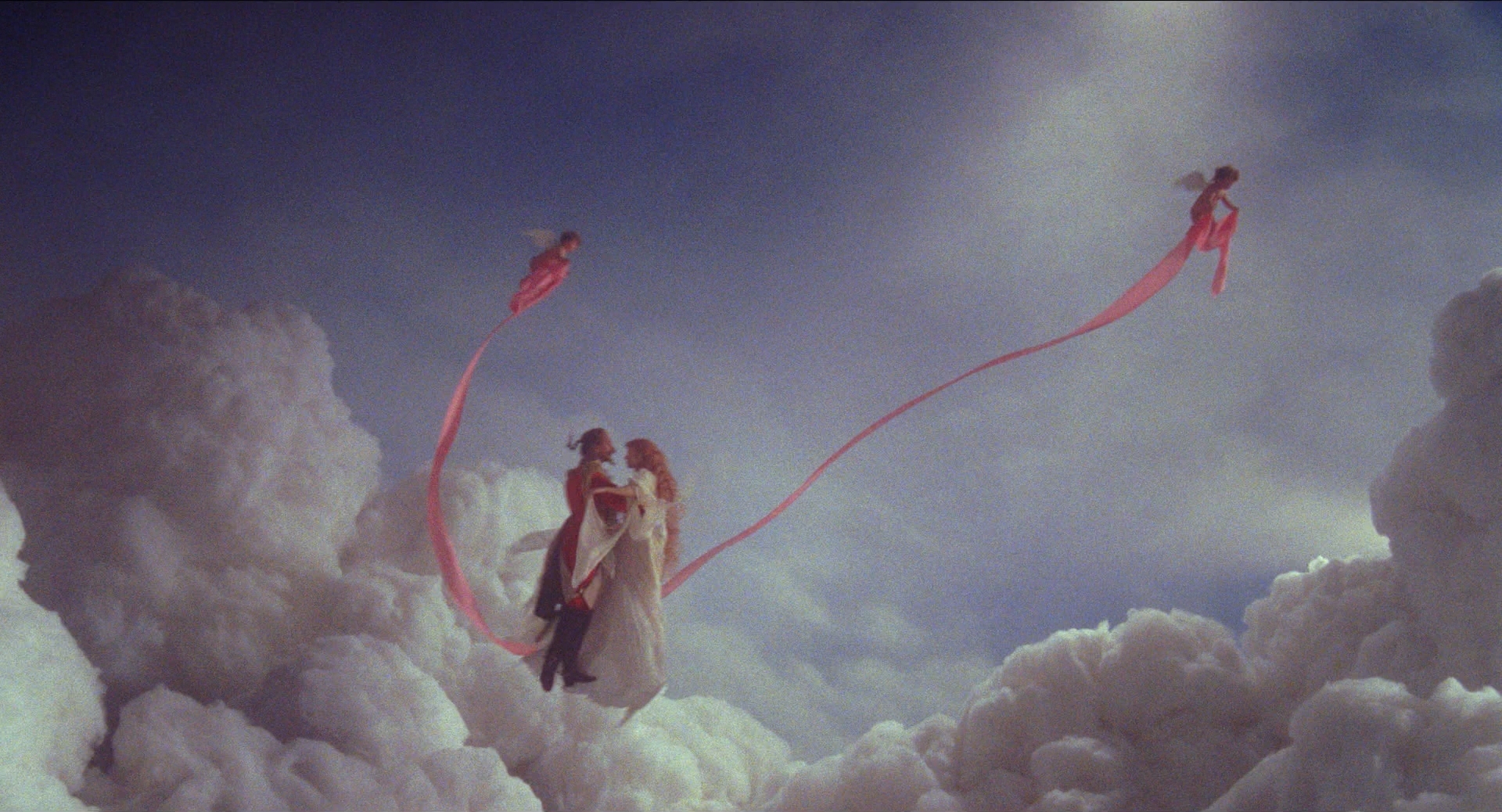
As should be expected from Gilliam, the film is a lavish affair, filled with amazing visuals and wild flights of fancy. Production design and photography were provided, respectively, by Dante Ferretti and Giuseppe Rotunno, both collaborators of Federico Fellini. Filming took place at the legendary Cinecittà Studios in Rome and at Pinewood Studios in England. Everything about the look of the movie is astounding, its deliberate artifice charming in all the best ways.
All the same, something about the picture just never comes together. The tone is a little shrill and the performances too over-the-top (Robin Williams most of all). The pacing drags and, frankly, it becomes exhausting to watch after a while. I can understand why test screening audiences, chosen at random with no idea what they’d be seeing, reacted so negatively to it. This is Gilliam at his most Gilliam-esque, a movie made for his fans and likely confounding to anyone else.
Likewise not unexpected for the director, production was chaotic. Sarah Polley would later describe it as “traumatic,” as Gilliam put the young actress in close proximity to physical danger with little supervision. Because he would repeatedly change his mind about entire scenes with no notice as he followed any new idea that came to his mind, even friend Eric Idle called making a movie with Gilliam “madness.”
Somewhat troubling in retrospect is the fact that, although she may have been 18-years-old at the time of release, Uma Thurman was only 17 during filming, knowledge of which makes her introductory scene a little uncomfortable.
The studio reported that production ran way over budget, though Gilliam disputes exactly how much so and claims he was used as a scapegoat for other business losses. Worst of all, this occurred during a regime chance at Columbia Pictures, with new management actively tearing apart and burying anything their predecessors had started, eager to claim the tax write-offs. As a result, The Adventures of Baron Munchausen was dumped into only a small handful of theaters with negligible promotion, and made almost no money at all.
Nevertheless, Terry Gilliam ultimately got to make the movie he wanted to make, and fans eventually found it through home video. Even if imperfect, arguably even one of Gilliam’s lesser works, this one film contains enough wonderment for a dozen others. That alone is an achievement worth savoring.
The 4K Ultra HD Blu-ray
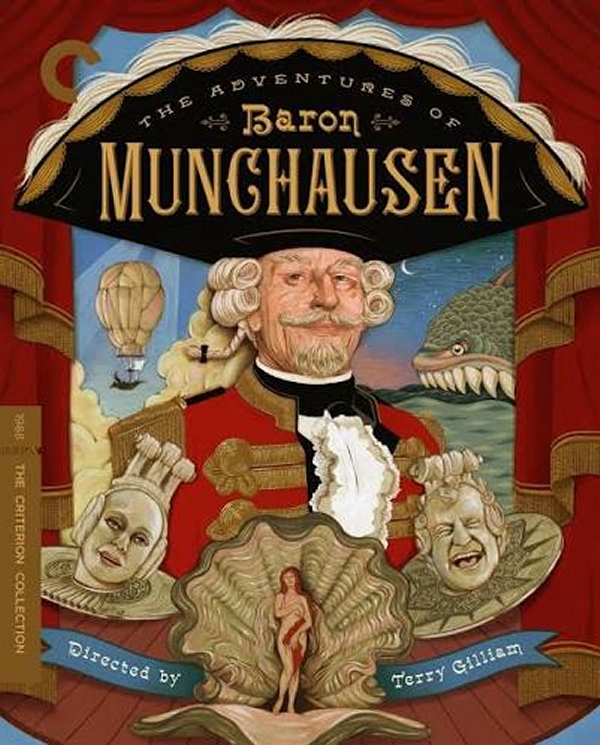
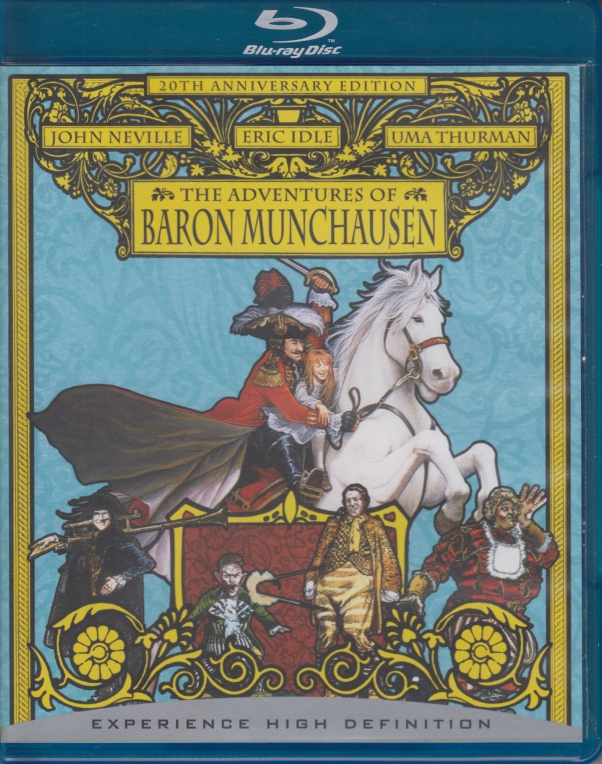
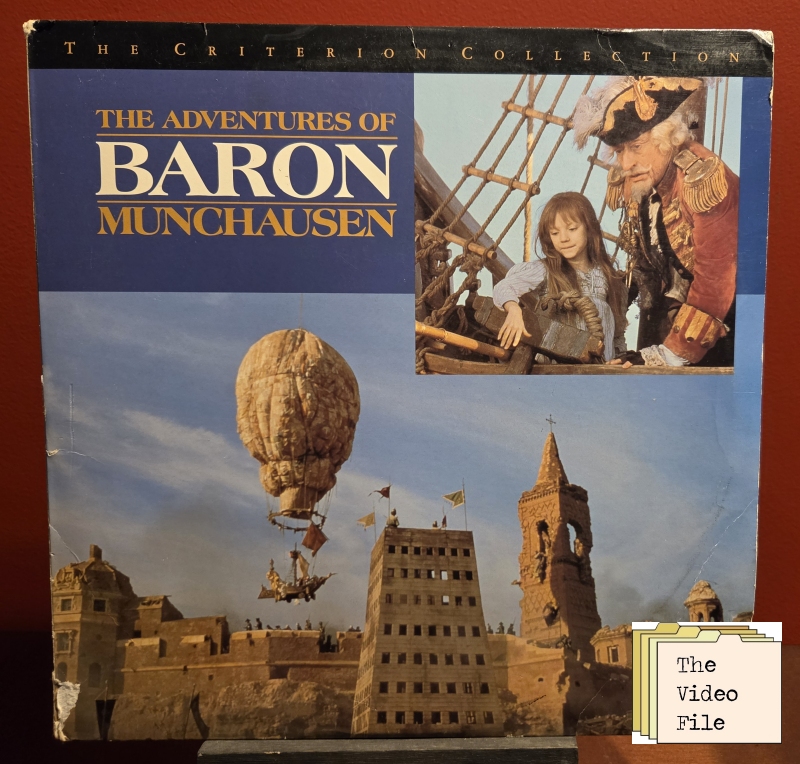
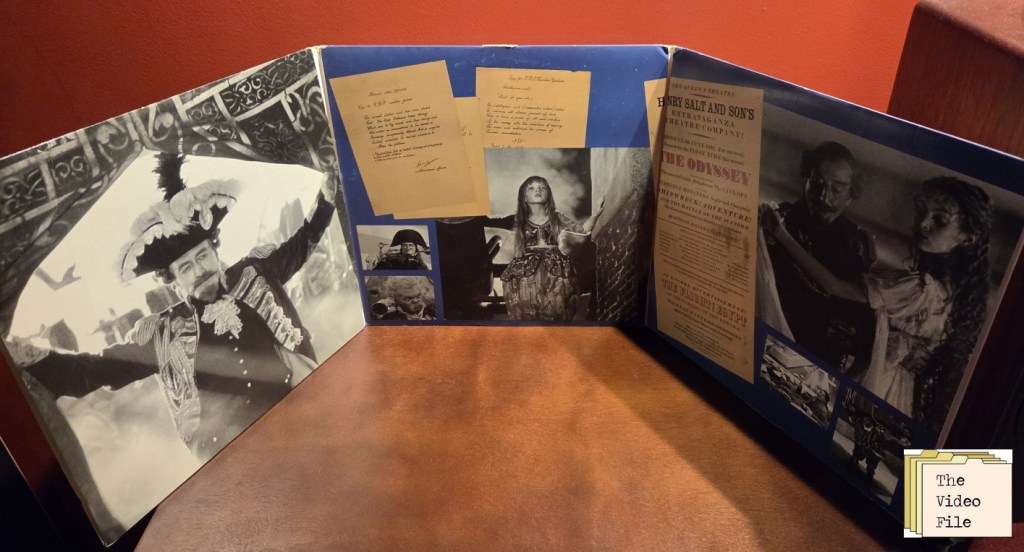
The Criterion Collection has long had an affiliation with director Terry Gilliam, and first released The Adventures of Baron Munchausen way back in 1992 on the Laserdisc video format. Although the label wasn’t able to license the film’s distribution rights for DVD or early Blu-ray, a 4K Ultra HD Blu-ray (with accompanying regular Blu-ray) arrived in early 2023 as spine #1166. This followed a previous Blu-ray released by Sony Pictures in 2008.
Transfer notes in the booklet within the Criterion Edition state that the 4K master was provided by Sony, with “color approval by director Terry Gilliam,” but don’t indicate when it was created or whether it’s the same master from the earlier Sony Blu-ray. Comparing the older Blu-ray from Sony to the newer Blu-ray from Criterion (keeping in mind that I don’t have the ability to take 4K screenshots yet), I would say that, at the very least, both derive from the same original film scan, with a very mild difference in color and contrast grading that probably won’t be noticeable to most viewers during normal playback.
At first glance, screenshots from the Sony Blu-ray may look sharper and more detailed than the equivalent Criterion 1080p disc. However, it appears that Sony used some artificial sharpening that Criterion didn’t. While some scenes on the Sony disc look pretty good, others have a gritty texture or visible edge enhancement halos not present on the Criterion disc.
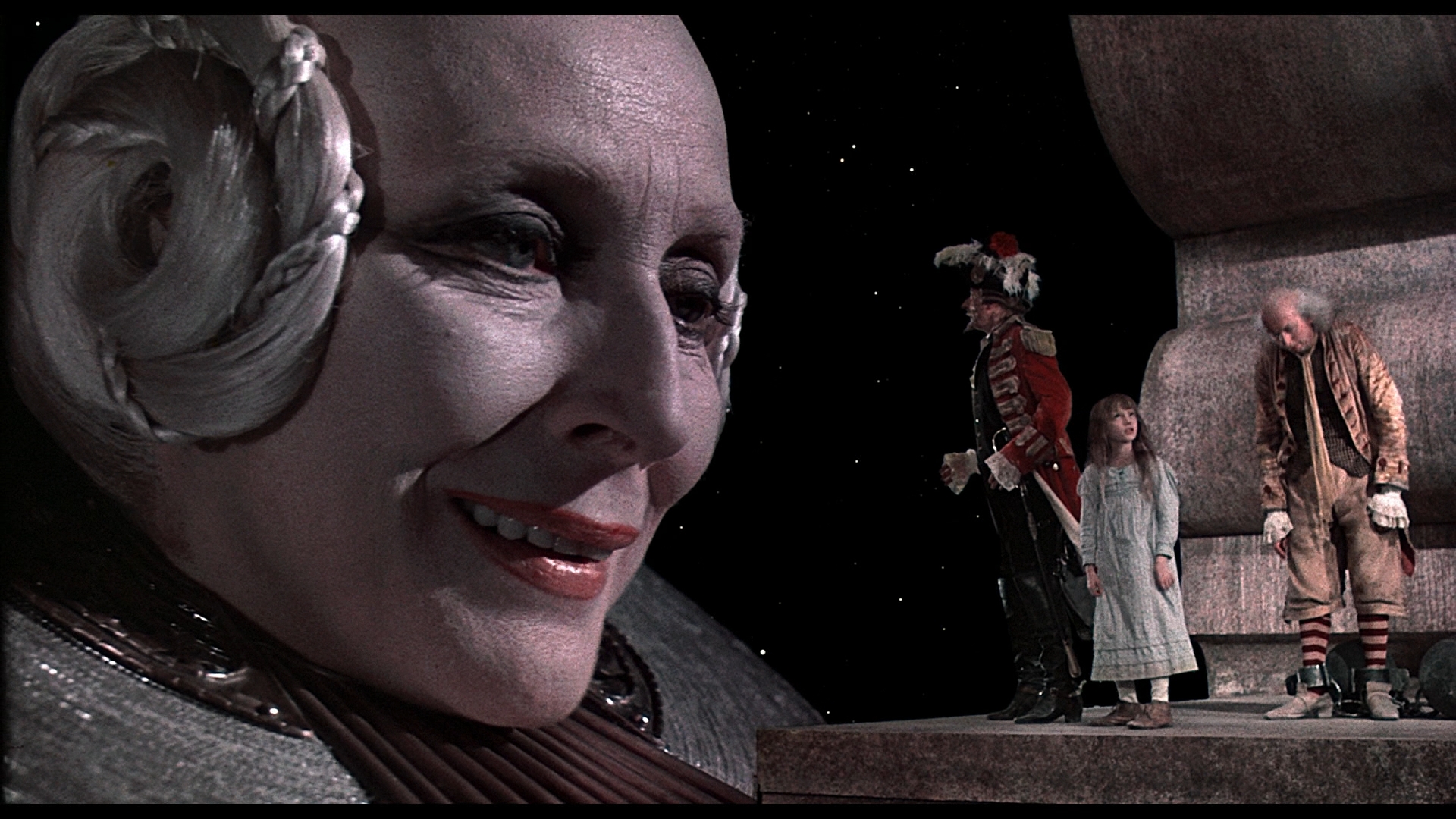
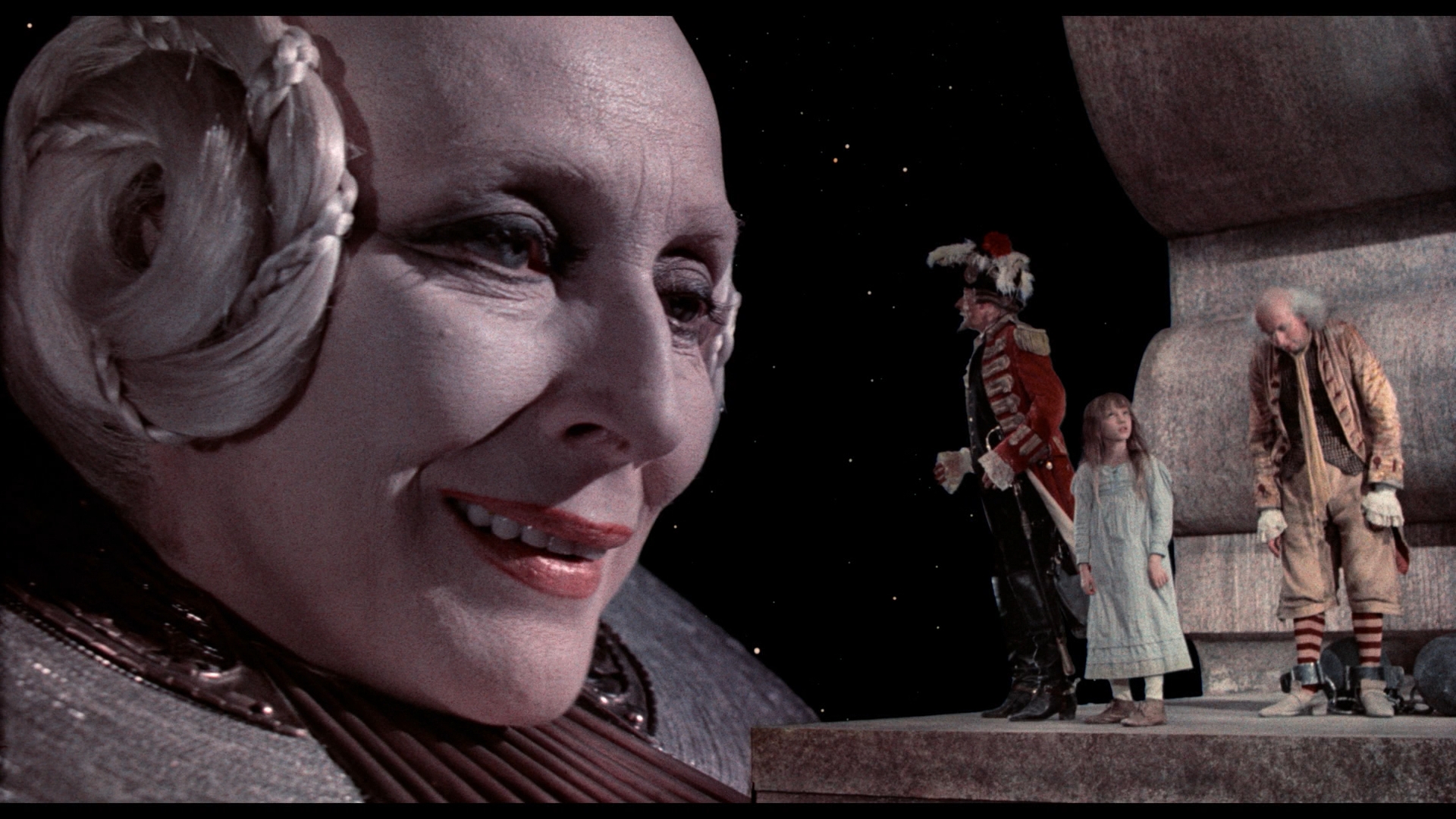
In fact, when I played around with the Criterion screenshots in a photo editor, I found some pretty basic filters that made the Criterion shots very similar to Sony’s. On balance, the Criterion Blu-ray without the extra processing looks more natural.
For its part, Criterion’s 4K disc brings out more of that texture and detail without the sharpening artifacts. The difference between 1080p and 4K isn’t huge for this movie, but some scenes really benefit from the extra resolution.
Still, I have one serious reservation about the Criterion disc. At least on my projector, the HDR grading makes the entire movie look overly dark, even at the highest tone-mapping setting I have available. The Blu-ray is a little brighter and more pleasing in that regard. HDR and Wide Color Gamut don’t add much to the movie in any case. Colors certainly seem like they could or should be richer, and no highlights of particular note grabbed my eye. As it is, I like the extra detail 4K brings, but prefer the grading on the Blu-ray. Neither is perfect, in my view.
That said, viewers with Dolby Vision-capable televisions may get different results. This could very well be one of those discs authored incorrectly to reserve data in the FEL layer that doesn’t have any technical need to be there, effectively hobbling the HDR10 portion. I can’t say that definitively, but it may be a possibility.
On the audio front, the remixed 5.1 soundtrack (encoded here in lossless DTS-HD Master Audio format) is stated to have been created in 2004, which seems weird because I can’t find any corresponding DVD release around that time. The movie’s original Dolby Stereo mix is not provided.
The 5.1 track on this disc is bad. I have to say that straight away. Honestly, it sucks. Not because of any overly-gimmicky surround effects; surround presence is mild at best. No, it just sounds incredibly flat and dull, overly noise reduced and rolled-off. Listening to it is fatiguing and makes the movie far less enjoyable.
Aside from the feature audio commentary (on both 4K and Blu-ray), other supplemental content is found on a second Blu-ray dedicated to extras. I’ve tried to break everything down to the best of my ability.
- New to Criterion as of 2022 (released in 2023):
- 16-minute featurette on special effects
- Video essay by journalist David Cairns about the history of the Munchausen character
- 1988 preview screening audience reaction cards dismissively (but hilariously) read by Terry Gilliam
- Unused marketing taglines for the film read by Gilliam, some more amusing than he gives them credit for
- Meet Baron Munchausen, a vintage 4-minute press kit interview with Gilliam
- Vintage 8-minute press kit promo
- 1991 episode of The South Bank Show profiling Terry Gilliam (47 min.)
- The Miracle of Flight, a very Python-esque animated short from 1974 by Gilliam (5 min.)
- Booklet essay by critic Michael Koresky
- Recycled from the 2008 Sony Blu-ray:
- Audio commentary by Gilliam and co-screenwriter Charles McKeown
- The Madness and Misadventures of Munchausen, a 72-minute making-of documentary
- Storyboards for three unfilmed scenes with voice acting by Gilliam and McKeown
- Found on Sony’s 2008 Blu-ray but originating on the 1992 Criterion Laserdisc:
- Four filmed deleted scenes with Gilliam commentary
- Recycled from as far back as the 1992 Criterion Laserdisc:
- Theatrical trailer (in standard-definition)
Unfortunately, not everything made the transition from earlier home video releases.
- Exclusive to the 2008 Sony Blu-ray:
- Interactive graphics and trivia track
- Exclusive to the 1992 Criterion Laserdisc:
- Solo audio commentary by Terry Gilliam
- Special effects compositing, including outtakes from the King of the Moon
- Still galleries of posters, advertising materials, production sketches, paintings, models, and costume tests
- Analysis of the film’s script
- Interviews with Charles McKeown, producer Thomas Schühly, production designer Dante Ferretti, and costume designer Gabriella Pescucci
- Historical notes on the Munchausen character, with clips and stills from previous film adaptations
Note: Screenshots on this page were taken from the Criterion and Sony Blu-ray editions of the film and are used for illustration purposes only.
Related
- Film from Z to A Article Index
- Terry Gilliam
- Robin Williams
- Uma Thurman
- Jonathan Pryce
- Sting

