
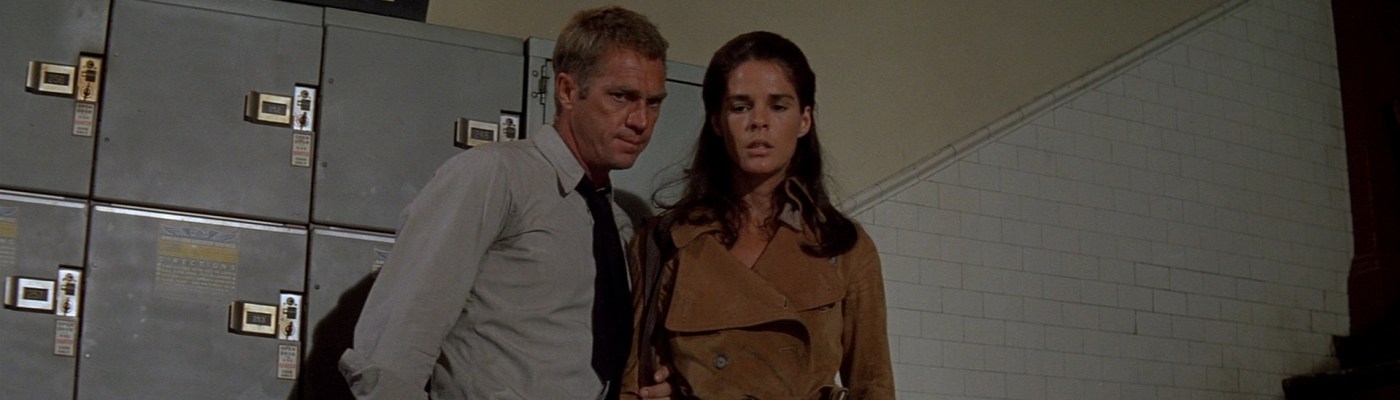
A heist thriller starring Steve McQueen near the height of his career, directed by Sam Peckinpah, and scripted by Walter Hill, based on a book by crime novelist Jim Thompson, The Getaway surely sounds like a can’t-lose combination of talent. Critics of the day felt otherwise, but audiences ate it up, making the film one of the top box office hits of 1972. Retrospective reviews from recent years have been much kinder to the movie than those during its release, but The Getaway still feels disjointed, like a lesser Peckinpah project thrown together only for the money.
To that end, the film was the most profitable in all of the director’s troubled career. A famously combative alcoholic, Peckinpah was drunk through most of the production (not uncommon for him) and battled frequently with star McQueen, who had negotiated with the studio for right of final cut himself. In interviews afterward, the director sounded displeased with aspects of the finished product, but the financial windfall it brought him undoubtedly tempered those feelings.
| Title: | The Getaway |
| Year of Release: | 1972 |
| Director: | Sam Peckinpah |
| Watched On: | Blu-ray |
| Also Available On: | Various VOD rental and purchase platforms |
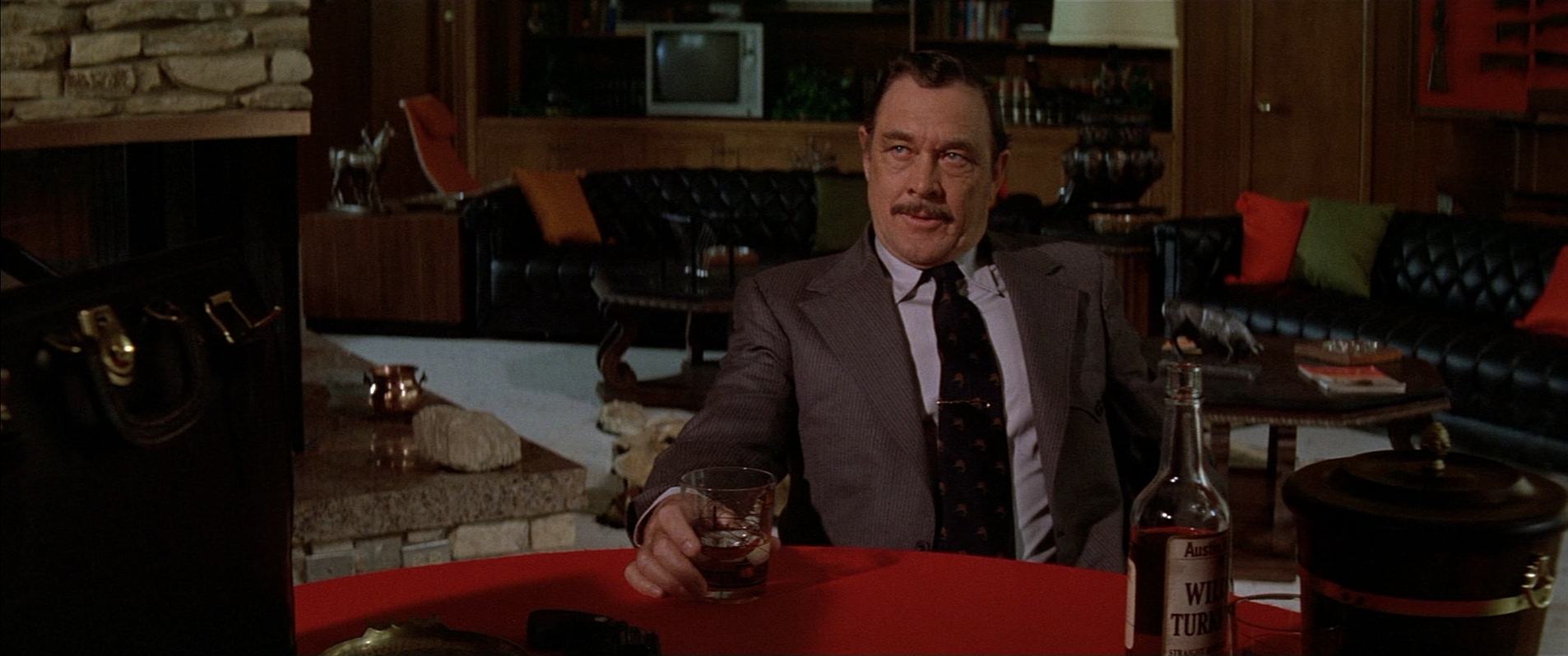
McQueen’s character in the movie is called “Doc” McCoy. If any Star Trek reference was meant by that, it’s not evident from anything on screen. A convict with several years left on his prison sentence, Doc gets sprung early by the intervention of influential businessman Jack Benyon (Ben Johnson from Peckinpah’s The Wild Bunch). Benyon is of course corrupt to his core, and wants Doc to pull off a bank robbery for him worth a half-million dollar payday. The job shouldn’t be any problem for Doc, nor for his wife Carol (Ali MacGraw, fresh off Love Story and trying to shed that good-girl image), both of whom are meticulous planners in the art of armed robbery. The only catch is that they’re not allowed to choose their own crew of people they trust. Benyon insists they must work with his men.
That’s obviously a big red flag, but Doc concedes, knowing that his only other option is going back to prison. No surprise, the job goes south pretty quickly. The rest of the movie is then spent with Doc and Carol on the run, from the police on their tails and from Benyon’s mob. The most duplicitous of Benyon’s goons, a slimeball named Rudy (Al Lettieri), also wants revenge after his attempt to double-cross Doc doesn’t work out as well he’d hoped.
With that setup, one might expect the film to be a high-octane thriller filled with car chases and shoot-outs. While it has those things in some measure, much of the movie is strangely lethargic, and makes lengthy detours where the characters don’t do much of anything except wait around and make obvious mistakes. By the big climax, the plot mechanics required to get Doc and everyone chasing him to all converge on the same shady hotel in El Paso don’t particularly make sense. Doc has already told Carol that he knows a trap is waiting for him there, yet he goes anyway and acts surprised when it happens. This suggests that the script was probably rewritten a few times during production.
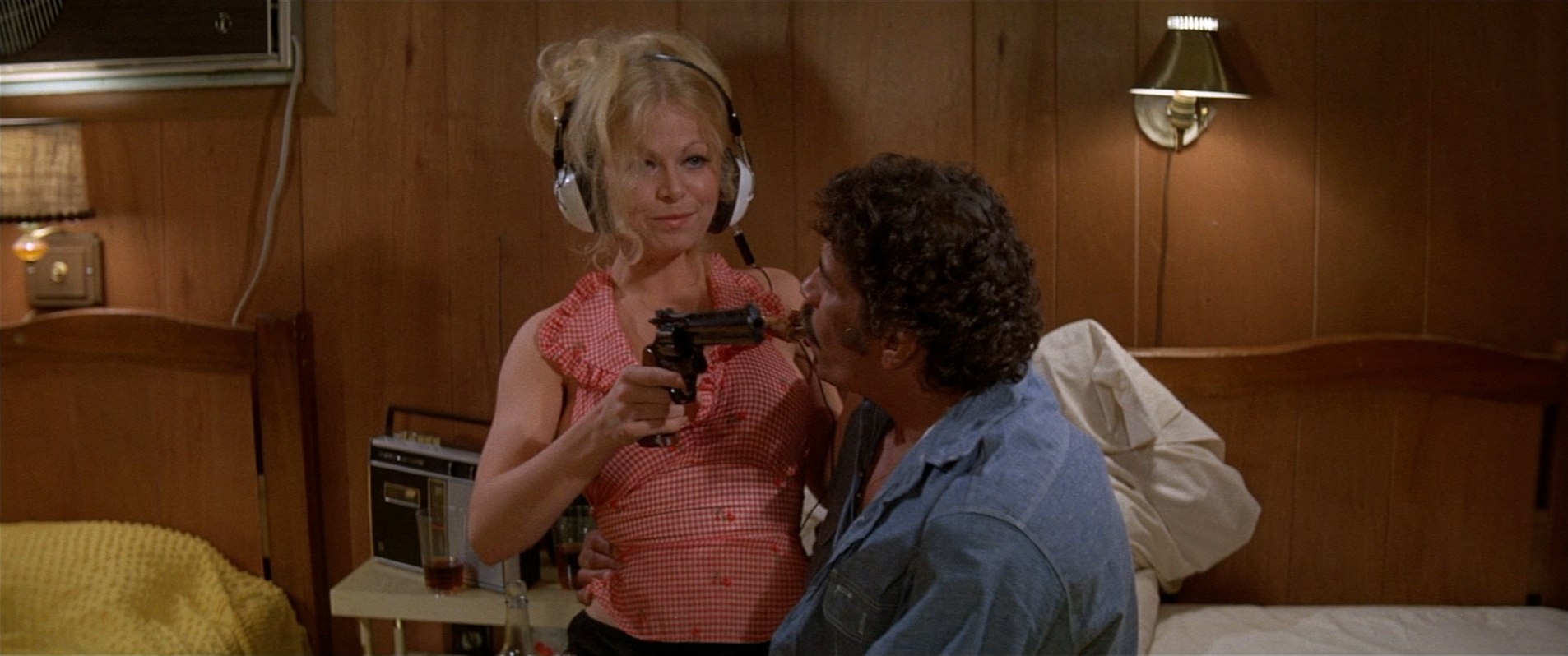
A bizarre subplot finds Rudy, wounded after a gunfight with Doc, kidnapping a doctor and his nymphet wife (Sally Struthers, young and vivacious). The latter falls for him almost instantly, cuckolding her husband and forcing the poor man to watch her have sex with Rudy while he’s tied to a chair in the room. The scene where she seduces Rudy by fondling the barrel of his pistol in a suggestive manner is disturbing in its erotic charge.
Neither director Peckinpah nor writer Walter Hill were ever subtle with misogyny in their respective careers. That’s evident in the Rudy storyline and in others with Carol. Peckinpah brings both Struthers and Ali MacGraw right to the edge of visible nudity for flimsy reasons in several scenes, just barely without crossing over, which must have protected his chances of getting a PG rating from the MPAA.
Yes, a very much adult crime thriller with a considerable amount of blood-soaked violence and sexual content received a PG rating in 1972. Ratings standards were different back then.
MacGraw took a lot of heat for her performance when the film was released, some of it unfair and some not. The actress looks lost in many scenes and has little chemistry with Steve McQueen, a feat that hardly seems possible. I expect that she was likely tormented by an abusive director and unprepared for such a chaotic shoot.
On the other hand, McQueen is as charismatic as ever. His well-tailored suit looks borrowed from his role in The Thomas Crown Affair and every shot of him uses the most flattering take (one of the things Peckinpah hated). Even when covered in piles of literal garbage, he still looks great and like a guy you’d want to be around.
When he actually seems invested in the project, Peckinpah directs the action scenes with energy and inventiveness, using the same rapid-fire, non-linear editing he perfected in The Wild Bunch. The final shotgun-blasting shoot-out is immensely tense and exciting, almost to the point where you won’t question how Doc carries around such an unlimited supply of ammunition without his blazer pockets bulging at the seams.
All told, The Getaway is a fun thrill ride worth a watch when the mood for a 1970s action movie strikes, but isn’t a classic for the ages. Then again, perhaps not every movie needs to be.
Misc. Trivia
Director Roger Donaldson (No Way Out) did a remake The Getaway in 1994, starring Alec Baldwin and his then-wife Kim Basinger. Once again scripted by Walter Hill, the remake was panned by critics and a box office flop that hasn’t seen much re-evaluation in the time since.
The Blu-ray
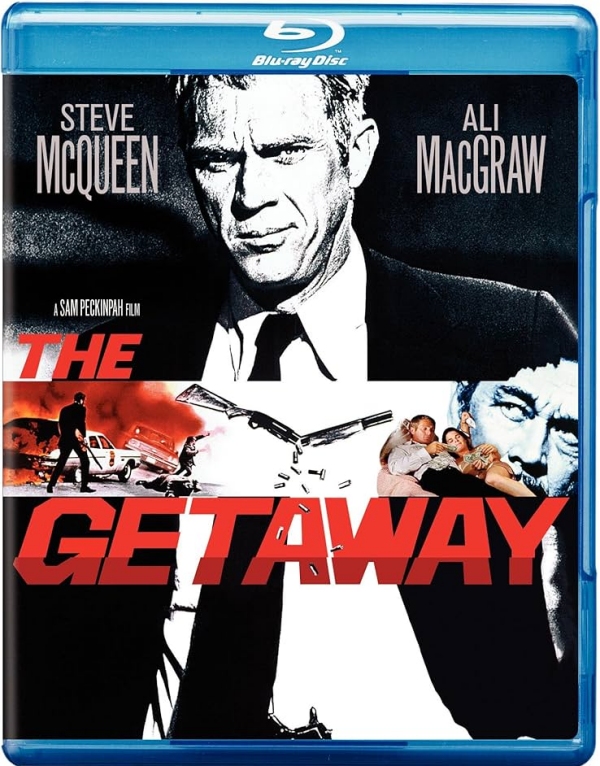
A Sam Peckinpah movie starring Steve McQueen seems like the sort of thing that will have to get remastered in 4K eventually. Sadly, until then, we’re stuck with an old Blu-ray that Warner Bros. released simultaneously on the now-defunct HD DVD format back in 2007. The disc isn’t necessarily all that bad for a dated high-def video master, but better is certainly possible.
Like many older Warner Blu-rays, the disc has no main menu and will start the movie unprompted. It’s also limited to only lossy Dolby Digital audio. On the video side of things, the image is both letterboxed and very mildly pillarboxed for an overall aspect ratio of 2.38:1. I don’t particularly understand the rationale behind this, but the bars on the sides are small enough that most viewers likely won’t ever notice them.
Contrast and colors are pretty good, though the bright red blood looks obviously fake. That may be a video transfer flaw, or might have been a requirement from the MPAA to secure the PG rating. Film grain appears poorly compressed and looks very noisy. Sharpness varies from scene to scene, some well detailed and others quite soft. Edge enhancement artifacts are noticeable in many of them, but aren’t too aggressive for the most part.
The lossy Dolby Digital mono soundtrack is very bright, sometimes shrill on the high-end, while the low-end is basically nonexistent. Gunfire is shallow and explosions are dull.
The most worthwhile of the bonus features on the disc is an audio commentary by the late Nick Redman (founder of the Twilight Time video label) with writers Paul Seydor, Garner Simmons, and David Weddle, all authors of books about Sam Peckinpah. Of milder interest is a half-hour featurette about Peckinpah and score composer Jerry Fielding. The so-called “virtual” commentary of old interview clips played over select scenes from the movie is quite dull, but not nearly as tedious as the bank robbery scene played with only music and sound effects, or the “alternate” isolated score that sounds pretty much the same as the regular score and is used extremely sparsely over the course of the otherwise dead silent two-hour audio track.

