
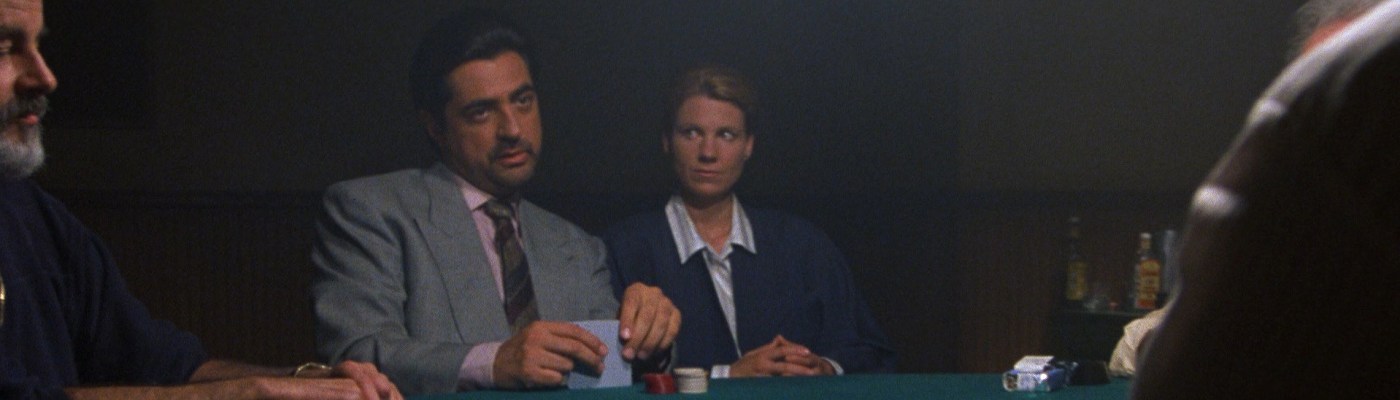
Con artists, and specifically con men, are a subject of much fascination for David Mamet, the acclaimed playwright behind Pulitzer-winning drama Glengarry Glen Ross. That 1983 play (and its subsequent 1992 movie adaptation) depicted conniving real estate agents trying to sucker unwitting clients into buying worthless property by any means necessary, not the least of which include lying and cheating to score the sale. In a similar vein, after he was lured to Hollywood, Mamet made his directorial debut with House of Games, a twisty thriller about professional hustlers able to gain the confidence of just about any victim, even those who ought to know better.
1987 was something of a banner year for Mamet. In addition to directing his first movie, he’d also written the screenplay for Brian De Palma’s blockbuster smash The Untouchables. As for House of Games itself, the film was well-received critically, winning a writing award at the Venice Film Festival. Roger Ebert even named it his choice for best picture of the year. I don’t know that I’d go quite that far, but the movie is still entertaining and holds up a a fun caper four decades later.
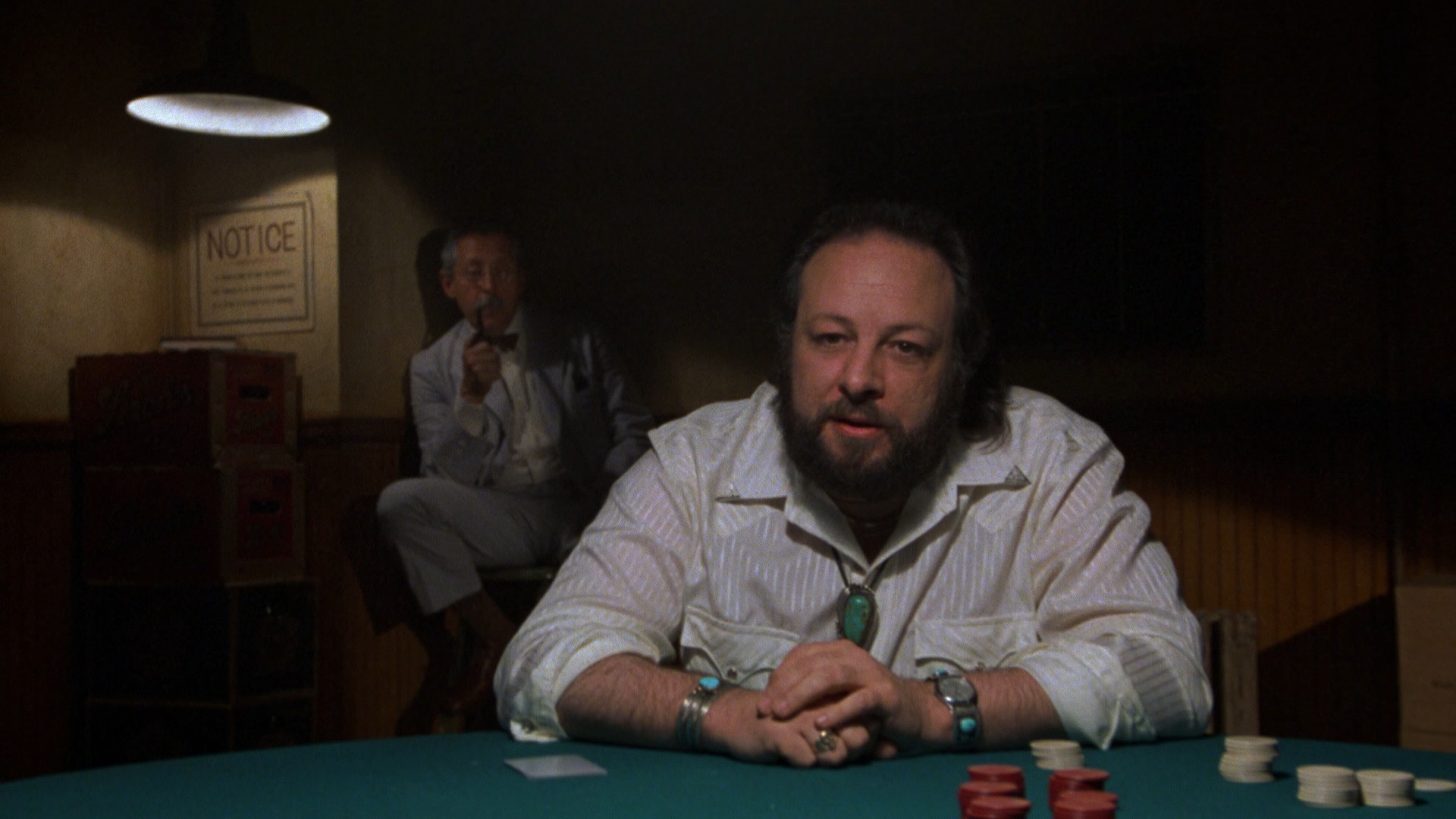
| Title: | House of Games |
| Year of Release: | 1987 |
| Director: | David Mamet |
| Watched On: | Blu-ray |
| Also Available On: | Amazon Prime Video Kanopy MGM+ Tubi Various VOD rental and purchase platforms |
Dr. Margaret Ford (Lindsay Crouse, Mamet’s wife at the time) is a very successful psychologist who’s just written a self-help book to some acclaim. Choosing to maintain her practice, Ford is troubled by one particular patient, a young compulsive gambler who tells her he lost a lot of money he doesn’t have to some bad men and fears they’ll harm him if he doesn’t pay. Believing she can sort out this situation herself, Margaret goes to a gambling hall called the House of Games, where she acts tough (without revealing her relationship) and threatens to involve the police unless her client’s debt is forgiven.
Mike (Joe Montegna) agrees on one condition, that Margaret pretend to be his girlfriend for the night and help him win a high-stakes game of poker. To do this, he teaches her a few basic tricks for reading his opponents’ tells to figure out if they’re bluffing. When that doesn’t go so well, Ford feels guilty for failing Mike and almost covers his losses with her own money, until she realizes the whole game was a set-up and everyone at the table had been playing her all along.
Impressed that she caught on to their tricks so quickly, Mike takes Margaret under his wing and reveals many secrets of the confidence game. She’s fascinated by this, hoping to use the material to write a new book about psychological manipulation. Of course, she’ll eventually get invested enough to help Mike and his team pull off their biggest scam yet, for a potentially huge payday. She’ll also become entwined romantically with Mike and try to run off with him when the scheme goes south.
One rather significant problem with House of Games as a movie is that anyone who’s seen The Sting or just about any other con artist picture should be able to figure out where all this is heading pretty early on. The script also has one twist too many, leaving viewers to expect another revelation that never actually manifests. Even so, the road getting there is well plotted and filled with Mamet’s famous dialogue cadence, which is uniquely and unmistakably his own. The way words flow out of the characters’ mouths is more writerly than realistic, but it’s a delight listening to all the same.
Unfortunately, some of the actors are better at delivering it than others. Joe Mantegna and Ricky Jay are terrific, fully understanding the way Mamet’s mind works and embracing the artificiality of his world. J.T. Walsh and William H. Macy also show up in smaller roles to work their magic. However, a few of the other supporting players struggle to make the lines sound natural or convincing when speaking them aloud.
The weakest link in this chain, sadly, is Lindsay Crouse. Her performance comes across stiff and stilted, obviously reading lines written for her to say rather than truly inhabiting the character. The consequence of this is that it’s hard to care much for Margaret or feel bad for her when she’s duped. I’m left wondering how a person supposedly so smart could be gullible enough to trust people she knows aren’t trustworthy. Perhaps that’s actually the point of the story, but Crouse never sells it. Frankly, I have trouble believing the actress had been nominated for an Oscar just two years earlier.
Mamet would continue to have this problem later in his career, repeatedly casting his next wife, Rebecca Pidgeon, in movies where she couldn’t keep up with the other actors around her. I guess love can make one blind to things like this.
Nevertheless, David Mamet would go on to write and sometimes direct a lot of movies, including a couple more on the con artist theme. Personally, I think 1997’s The Spanish Prisoner is a refinement on the things Mamet learned from House of Games and is a better movie overall, but House of Games remains enjoyable despite some of its flaws.
Mamet’s increasingly toxic behavior and personal views in real life are a longer conversation for another day.
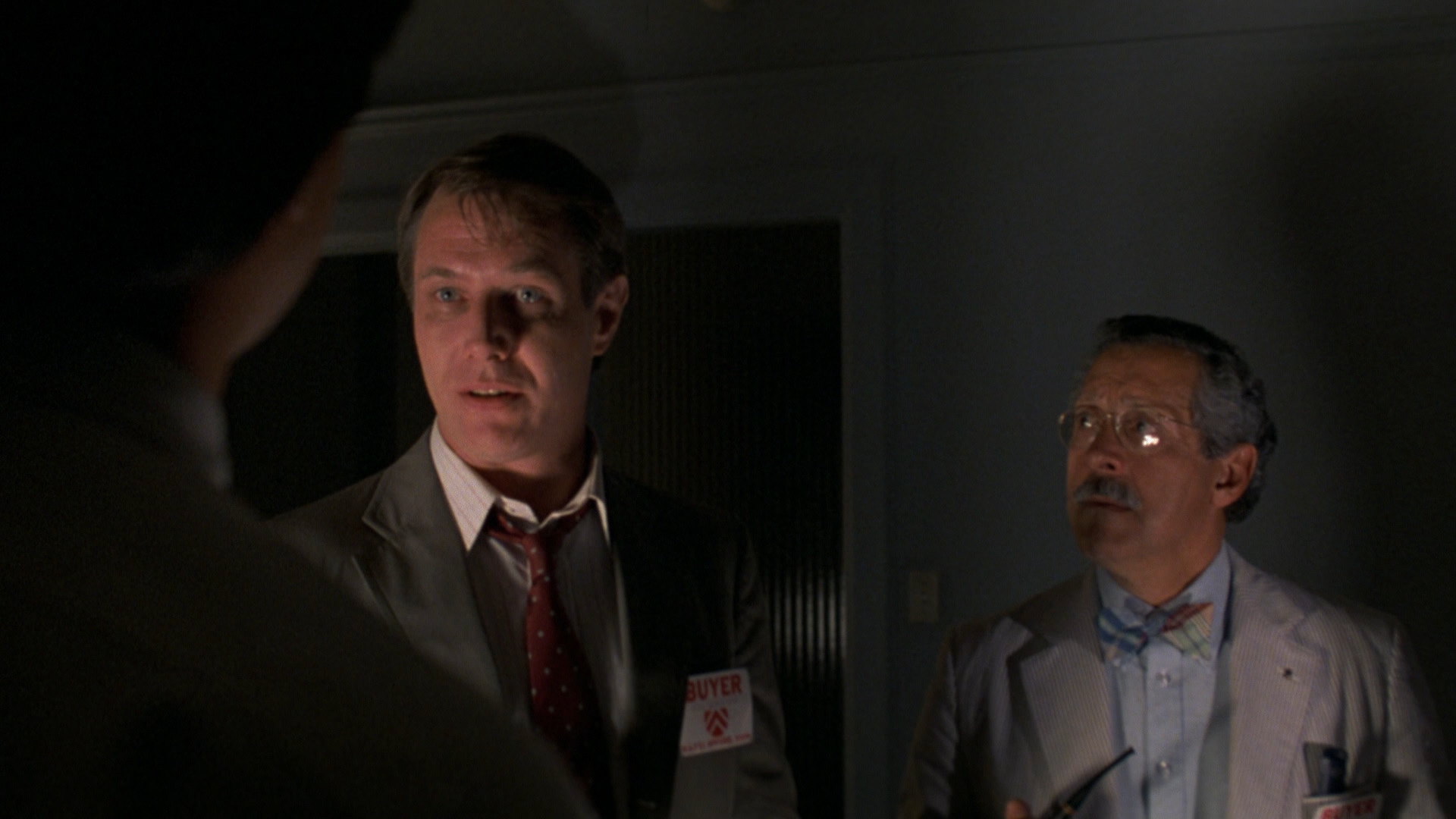
The Blu-ray
House of Games arrived on Blu-ray from the Criterion Collection in 2019 as spine #399, following a prior DVD release from the label in 2007. As of this writing, no 4K Ultra HD edition has been announced. I wish one were, because this movie could use a remaster.
The Blu-ray case came with a “Director Approved” sticker featuring David Mamet’s signature, and claims that the high-definition transfer was supervised by Director of Photography Juan Ruiz Anchía. The enclosed booklet further specifies the master was scanned from a 35mm Interpositive. Nowhere do either state how old it is.
Pointedly, the description on the case omits the words “new” and “restored” when describing the transfer, as opposed to the way that bullet point was worded on the back of the 2007 DVD. The movie is presented in a 16:9 full-screen aspect ratio, slightly opened up from the theatrical 1.85:1. In more recent years, Criterion typically respects the theatrical ratio unless instructed otherwise by the filmmakers (which admittedly could have happened here).
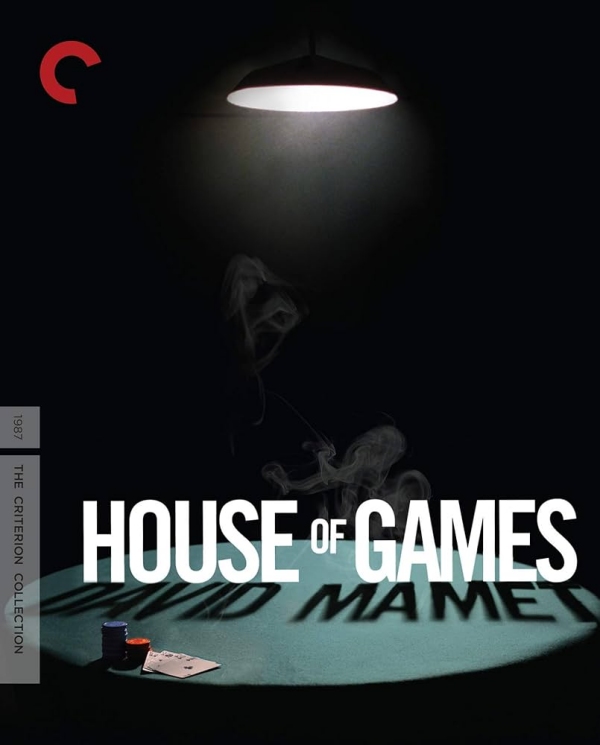
In its defense, the image has pretty nice colors and contrast, and probably looked fine in standard-definition a couple decades ago by the expectations of the day. That’s about as much nice as I have to say about it. Picture quality is otherwise very soft and lacking detail, to the point that it almost looks like the camera was out of focus for the entire movie. Film grains is also noisy as hell and looks awful. Were this movie actually scanned and mastered in 2019, surely it would have looked much better than this.
The soundtrack is only offered in PCM mono. It starts out a little hissy, but either that tones down after a while or I just stopped noticing it. The movie is almost entirely dialogue, and makes pretty effective use of silence in many scenes. That dialogue and other sound effects are crisp and clear enough for what they need to be. Music only comes in subtly, but has a small amount of bass here or there.
Bonus features all appear to be recycled from Criterion’s 2007 DVD. These include an audio commentary by David Mamet and Ricky Jay, interviews with Lindsay Crouse and Joe Montegna (15 minutes each), a 25-minute vintage making-of piece shot during production, storyboards for an alternate con scene that was never filmed, and a trailer. The accompanying booklet contains an essay by film critic Kent Jones, plus a lengthy excerpt from Mamet’s written introduction to the published screenplay.

