
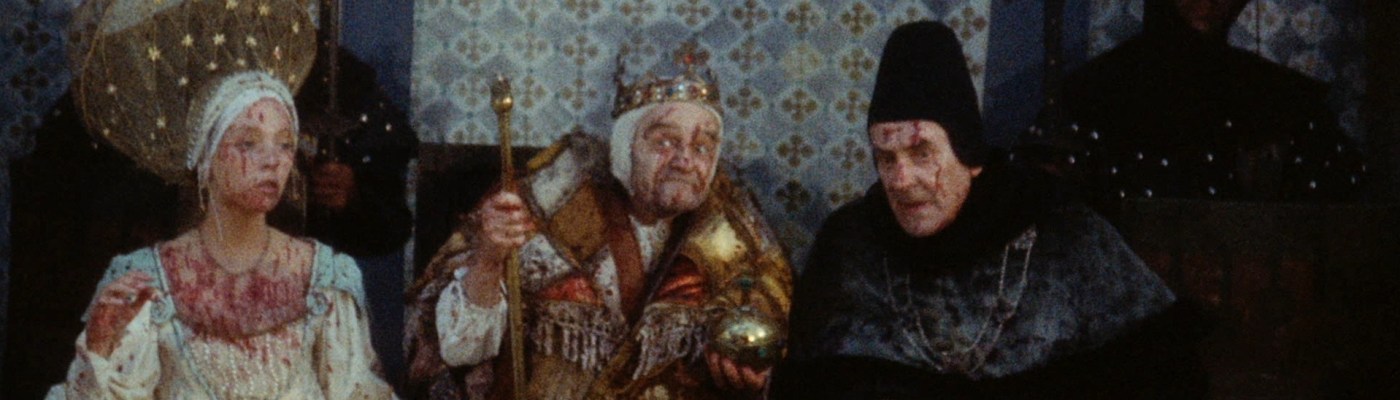
During an early scene in Monty Python and the Holy Grail, a Medieval peasant woman digging in a pool of mud calls up to her son (Michael Palin), “Dennis, there’s some lovely filth down here!” Wallowing in filth is the best either of them can hope for, and is likely better than their current circumstances. That scene is, essentially, the entire basis for director Terry Gilliam’s 1977 follow-up feature, Jabberwocky, which could almost be thought of as a spiritual sequel, or perhaps prequel, to Holy Grail.
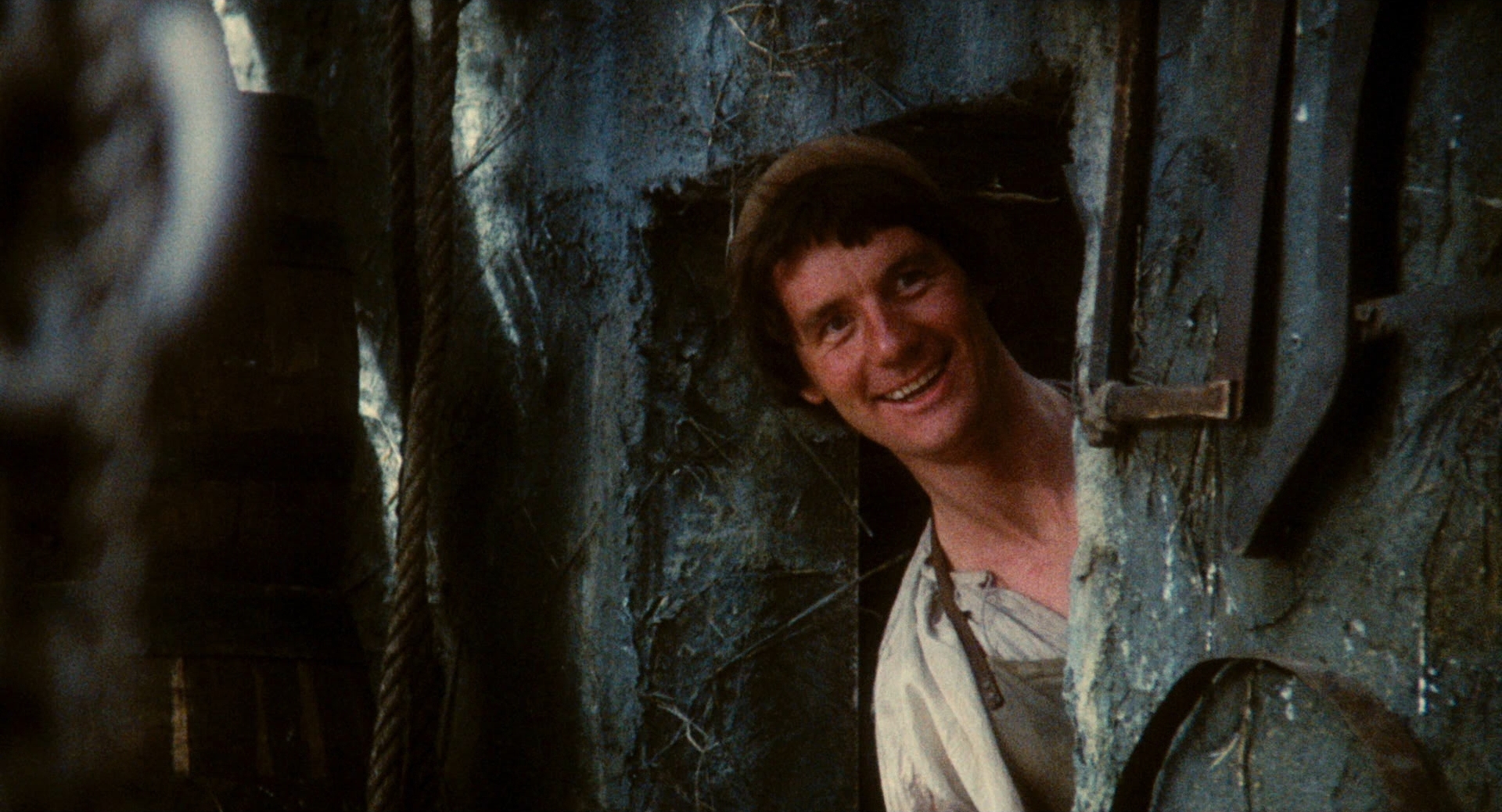
Jabberwocky is likely best, or only, known as the first movie Gilliam directed on his own, outside the Monty Python troupe. He certainly didn’t stray very far. The film stars Python member Michael Palin, once again playing a man named Dennis (though very differently), and much of the humor is decidedly Python-esque. That being said, don’t go into it expecting a forgotten comedy classic or you’ll undoubtedly leave disappointed. To be honest, you probably will anyway.
| Title: | Jabberwocky |
| Year of Release: | 1977 |
| Director: | Terry Gilliam |
| Watched On: | Blu-ray |
| Also Available On: | The Criterion Channel Amazon Prime Video Kanopy Pluto TV Various VOD rental and purchase platforms |
The title Jabberwocky was taken from a famous nonsense poem found in the pages of Lewis Carroll’s 1871 novel Through the Looking Glass. The poem itself is comprised mostly of made-up words and was intended as a satire of pretentious literary works and criticism. Far from a straight adaptation, which would seem impossible, Gilliam took from the poem only the most basic framework of story (however unintelligible) about the slaying of a monster during the Middle Ages.
In the film version, a horrific dragon-like creature (unseen until the end) terrorizes the English countryside, gobbling up anyone foolish enough to invade the forest where it lives. The desperately poor and starving peasants of the land seek safe haven in a walled city where the king lives, only to be refused by guards at the gate. In a nearby town, a naïve and utterly doltish barrel-maker’s son (Palin) is disowned by his dying father and must strike out on his own to hopefully find gainful employment and a new path through life at that city. Initially rebuffed, Dennis manages to sneak in and get roped into a series of misadventures by the residents, blithely ignorant of anyone’s intentions or actions, no matter how awful they may be for him. Eventually, he inadvertently becomes squire to a knight sent out to kill the beast, a job he is not at all prepared for or even capable of handling.
Unlike Monty Python and the Holy Grail, which was largely built as an episodic series of sketches and set-pieces, Jabberwocky has a straightforward narrative structure with a clear beginning, middle, and end to the story, following one character’s escapades. Through the whole thing, Palin plays Dennis as a happy idiot, always optimistic and always oblivious to his own dire straits. Frankly, the gag wears thin pretty quickly. The film plays like a single Python sketch stretched out to 109 often tiresome minutes.
This early in his career, Terry Gilliam hadn’t quite found his cinematic voice yet and was only starting to feel it out. In its favor, the movie has a few clever ideas and a satirical streak straight out of the director’s Monty Python background. He amps up the muck and grime, piss- and shit-covered degeneracy of the so-called Dark Ages beyond even what he’d done in Holy Grail. The monster, when finally revealed, is a surprisingly impressive invention. While obviously a man wearing an oversized puppet suit, it looks both cool and imposing.
More importantly, Gilliam’s portrayal of pompous aristocracy is perhaps the film’s strongest asset. The elderly, addle-brained ruler of the land, called King Bruno the Questionable, surrounds himself with enabling sycophants and allows his country to fall into ruin while he’s distracted by mindless pursuits. In that respect, the story is actually very timely right now.
Unfortunately, just about everything else is kind of a slog. Other than the monster, the movie has dicey production values and looks tossed together from odds and ends. Poor sound recording makes half the dialogue unintelligible. Worse, most of the humor isn’t particularly funny. It’s a one-note tone played over and over again to exhaustion.
If it remains of any interest at all, Jabberwocky is a stepping-stone work that shows unmistakable signs of the filmmaker Terry Gilliam would later become. From that perspective, fans (myself included) may find it fascinating. As a movie in its own right, sadly, I’m left feeling that only the most forgiving of apologists could claim to actually like or enjoy it. Gilliam would make a huge leap forward with his next project, the still-delightful Time Bandits.
The Blu-ray
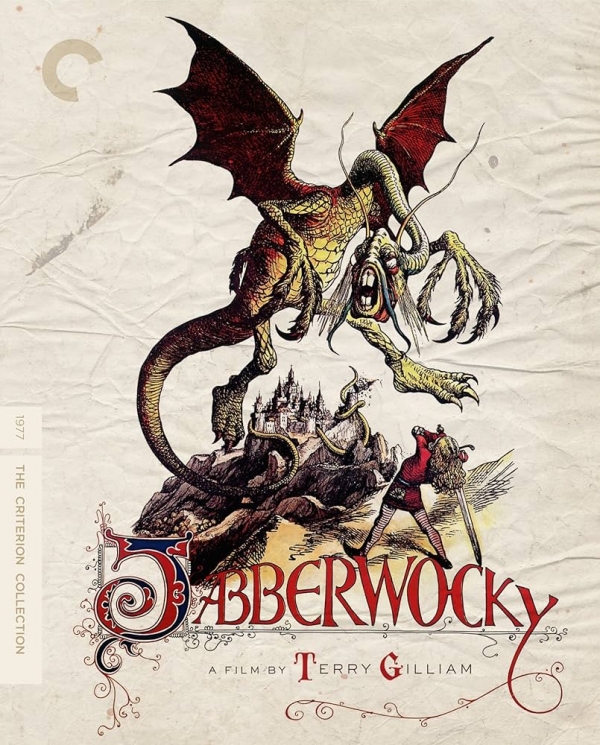
The Criterion Collection brought Jabberwocky to Blu-ray in 2017 as spine #903. As of this time, no 4K release has been announced, nor is one merited.
Transfer notes in the enclosed booklet state that the film was restored by the BFI National Archive and The Film Foundation, with funding from the George Lucas Family Foundation. The camera negative was scanned at 4K resolution, with digital image repair and other manipulation performed by L’Immagine Ritrovata, which has been responsible for a lot of controversial revisionist work over the years. Nevertheless, Terry Gilliam signed off on the completed product.
Jabberwocky was a very inexpensive movie that now looks like someone has tried very hard to make it appear less inexpensive, to decidedly uneven results. The soft-focus photography seems to have been digitally sharpened, greatly emphasizing the coarse layer of grain over most scenes. Contrast is also obviously boosted, crushing shadows to near impenetrability. The 1.85:1 image compares very poorly to Sony’s restoration of Monty Python and the Holy Grail, which had some issue of its own but definitely looks better than this.
The only audio option on the Blu-ray is a DTS-HD Master Audio encoding of a 5.1 remix created for DVD in 2001. The original mono is not represented. The 5.1 track has sharp sound effects and booming bass, and I’d guess that most of the original effects were replaced with newer substitutes. They’re very loud and often drown out the weak dialogue, which is suppressed low and difficult to hear in many scenes.
Among the bonus features, an audio commentary by Terry Gilliam and Michael Palin first appeared on DVD, as did seven minutes of sketch-to-screen comparisons. Audio excerpts from an interview with cinematographer Terry Bedford date from 1998. New as of 2017 are a 40-minute making-of documentary called Good Nonsense, and a 14-minute interview with the special effects artist who made the Jabberwock creature.
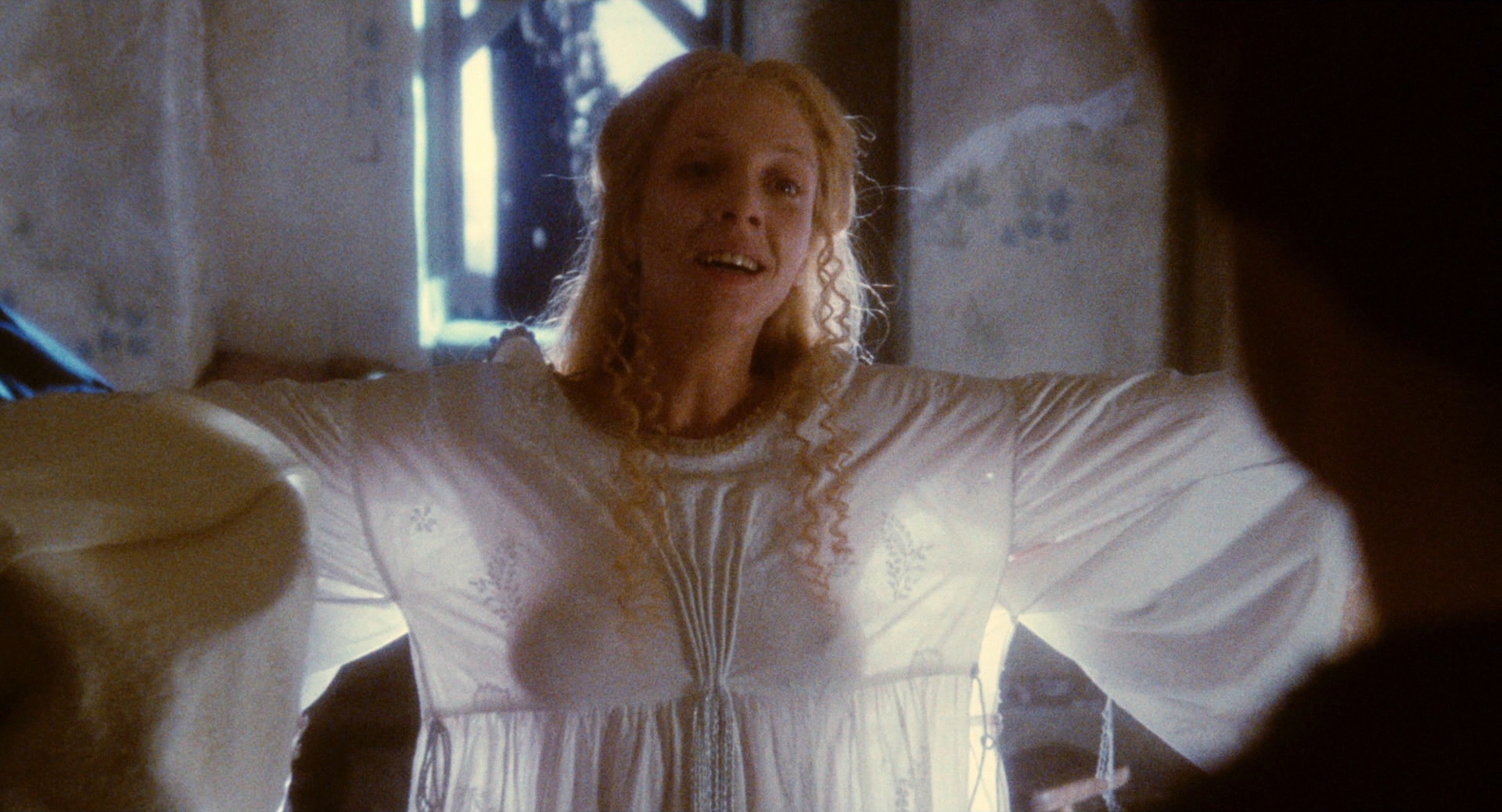
Also present are a trailer, an alternate opening that played with the film’s UK theatrical release, and a reading of Lewis Carroll’s original poem by Michael Palin and actress Annette Badland (who played the disinterested object of Dennis’ affection).
A text version of that poem is included on the interior side of the cover art in the clear keepcase. The accompanying booklet features a lengthy essay by critic Scott Tobias.

