

Despite effectively kicking off the modern era of superhero blockbusters with its first movie in 2000, Fox’s X-Men franchise suffered serious quality swing issues with later installments and started to feel like an also-ran when competing against the even more successful Marvel Cinematic Universe. The series seemed to bounce back a little with the prequel entry X-Men: First Class, which scored mostly solid reviews and fan acclaim in 2011. Nevertheless, that movie underwhelmed financially and left the X-Men still needing a decisive hit to get back on track.
The man to do that would be returning director Bryan Singer, the guy who’d launched this whole enterprise in the first place. His 2014 X-Men: Days of Future Past gave the mutant superheroes exactly the big summer blockbuster they needed to stay relevant against Marvel’s Avengers, and would sustain the series through some more turbulent ups and downs.
Off-screen, unfortunately, Days of Future Past arrived just one month after the first accusations of sexual abuse were lobbied against its director. At the time, the studio managed to downplay and skirt around that problem enough that it didn’t hurt the movie’s box office performance. Eventually, however, more claims would surface, ostracizing Singer from the entire filmmaking industry. Is any of that this movie’s fault? Probably not, but speaking as someone who’s not particularly invested in X-Men in the first place, I must admit that the controversy can’t help but color my opinion of the work.
| Title: | X-Men: Days of Future Past |
| Year of Release: | 2014 |
| Director: | Bryan Singer |
| Watched On: | Blu-ray |
| Also Available On: | 4K Ultra HD Blu-ray Disney+ Various VOD rental and purchase platforms |
Truth be told, I’d already lost interest in this franchise with the third movie, Brett Ratner’s disappointing X-Men: The Last Stand. So did many other fans. The failed spin-off X-Men Origins: Wolverine was somehow even worse. By those standards, I can understand why many viewers found First Class such an improvement and possibly a sign of even better things to come. Personally, I seem to be in a minority opinion of not especially caring for that one either. To me, First Class felt plodding and dull, and needlessly repetitive of storylines already previously covered. Admittedly, I haven’t watched it in a while. Perhaps I’ll feel differently if I ever give it another shot.
Based, somewhat loosely, on a famous 1981 comic book arc written by Chris Claremont in The Uncanny X-Men, the movie version of Days of Future Past represents an attempt to merge most of the cast and best elements from Bryan Singer’s first couple X-Men movies with those from the prequel First Class, while also ret-conning and writing out less popular installments like The Last Stand.
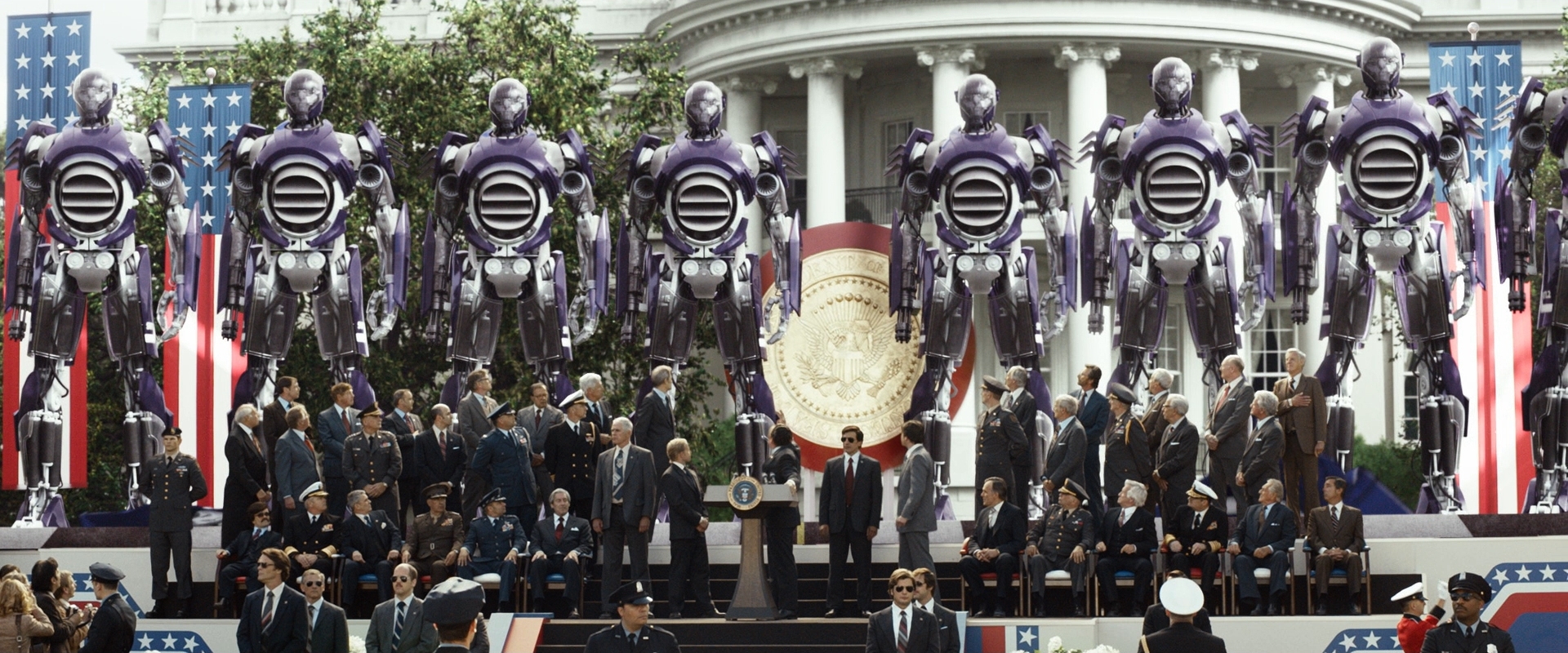
The story takes place in two time periods, starting in a dystopian future where most mutants have been wiped out by evil robots called Sentinels. Former enemies Professor Xavier (Patrick Stewart) and Magneto (Ian McKellen) have banded together along with a handful of other remaining survivors to make a… well, I suppose it’s another last stand. In the hopes of changing the timeline and preventing any of this from ever happening, Kitty Pride (Elliot Page, then still identifying as Ellen) uses her power to project the consciousness of Wolverine (Hugh Jackman, of course) back in time to 1973 to possess his younger body, which conveniently looks exactly the same because Wolverine doesn’t age.
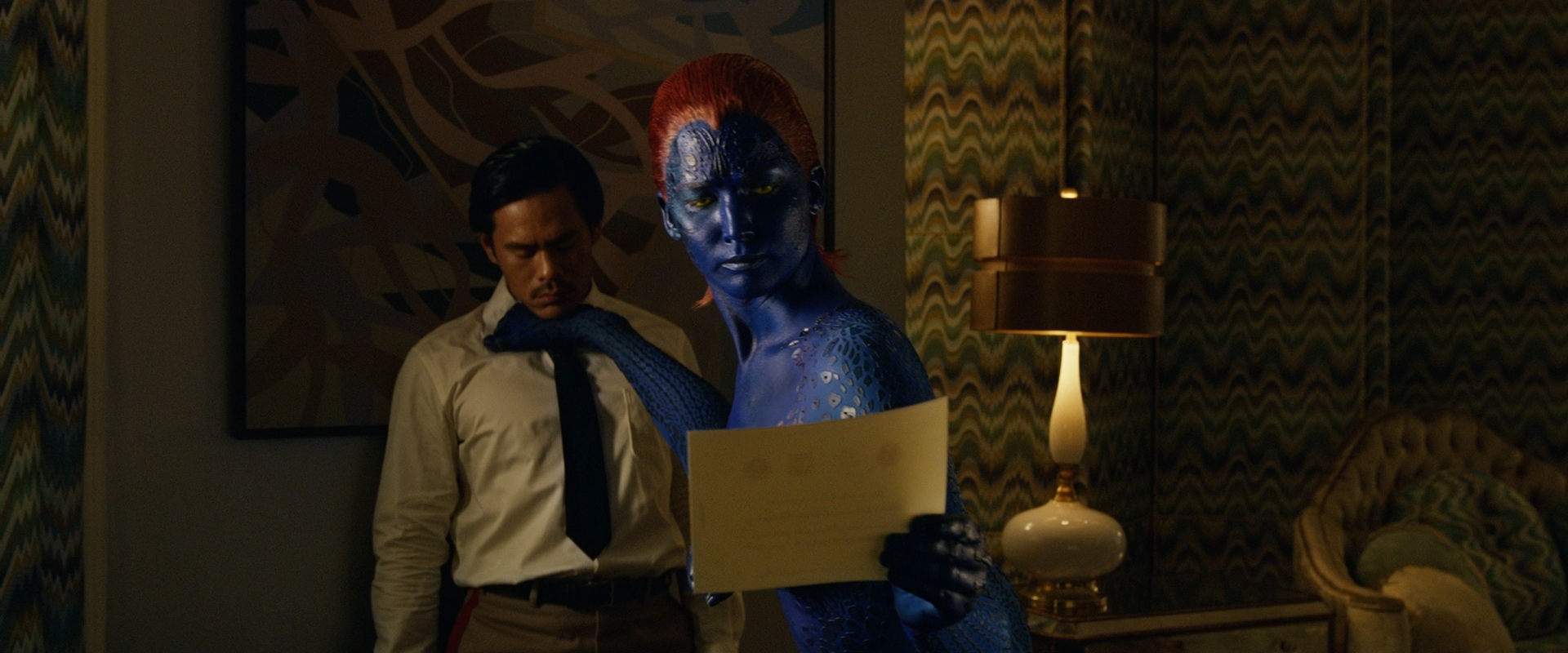
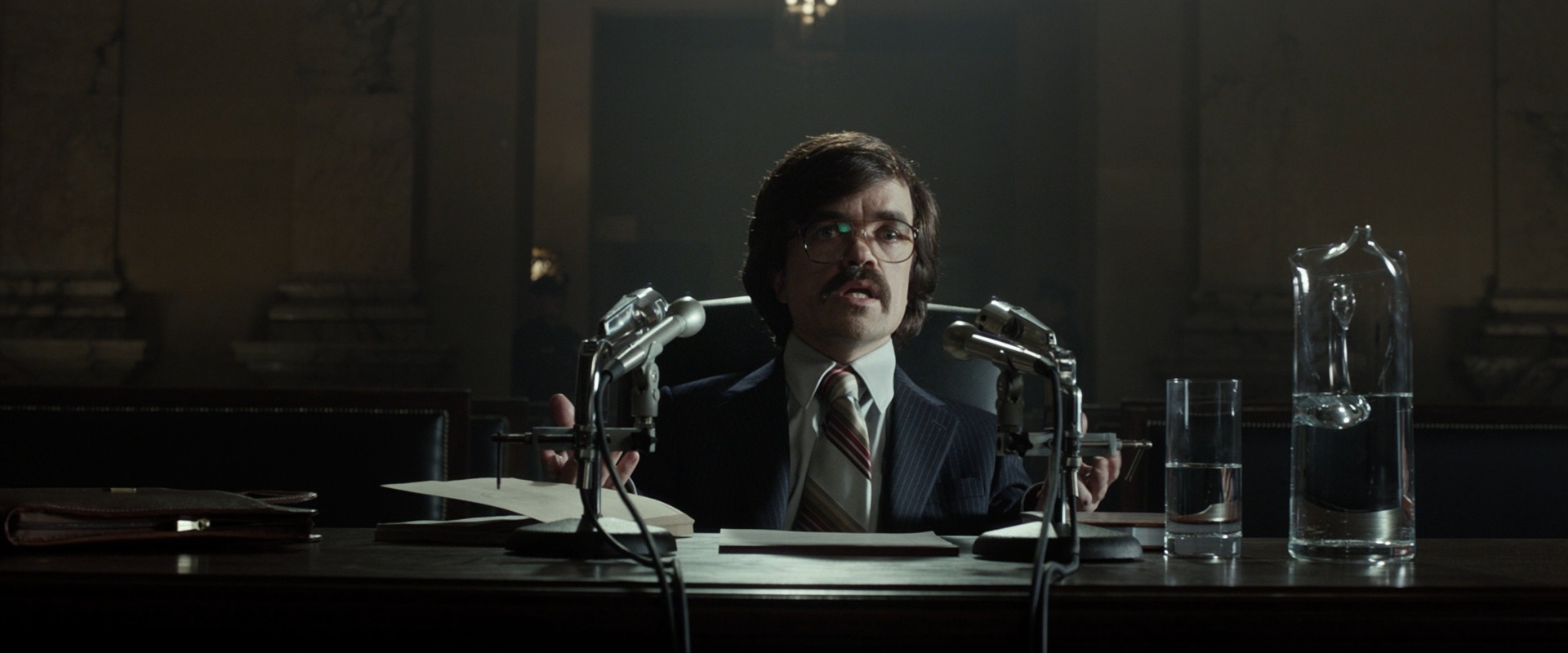
Not to get too bogged down in the plot mechanics, but once he gets to the past, Wolverine must track down and convince the younger Professor X (James McAvoy) and Magneto (Michael Fassbender) to mend fences and work together to stop Mystique (Jennifer Lawrence) from assassinating mutant-phobic industrialist Bolivar Trask (Peter Dinklage) before he sells his Sentinel program to the Nixon administration. While killing Trask may seem like a good idea to protect mutantkind, doing so will actually turn the entire human population of Earth against all mutants and accelerate the Sentinel apocalypse.
No explanation is ever given for how or why Professor Xavier, who was killed in The Last Stand, reappears as an older man in the future. At the time of the film’s release, director Singer waved that plot hole away by saying that he believed in multiverses and parallel timelines (ideas that would become central to later follow-ups), but that seems at odds with how this story insists that altering the past will cause one new timeline to overwrite and eliminate another. Ultimately, comic book logic must win out and it’s best not to question details like that too much.
Singer has some fun with the 1970s period setting and delivers a doozy of an action set-piece centered around otherwise throwaway character Quicksilver (Evan Peters), who has a blast showing up stronger opponents (and friends) with his speedster antics. This movie premiered a few months before the CW network’s TV series adaptation of The Flash, and this scene still holds up against nine seasons of that show.
Disappointingly, most of the film’s other attempts at spectacle devolve into mundane CGI overkill. The green-screen visual effects don’t feel terribly impressive anymore, if they ever did at the time. The Sentinel robots are also in no way believable as 1970s technology, even by comic book standards.
Juggling such a huge cast, most of the characters are given short-shrift, and famous faces including Famke Janssen, James Marsden, and Anna Paquin are reduced to walk-on cameos. An extended version of the movie called The Rogue Cut would be released a year later, adding 17 minutes of footage to address that problem. I haven’t seen it, and honestly, I doubt I’d have the interest or the patience to watch much more of this.
At 2 hours 12 minutes, even the original theatrical cut of Days of Future Past suffers a frustrating sense of lethargy. Major players Jackman, Fassbender, and McAvoy feel like they’re going through the motions, having shown up on set to collect easy paychecks, no longer caring much about anything that happens on screen. Jackman’s Wolverine doesn’t even do much of any fighting in this one. The character is merely a catalyst to set plot points in motion in order to fix what people didn’t like about the previous movies and set up the next one.
I guess the picture did well enough at that. Fans approved and the film made a lot of money at the box office, though that momentum would fade quickly when Singer’s next sequel arrived two years later. For my part, I don’t dislike Days of Future Past, so much as simply feel apathy toward it. The movie is competently made and does its job of wasting a couple hours of time in a moderately enjoyable manner, but nothing about it sticks with me, either for good or ill. It’s just a middle-of-the-pack entry from a movie franchise I could take or leave.
The Blu-ray
I wouldn’t consider myself an X-Men franchise completist collector by any means. I enjoyed the first two movies and bought them initially on DVD, then later upgraded to Blu-ray. For the third, one theatrical viewing was enough. I received a couple of the later entries as screener discs when I reviewed Blu-rays for other publications, but didn’t give them much thought after finishing those reviews.
When X-Men: Days of Future Past premiered in 2014, I neither saw it in the theater nor bought it on disc. The movie landed on video in both 2D and 3D Blu-ray options that fall. An extended version called The Rogue Cut (that gave more screen time to Anna Paquin, among other additions) followed in 2015. The original theatrical cut then returned in February 2016 as one of Fox’s launch titles for the 4K Ultra HD Blu-ray format.
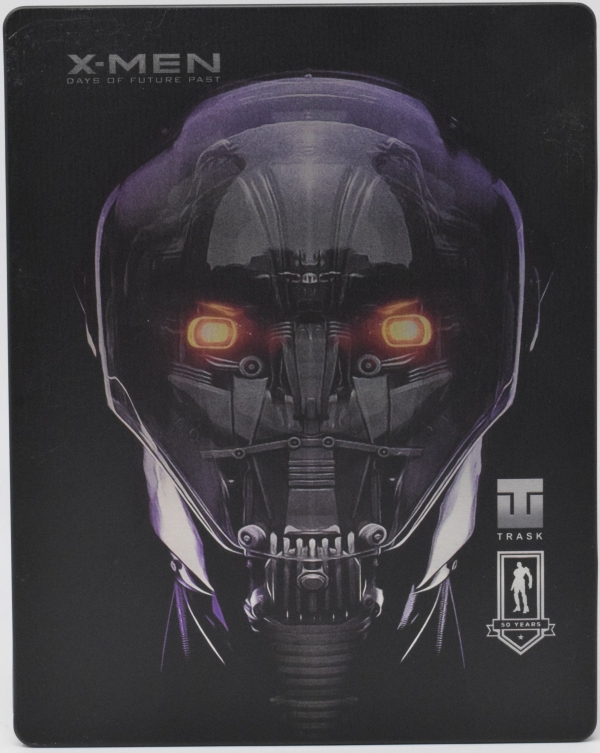
According to my collection tracking software, I bought both Days of Future Past and its sequel X-Men: Apocalypse in Blu-ray SteelBook cases in October 2016, coinciding with the home video release of the latter. I don’t know why I did this. My notes say I got them for reasonable prices (just $14.99 for Days of Future Past), so I must have felt some obligation as a SteelBook collector to pick them up. Neither of the SteelBooks contained a 4K version of its movie, but I hadn’t upgraded to a 4K projector yet at that time anyway. Regardless, I filed them both on my shelf and never watched either one until now.
Looking at it from the perspective of a collectible item, the Days of Future Past SteelBook has boring artwork and a dull matte finish that makes it quite underwhelming even just from an aesthetic standpoint. In hindsight, this feels like a waste of money, no matter how little I paid for it.
Despite being photographed with native 3D cameras, most reports from the time claimed that Days of Future Past was so restrained in its use of 3D as to be barely noticeable. I don’t feel I’m missing anything there. Those cameras were also limited to 2K resolution, as were all the CGI visual effects and the Digital Intermediate. The later 4K version is an upscale from that DI. All in all, this is a movie I’m fine only owning on regular 2D Blu-ray.
As far as that goes, the Blu-ray holds up pretty well, aside from the infuriating fact that the disc automatically opens with an unskippable trailer for Ridley Scott’s flop historical epic Exodus: Gods and Kings before the main menu, that plays every time you load the disc. The best you can do is fast-forward through it, but all other options to jump past it or go directly to the menu are disabled. I recommend muting your volume until you’re ready to start the movie.
Once you get to it, the movie’s 2.40:1 image is perhaps slightly soft even by 1080p standards, but not enough to be bothersome. I expect that look was intentional to blend the live action footage with the CGI. The picture is also a bit dim in dark scenes, but shadow detail is sufficient to avoid murkiness or black crush. Colors are strong, especially Mystique’s deep blue skin. While I don’t doubt that HDR might make the highlights pop more and improve contrast further, the Blu-ray remains adequate enough for my needs.
The DTS-HD Master Audio 7.1 soundtrack is quite impressive with immersive surround activity and loud, deep, throbbing bass during most of the action scenes. Listening to this mix now, at a time when most modern movies limit (if not eliminate altogether) low frequency extension, reminds me how much more fun film soundtracks used to be before all the studios insisted on mixing for soundbar and earbud listeners.
For bonus features, the five minutes of deleted scenes with optional Bryan Singer commentary have unfinished VFX and contain none of the material that got reinstated for the Rogue Cut. That’s followed by six minutes of behind-the-scenes footage where Jennifer Lawrence keeps cracking up when trying to deliver serious dialogue, another jokey gag reel, four Electronic Press Kit featurettes of about ten minutes length each, a still gallery, some trailers, and some instructions for integrating your viewing with a phone app that was probably abandoned years ago.
Related
- X-Men franchise
- Michael Fassbender
- Peter Dinklage
- Patrick Stewart
- Famke Janssen
- Elliot Page
 The Video File Blog
Now I wanna try that phone app, haha.
LikeLike
The X-Men series is unusual in that it deals, from the very first film, explicitly with racism and fear of the different – and how the marginalized should respond, from the debates between ML King and Malcolm X to the progressive Jews who helped create the American constitutional system versus the Neo-Nazi fundamentalists that rule Israel today.
Days of Future Past says that war is not the answer for either the majority or the minority.
“There is no way to peace – peace is the way.”
These films are more than simple action-adventures but have tremendous historical resonance.
LikeLike
I get all that subtext. And yet, ultimately, this is still just a middling action movie about a bunch of weirdos with superpowers who stand in front of green-screens to fight giant cartoony robots. It has one really good set-piece, and the rest is all pretty underwhelming, even by the low standards these things usually set.
LikeLike