

Fresh off his Oscar win for Platoon, filmmaker Oliver Stone transitioned directly from the jungle combat of Vietnam to a very different battlefield in the cutthroat trenches of Wall Street. Released in 1987, the financial drama was a solid box office success and won star Michael Douglas an Oscar, but was also greeted by mixed reviews from many prominent critics, who found Stone’s morality tale a little too preachy (hardly the first, nor last time he’d be accused of that).
I’ve watched Wall Street a few times over the years, and always liked the movie. While I can’t argue against the complaint that the last-act moral turnaround for Charlie Sheen’s character is a bit simplistic, perhaps even naïve, this latest viewing nearly four decades later demonstrates how relevant the film remains. If anything, Stone underestimated just how much worse things would get in the real world.
| Title: | Wall Street |
| Year of Release: | 1987 |
| Director: | Oliver Stone |
| Watched On: | Blu-ray |
| Also Available On: | Hulu |
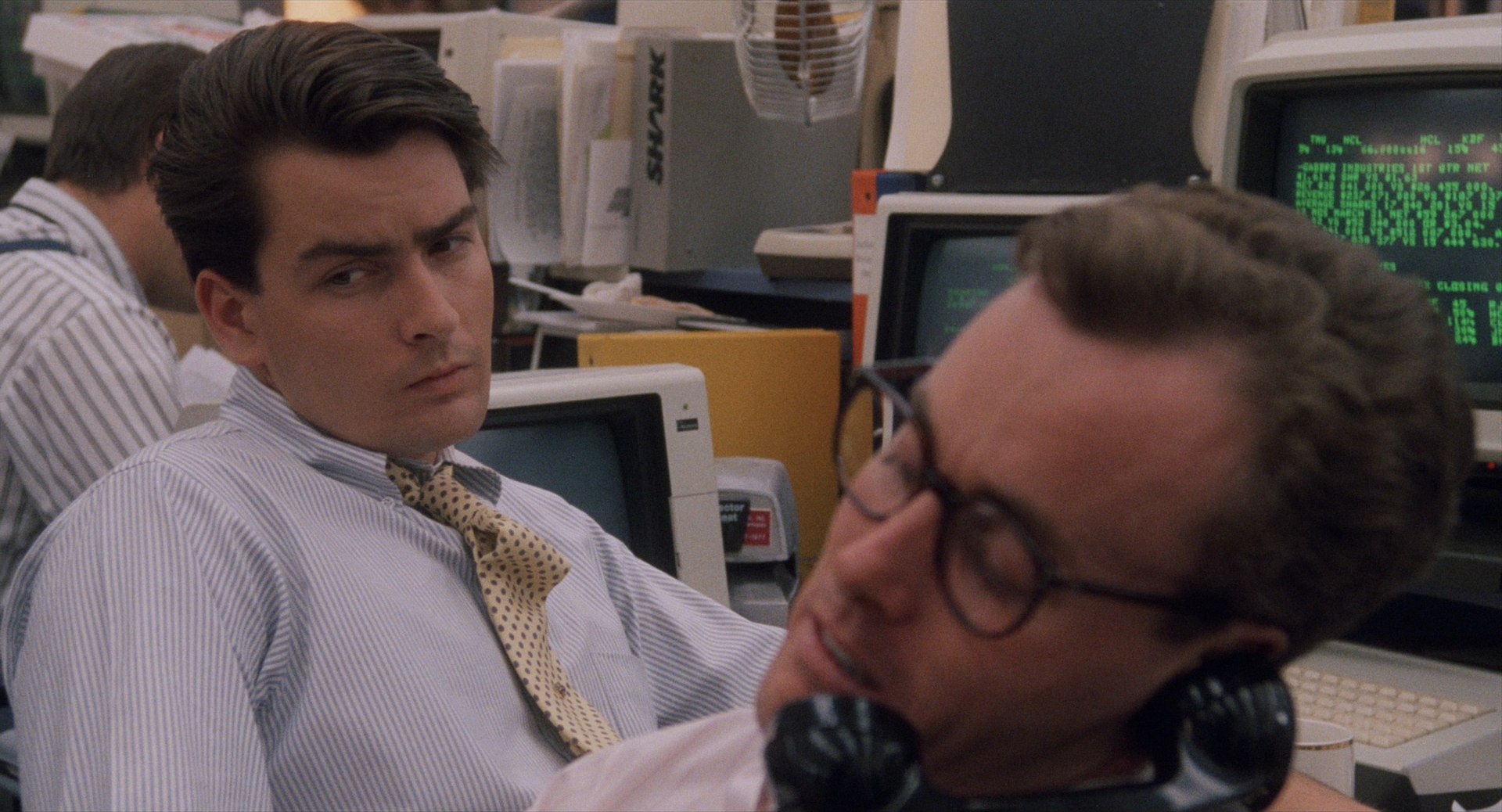
Douglas may have the flashiest role, but pre-burnout Charlie Sheen (following Stone straight from Platoon) is the actual lead in the story as Bud Fox, an eager young stock trader desperate to become a power player in the dog-eat-dog competitive world of high-stakes finance. Stuck in a low-level position cold-calling clients for a respectable but hardly notable brokerage firm, Bud exerts every ounce of his energy, day and night, pretending to be more than he is. He can barely pay the rent for his overpriced rat hole Manhattan apartment, wears suits he can’t afford, and puts on airs of maintaining a lifestyle well beyond his means, hoping to fake it ’til he makes it. The fact that everyone around him does the same only feeds into Bud’s compulsive need to drive himself harder and ingratiate himself into both social and business circles where he doesn’t belong.
Bud idolizes Gordon Gekko (Douglas), a financial mogul and titan in his world who seems to have gotten super-rich solely by screwing over other super-rich people and taking what they previously had. Gekko talks about having his fingers in countless pies: real estate, stocks and bonds, buying and selling corporations, etc. The only business he actually seems to be in is money – having as much of it as he can hoard and preventing anyone else from getting any of it. Once Bud finally worms his way into Gekko’s sphere, he’s quickly seduced by a taste of the ostentatious wealth he’d always dreamed of having. In that process, he’s just as quickly morally compromised when his new mentor teaches him how the game is really played, with illegal tactics like insider trading that would send any normal businessman straight to prison. Of course, Gordon himself is untouchable. No level of deceit is out of bounds when a dollar can be made from it.
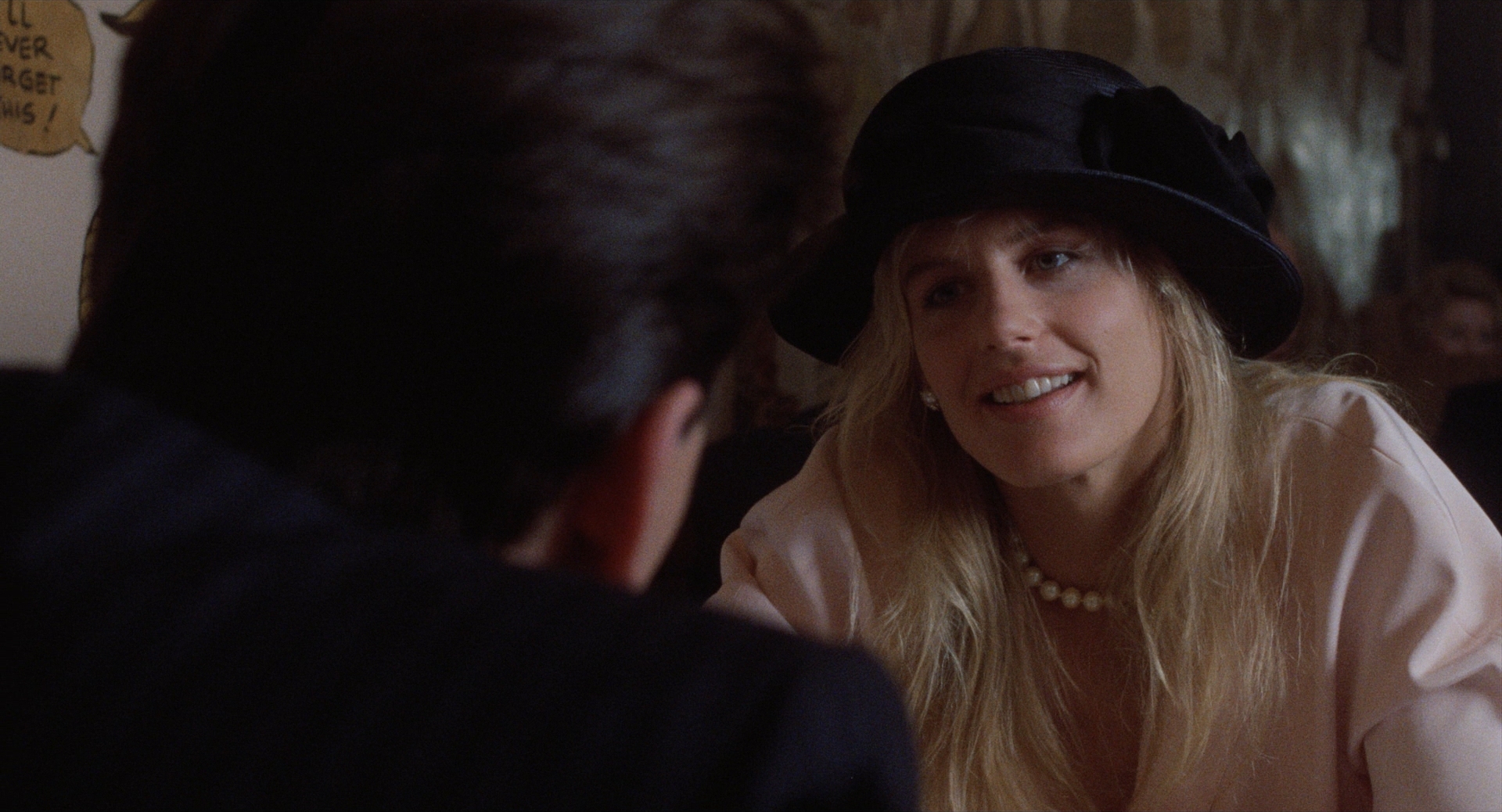
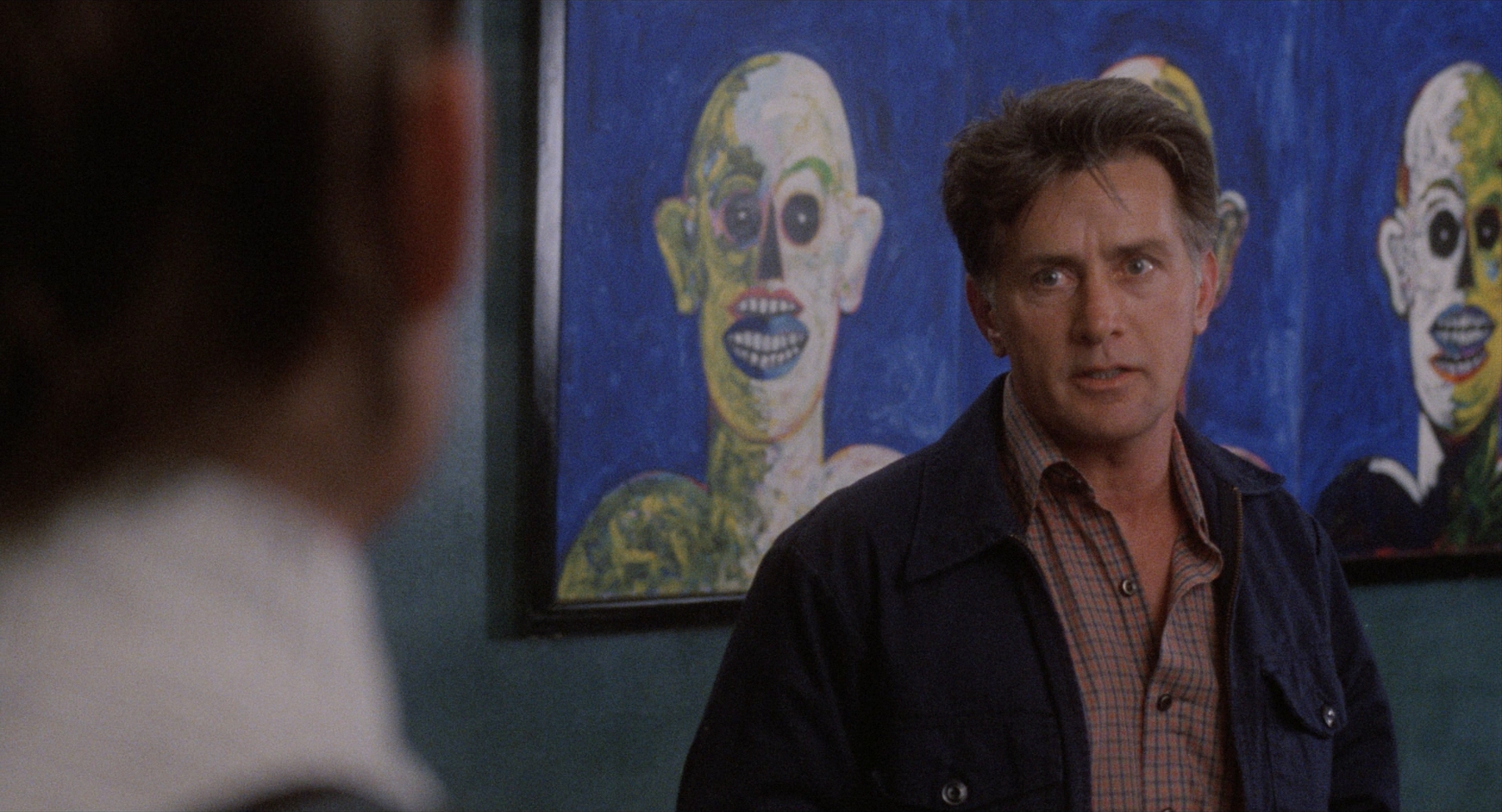
After Douglas and Sheen, the film also has a stellar supporting cast. Martin Sheen (Charlie’s real father) plays Bud’s blue collar dad and an attempted voice of reason. Hal Holbrook, Terence Stamp, James Spader, and John C. McGinley all have other important roles, while Sean Young barely gets a line of dialogue as Gekko’s wife. Third-billed on the poster for playing Bud’s high-priced girlfriend, Daryl Hannah delivers what seemed to be the worst performance of her career (the Razzie Awards sure felt so), but I suspect her role was always underwritten and what little of it went before cameras got cut to shreds in editing.
Stone’s Wall Street is often cited as a zeitgeist-capturing portrait of out-of-control 1980s Capitalism at the zenith of its greed and excess, but honestly, how much has changed in the meantime? The real Wall Street may have appeared to show signs of reform when financial criminals like Ivan Boesky and Michael Milken (both models for the Gekko character) were convicted and shipped off to prison, but cycles of abuse and corruption have only recurred and intensified with time, to the point that most of the controls and safeguards that finally step in to set things right during the last act of the movie have been stripped of power or eliminated altogether today.
Forgive the spoiler for a very famous four-decade-old movie, but Wall Street ends with Bud finally developing a conscience and turning on his mentor, and the suggestion that Gordon is about to be arrested and imprisoned. A man of Gekko’s status and position right now would undoubtedly walk away from such a scandal unscathed, possibly stronger than ever, and take revenge on those he believes wronged him. Complain all you want about Oliver Stone’s heavy-handedness in telling the story, but the most dated and even misguided aspect of Wall Street as a film turns out to be the director’s belief that justice could prevail in the end. The real world has not proven so tidy in recent years.
Ironically, a great number of toxic finance bros in the business sector have embraced Wall Street, or at least the first three-quarters of it, as a lifestyle guide for everything they want to become – choosing to roll their eyes and selectively ignore anything that happens at the film’s climax. That makes me wonder if Stone wasn’t quite heavy-handed enough to get his point across after all.
Oliver Stone eventually made a belated sequel to Wall Street in 2010. I’ve never had much interest in watching it, due to a combination of poor reviews, Stone’s downturn from relevance as a filmmaker, and (most significantly) the irritating choice of Shia LaBeouf as his new screen proxy. I’m still not sure whether or not I’ll ever want to, but I will say that this revisit of the original film leaves me curious what a character like Gordon Gekko could pull off for a second act in the (close to) modern day. Hell, the guy’d probably get elected President.
The Blu-ray
Wall Street has not been particularly well represented on high-definition home media. Admittedly, I didn’t see the movie in a theater. (I was 13, and not too interested in a heavy financial drama at the time.) Did it always have very drab, dull photography? Knowing cinematographer Robert Richardson’s other work (Natural Born Killers, Casino, Kill Bill), that seems unlikely.
20th Century Fox Home Video first released Wall Street on Blu-ray in 2008, on a disc with very soft picture quality pretty much indistinguishable from DVD. The studio later reissued the movie in 2012 with a remastered video transfer for the short-lived Filmmakers Signature Series line. The remaster offers a small improvement in detail when compared directly, but the 1.85:1 image still generally looks very soft and grainy, and has bland colors.
No details were given on the source of the remaster. Was it a new scan from the camera negative? I’m skeptical. (Click the links in the caption below for full-size screencaps.)


The DTS-HD Master Audio 5.1 soundtrack is also curiously weak. Dialogue is prioritized in the mix, while music and effects sound suppressed. The track has virtually no dynamic range at all and does a terrible disservice to Stewart Copeland’s score. I had to boost my volume significantly above normal levels, but even that didn’t help any.
Strangely, the track briefly kicks into some life only during the end credits playback of the Talking Heads song “This Must Be the Place,” which sounds pretty good, even though an earlier usage of the same song previously in the movie sounded flat and awful.
The Filmmakers Signature Series disc also offers a lossy Dolby Digital 4.0 soundtrack that I assume is meant to convey the film’s original Dolby Stereo theatrical mix. (The older Blu-ray didn’t have this.) Hoping that perhaps the 5.1 remix had simply been botched, I sampled quite a bit of the 4.0 track to compare. Sadly, it sounds about the same. Frankly, I’m not sure I could tell them apart.
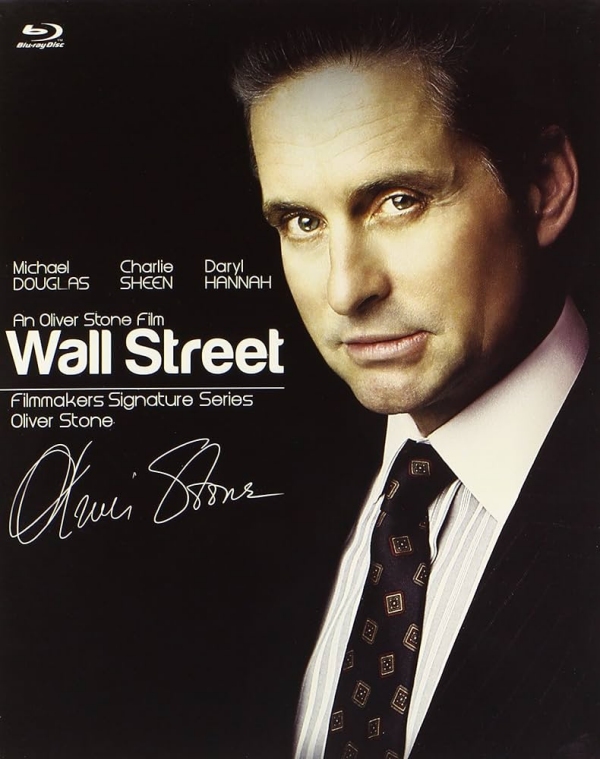
The small selection of bonus features was mostly recycled from the 2008 Blu-ray, if not from even older DVD editions. These include an audio commentary by Oliver Stone, about 20 minutes of deleted scenes (also with Stone commentary), a 47-minute making-of documentary, and the hour-long Greed Is Good retrospective documentary created for the film’s 20th anniversary in 2007. The only item new (in a manner of speaking) to the Filmmakers Signature Series disc is a 17-minute Fox Movie Channel promo.
Omitted is a 1-minute introduction by Oliver Stone that references the 20th anniversary a few times and was considered out of date by 2012. It’s inessential.
The Filmmakers Signature Series edition also came packaged with a booklet containing some shamelessly sycophantic writing about the movie, director Stone, and a few of the stars.
Related
- Oliver Stone (director and/or writer)
- Martin Sheen
- Sean Young
- Sean Young & Daryl Hannah
- Terence Stamp
 The Video File Blog