

Released to a good bit of critical acclaim but limited commercial attention almost two decades ago, and mostly forgotten on both ends in the meantime, director Tom McCarthy’s The Visitor is a movie that not just deserves but actually needs to be rediscovered today. Not to date this review too much (we’ll see how this reads in a few years), but watching in 2026, the film speaks very strongly to the tremendous cultural turmoil of this moment in time, yet manages to do so without becoming preachy or didactic about it.
Even putting it that way makes The Visitor sound more overtly political than it was ever intended to be. This isn’t a big, grandstanding broadside, of the type that inevitably makes viewers on either side of the issue more firmly entrench themselves into their respective positions. Rather, it’s a very small, personal drama, about how human beings are affected by a cold and inhumane system.
| Title: | The Visitor |
| Years of Release: | 2007 – Film festivals 2008 – General theatrical release |
| Director: | Tom McCarthy |
| Watched On: | Blu-ray |
| Also Available On: | Tubi Kanopy Various VOD rental and purchase platforms |
Writer/director McCarthy had made some waves in critical circles and the art film crowd with this 2003 drama The Station Agent, which is largely remembered today as a breakout role for its star, Peter Dinklage. McCarthy’s follow-up a few years later received a similar reception. The Visitor was very well-reviewed, made a small profit off its modest budget, and even landed an Oscar nomination for its own star, Richard Jenkins. For a movie of its sort, that counts as a pretty big success. Unfortunately, the film did not prove to have much staying power in the collective consciousness and quickly faded from view. Most anyone who still remembers it today probably thinks of it mainly as a rare starring vehicle for a longtime character actor.
Jenkins plays Walter Vale, an aging college professor whose comfortable life in Connecticut was rended apart by his wife’s death a few years earlier. Without her, Walter has retreated into a solitary existence, deliberately cutting himself off from the world. He no longer cares about his job or much of anything, and just goes through the motions because he doesn’t know what else to do with his time. Even his attempts to take up a new hobby with piano lessons haven’t gone particularly well. Walter isn’t a mean person, but he can be very aloof, uptight, and kind of a jerk at times, even if he doesn’t intend to be.
When the university insists that he travel to New York to deliver a lecture on behalf of a colleague taking maternity leave, Walter returns to an old apartment in the city he’s kept for years but rarely uses. Upon entering, he discovers that the place is currently occupied by a young couple who’d been conned into believing they were sub-letting it from a guy named “Ivan.” Walter has no idea whom this Ivan is or how anyone got his key, but rather than fly into a rage, kick the squatters out, or call the police, he’s instead simply flustered by the situation. He apologizes for barging in on them, recognizes that they’re not at fault and, when he realizes they have nowhere else to go, allows them to stay with him until they can make new arrangements.
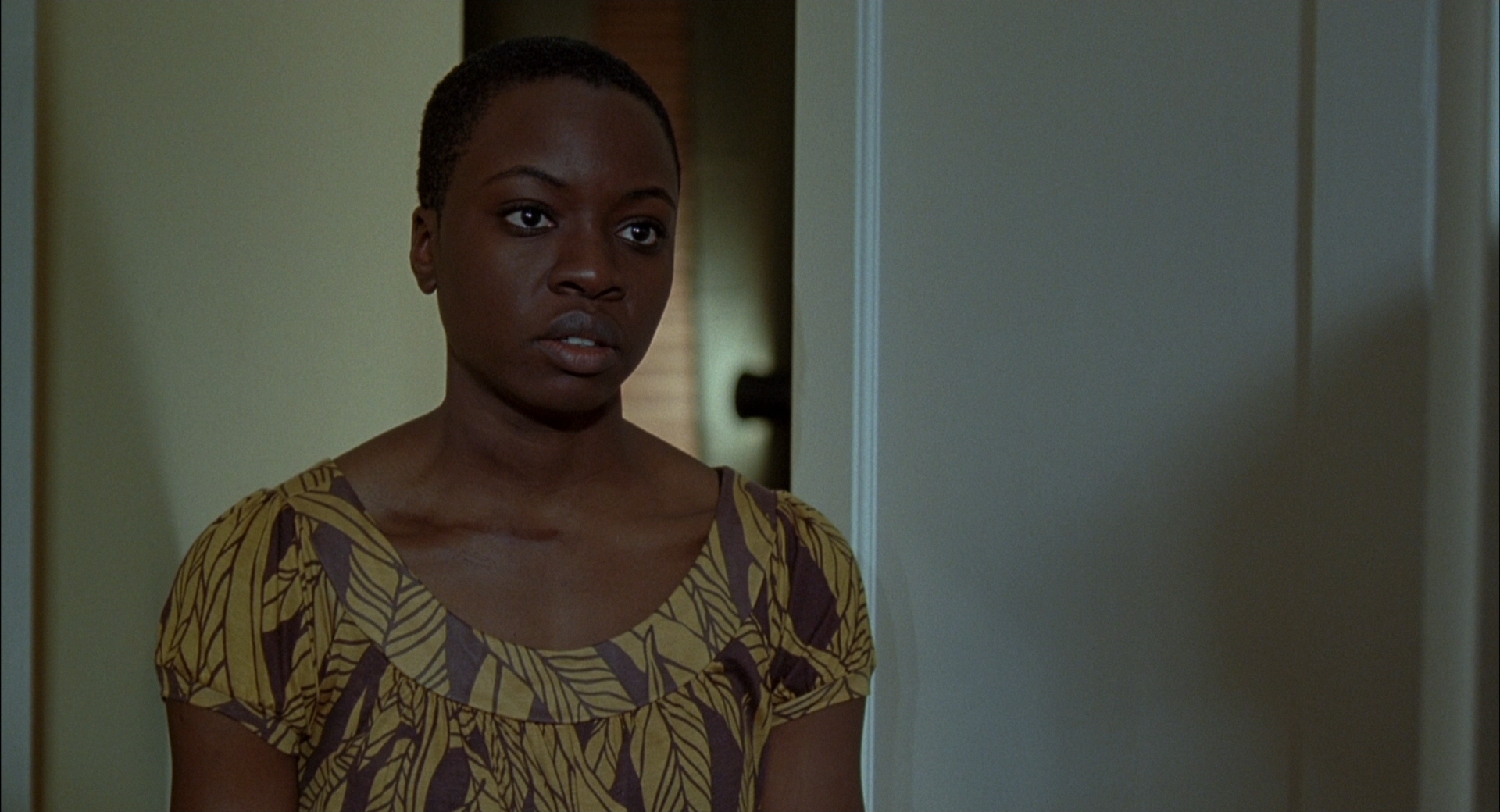
During his time with them, Walter forms a friendship with Tarek (Haaz Sleiman), an enthusiastic and upbeat street musician who introduces him to an African drum called the djembe. Walter is entranced and has what may be the first moments of happiness since his wife died. Learning to play literally forces him to break out of his old rhythms. Takek’s girlfriend, Zainab (Danai Gurira, in an early role before breaking to stardom in The Walking Dead), is much more wary of this new intruder in their lives but grudgingly accepts his presence.
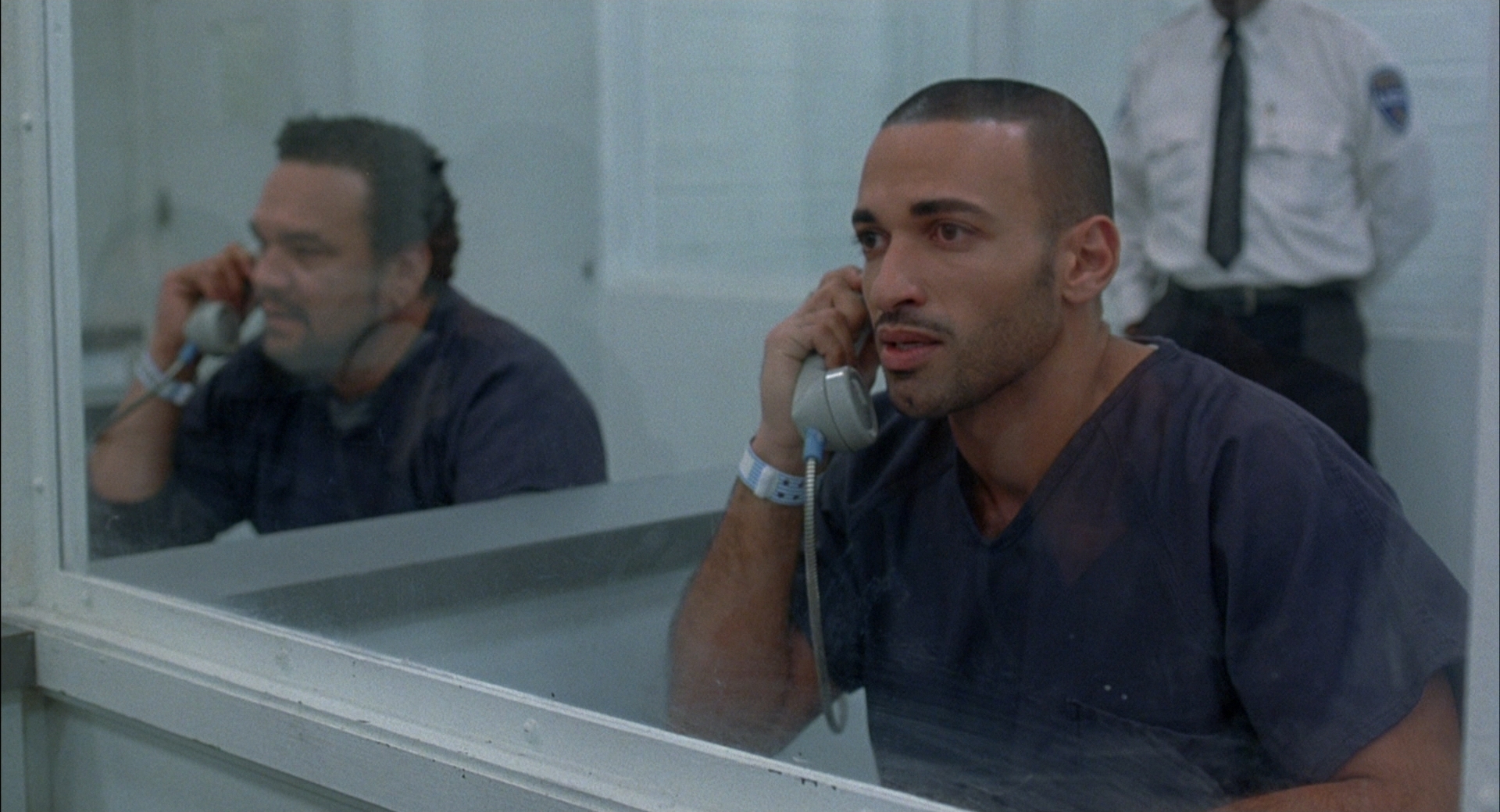
When Tarek is accosted by cops in a subway station on a bullshit charge of jumping a turnstile (which he didn’t even do), he’s hauled off to jail for this minor offense and, from there, quickly transferred to a Homeland Security detention facility. Realizing that both Tarek and Zainab are illegal immigrants, Walter does what he can to help. He hires an immigration attorney and visits Tarek every day, only to face a cruel and dehumanizing institution that doesn’t care about people, only about rules. Whether those rules be good or bad, right or wrong, fair or unfair doesn’t matter.
The Visitor is decidedly not a White Savior story. As much as he tries, Walter is powerless to do much of anything in the face of a system designed to ensure only one unavoidable outcome. That inevitability slowly crushes all the characters. The journey to it isn’t sensationalized, just sad.
To be honest, the fact that so much focus landed on the film’s white lead is something of a sad irony, considering what the story really turns out to be. Make no mistake, Jenkins is very good in this movie and delivers a heartbreaking performance, but part of me wishes his character weren’t needed at all. In ideal circumstances, the story ought to be just as powerful to a (presumptively white) audience even without a white man as the entry point. Sadly, the financial realities of the filmmaking business usually dictate otherwise.
I also worry a bit that the storyline about Walter taking up the African drum has a whiff of cultural appropriation, though I’m sure what McCarthy intended with it was to demonstrate the importance of different cultures embracing one another.
The film was released at the tail end of the George W. Bush administration, but doesn’t try to score any political points off the party in charge, which is never mentioned. (The situation certainly didn’t get any better under Obama or later successors.) What it does acknowledge is that the United States was left broken by the events of 9/11 in 2001, and the country’s treatment of immigrants changed radically at that time, leading directly to the disaster we have today.
McCarthy offers no easy answers to these problems. This isn’t a piece of activist art. It’s just a quietly devastating reminder of the need for empathy and compassion, traits that have been so badly devalued in the modern day. In that respect, The Visitor is more vital than ever.
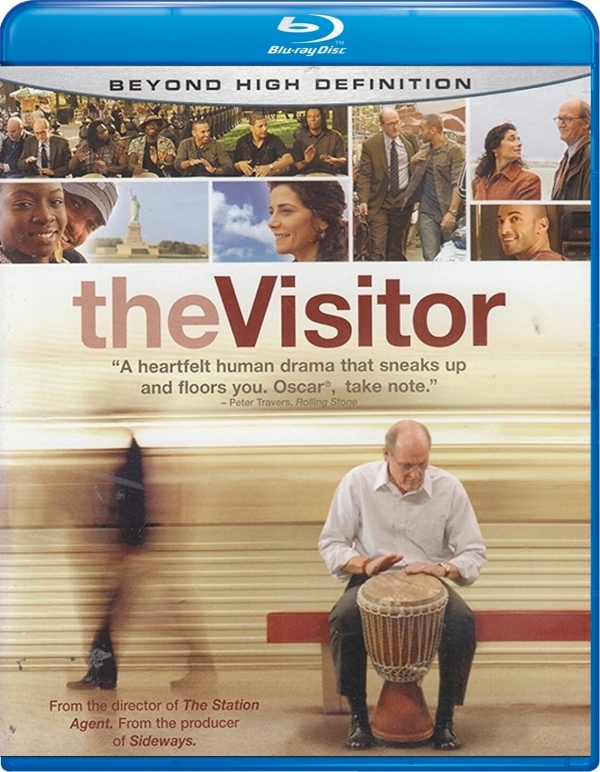
The Blu-ray
The Visitor played at the Toronto International Film Festival in late 2007 and has a copyright date of that year in the end credits, but didn’t receive a general theatrical release (quite limited, at that) until the following spring. Home video distribution on DVD and Blu-ray followed in October 2008 via Anchor Bay Entertainment, a label that would eventually get absorbed by Lionsgate. At present, that seems to be about the end of the line for the film. It hasn’t received much attention from anyone since.
Annoyingly, the Blu-ray edition opens with a forced trailer for other Anchor Bay releases before the main menu. The disc also defaults to playback with a lossy Dolby Digital 5.1 soundtrack despite having an option for uncompressed PCM 5.1 available.
The back of the Blu-ray case erroneously claims an aspect ratio of 2.35:1, but the movie was actually photographed and composed for 1.85:1, and is presented that way on disc. The 1080p high-def transfer is a little dated but mostly respectable. This isn’t a flashy or overtly stylish film. Detail and color are adequate, but the image has a mildly processed appearance, with some light edge enhancement and likely Digital Noise Reduction. Film grain is very faint and a little mushy. Thankfully, while these problems are noticeable, especially on a large screen, they aren’t quite as aggressive as many releases from the same time period. The movie remains acceptably watchable overall.
Once you’ve realized you need to switch to it, the PCM 5.1 soundtrack has nice fidelity in the piano score and the scenes with African drums. The movie has a very restrained sound mix that rarely calls attention to itself. Surround usage is subtle and the track has no dynamic range of note.
Bonus features include an audio commentary by director Tom McCarthy and star Richard Jenkins, a short featurette about djembe drums, another very brief Inside Look EPK piece, a few minutes of deleted scenes, and a trailer.
 The Video File Blog