
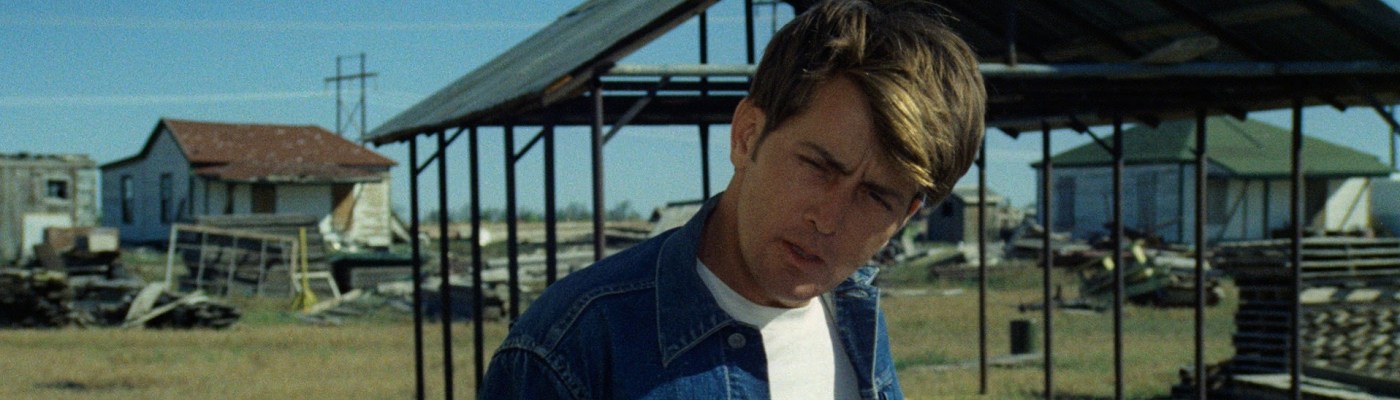
Likely best known in film appreciation circles as the feature directing debut for Terrence Malick (The Thin Red Line, The Tree of Life), Badlands is both one of Malick’s shortest movies and seemingly his most straightforward. A lovers-on-the-run crime tale inspired by the real-life Charles Starkweather murder spree of the late 1950s, the film no doubt looked to audiences of 1973 like it was riding the coattails of Bonnie and Clyde or The Getaway. Its marketing certainly tried to draw those connections. When actually watching it, however, Badlands plays more like a deconstruction of that genre, and a meditation on how (or why) the American environment could foster such a criminal psychosis.
Even based on a very low budget, Badlands was not a box office success in its day. Much of that was the fault of distributor Warner Bros. bungling its release by pairing it on a double bill with the comedy Blazing Saddles, of all things! What anyone in the studio could have possibly been thinking with that decision is a mystery lost to time. Fortunately, some prominent critics took note and championed the work until, eventually, it came to be regarded as a seminal piece of 1970s cinema.

| Title: | Badlands |
| Year of Release: | 1973 |
| Director: | Terrence Malick |
| Watched On: | Blu-ray |
| Also Available On: | DVD Various VOD rental and purchase platforms |
A frequent day player on countless TV series throughout the 1960s and early 1970s, with some occasional feature film work sprinkled in during that time, Martin Sheen scored his first breakout leading movie role playing Charles “Kit” Carruthers, a high school dropout of little ambition working dead-end jobs in a South Dakota nowheresville. While on his route as a garbage collector one afternoon, Kit encounters 15-year-old Holly Sargis (Sissy Spacek) idly practicing majorette baton twirling in her front yard. Despite their ten-year age difference, Kit is drawn toward Holly and boldly asks if she’d like to spend some time with him. Too naïve to be wary of strange older men and having nothing better to do that day, Holly agrees. This would be her first of many serious mistakes.
Unlike the way this sort of relationship is usually portrayed in the genre, these two kids don’t have a passionate, fiery love affair. Kit’s an odd duck with many peculiar behaviors. If Holly had said no to him, he probably would have moved on to something or someone else and never thought of her again. Holly, likewise, is emotionally disaffected in her own ways. She continues to hang around with Kit mostly because he asked and she doesn’t know what else to do. The fact that her controlling father (Warren Oates) objects to Kit and orders Holly to stay away from him works in Kit’s favor. In his mind, the only logical thing to do is kill the father and run off with the girl. When that happens, Holly feels strangely unmoved by her father’s death. She goes along with Kit because that seems to make a twisted sort of sense in the moment.
The rest of the story is told entirely from Kit and Holly’s perspectives, in which the things they do aren’t nearly as big a deal as the few glimpses we get into the outside world’s reaction would blow them up to be. The couple hides in the woods, building an elaborate treehouse to live in, stealing food and supplies to support themselves. Kit periodically has to kill people, but his reasons for doing so feel rational as he sees them. Holly never harms anyone herself, but nor does she try to stop Kit. When intruders find their cozy hideaway, Kit shoots his way out and leads the two of them on a cross-country crime and murder spree across the American West.
Kit is a true psychopath, not the type of loony Hollywood psycho the movies usually dish up. He kills not out of blood lust, but because he genuinely doesn’t care whether anyone lives or dies, not even himself. He feels detached from the entire world. Even his relationship with Holly has its limits and he’s ready to leave her when that seems the right thing to do. For her part, Holly has been raised her entire life to be complacent and follow the instructions of a strong male figure – formerly her father, now Kit. She feels a powerful sense of obligation to stay with him even when she comes to realize that isn’t in her own best interest.
The real Charles Starkweather, on whom Kit is based, triggered a media panic across much of the country. Children living thousands of miles away quaked in their beds at night, terrified that he’d break into their homes and kill them in their sleep. The movie gives us snippets of this, as news broadcasts play on the radio and Kit periodically checks the newspapers to see how famous he’d become. But he views his notoriety with bemusement; he doesn’t relish or stoke it on purpose. He’s just doing what he needs to get by in life, until the inevitable time that won’t matter anymore.
As much a character in this story as any of the performers is the landscape of Badlands. Stark, beautiful, bleak, desolate, and oppressive, this world is crushing in its total indifference to any human beings populating it. What impact could a handful of murders make in such an environment? Everyone will die eventually, regardless. Their lives, fleetingly brief as they are, have no particular hope or meaning or relevance to the passage of time.
Both despite and because of its apparent simplicity, Badlands is a very philosophical film, and also a nihilistic one. Malick tells the story in understated terms, with a lyrical, haunting, often hypnotic tone. His use of imagery is simultaneously gorgeous and despairing. The soundtrack, featuring recurring use of Carl Orff’s 1920 composition “Gassenhauer” (which Hans Zimmer would later copy liberally for his score to True Romance) brings a childlike playfulness to contrast the brutal subject matter.
This isn’t the type of movie a viewer comes out of cheering about or lining up to watch again right away, but it can stick with you a lot longer than others that may seem more entertaining at first reaction.

The Blu-ray
Badlands joined the Criterion Collection as spine #651 in 2013, under license from Warner Bros. The booklet included with the Blu-ray edition states that Criterion’s video master is based on a 4K scan of the 35mm camera negative, supervised by Emmanuel Lubezki (cinematographer of several of Terrence Malick’s later films, including The Tree of Life and Knight of Cups) and approved by director Malick. Lubezki himself was only 9-years-old when Badlands premiered in 1973, but two of the three cinematographers who’d originally shot the movie had passed away by 2013, and I must assume Tak Fujimoto wasn’t available to consult on it at that time. (Fujimoto worked with Criterion on the 2011 Blu-ray release of Something Wild and would again in 2018 for The Silence of the Lambs.)
Badlands is a film of tremendously striking imagery, much of it intentionally rough-hewn. The 1.85:1 image is a little soft, quite grainy, and has delicate colors, but the Blu-ray retains a pleasingly filmic texture and looks very nice in projection.
Audio is only available in the original mono, encoded in uncompressed PCM format. Much like the visuals, the sound design is also quite sparse. If anything, the movie is notable for how quiet it is. Scenes that would normally ramp up to bombast or melodrama in any other film of comparable subject matter are allowed to play out in contemplative silence here. Dialogue and music are nevertheless crisp and clear, gunshots hit with a sharp crack, and car engines rev with a fair amount of heft.

Criterion’s bonus features include a 42-minute retrospective documentary, substantive interviews with producer Edward Pressman and editor Billy Weber, an episode of the 1993 true-crime TV series American Justice that recaps the story of the Charles Starkweather murder spree, and a trailer. The enclosed booklet adds an essay by filmmaker Michael Almereyda (Nadja, Experimenter).
Related
- Martin Sheen
- Lovers-on-the-Run Movies
 The Video File Blog