

Based on a Pulitzer Prize-winning bestseller novel by author Anthony Doerr, the new four-episode limited series All the Light We Cannot See is a prestige production with all the high-gloss production values a hefty Netflix budget can buy. It’s also completely ridiculous, to a frankly laughable degree. I suppose that’s what you get when you entrust a harrowing Holocaust drama to the director of Night at the Museum.
I must state up front that I haven’t read the book. I assume it must be pretty good, or it wouldn’t have won that Pulitzer and be so beloved among readers. That leads me to also assume that the TV adaptation must not be very faithful to it. The show is an overwrought and downright silly melodrama with a plot so dumb it’s almost impossible to take seriously.
| Title: | All the Light We Cannot See |
| Season: | 1 |
| Number of Episodes: | 4 |
| Release Date: | Nov. 3, 2023 |
| Watched On: | Netflix |
At the height of World War II in 1944, the Nazi-occupied port of Saint-Malo, France suffers regular bombardments from Allied bombers trying to drive the Germans out. The local populace is unable to flee, as the Nazis have sealed off the walled town to prevent civilians from evacuating. In one of the houses hides a pretty blind girl named Marie LeBlanc (Aria Mia Loberti), who uses an illegal radio every night to broadcast readings from Jules Verne’s 20,000 Leagues Under the Sea that are not-so-secretly coded with messages for the British and American forces.
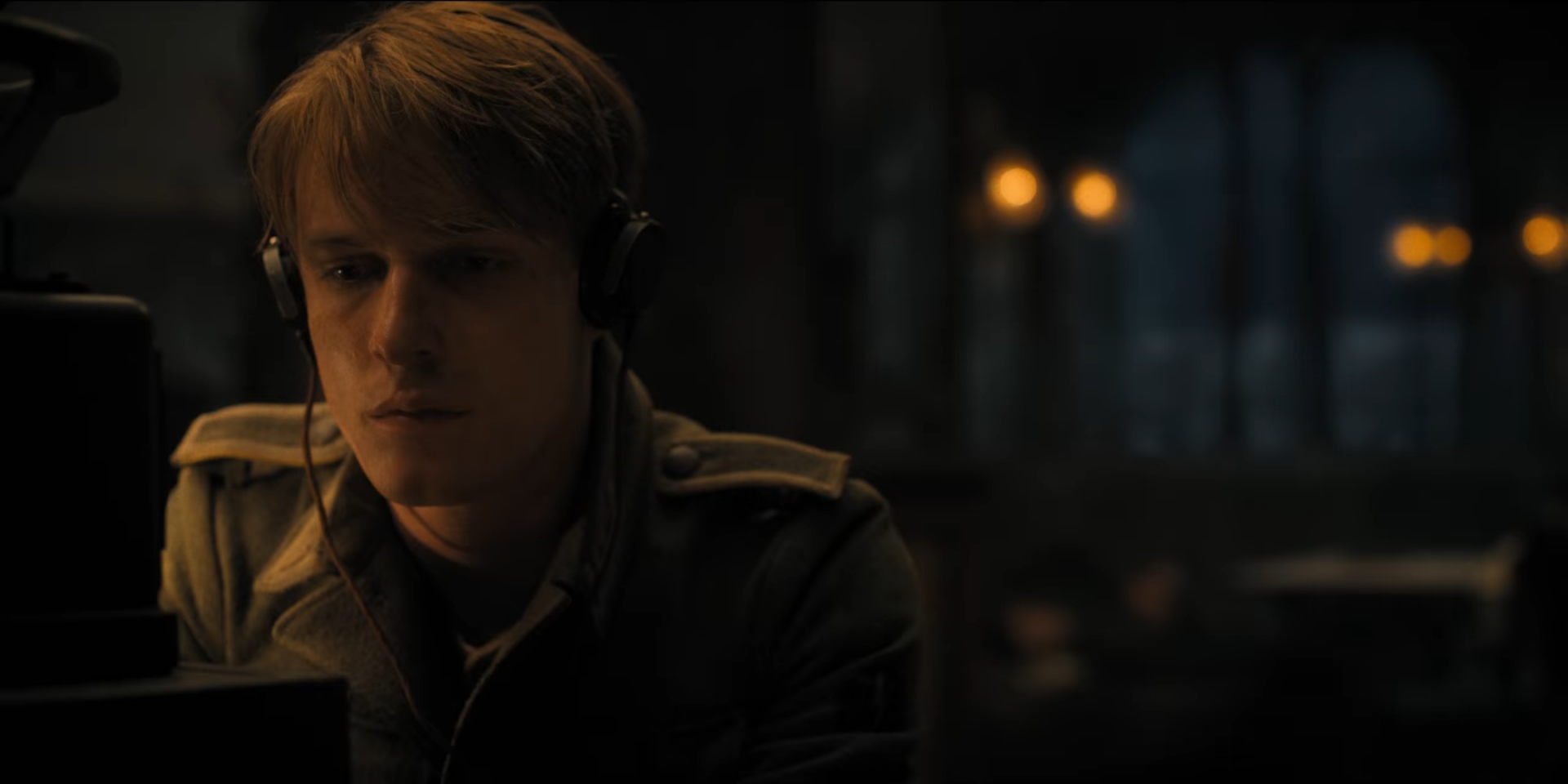
Tasked to find her is Werner Pfennig (Louis Hofmann), a handsome and good-hearted German radio technician who was forcibly conscripted into the Nazi army and wants nothing to do with the war. Werner listens to Marie’s broadcasts every night and has fallen in love with the sound of her voice. He lies to his superiors about being unable to detect the transmissions. Luckily, any time one of them suspects that he isn’t performing his job well, that person is conveniently killed in a bombing raid within minutes while Werner of course survives unscathed. (This happens several times.)
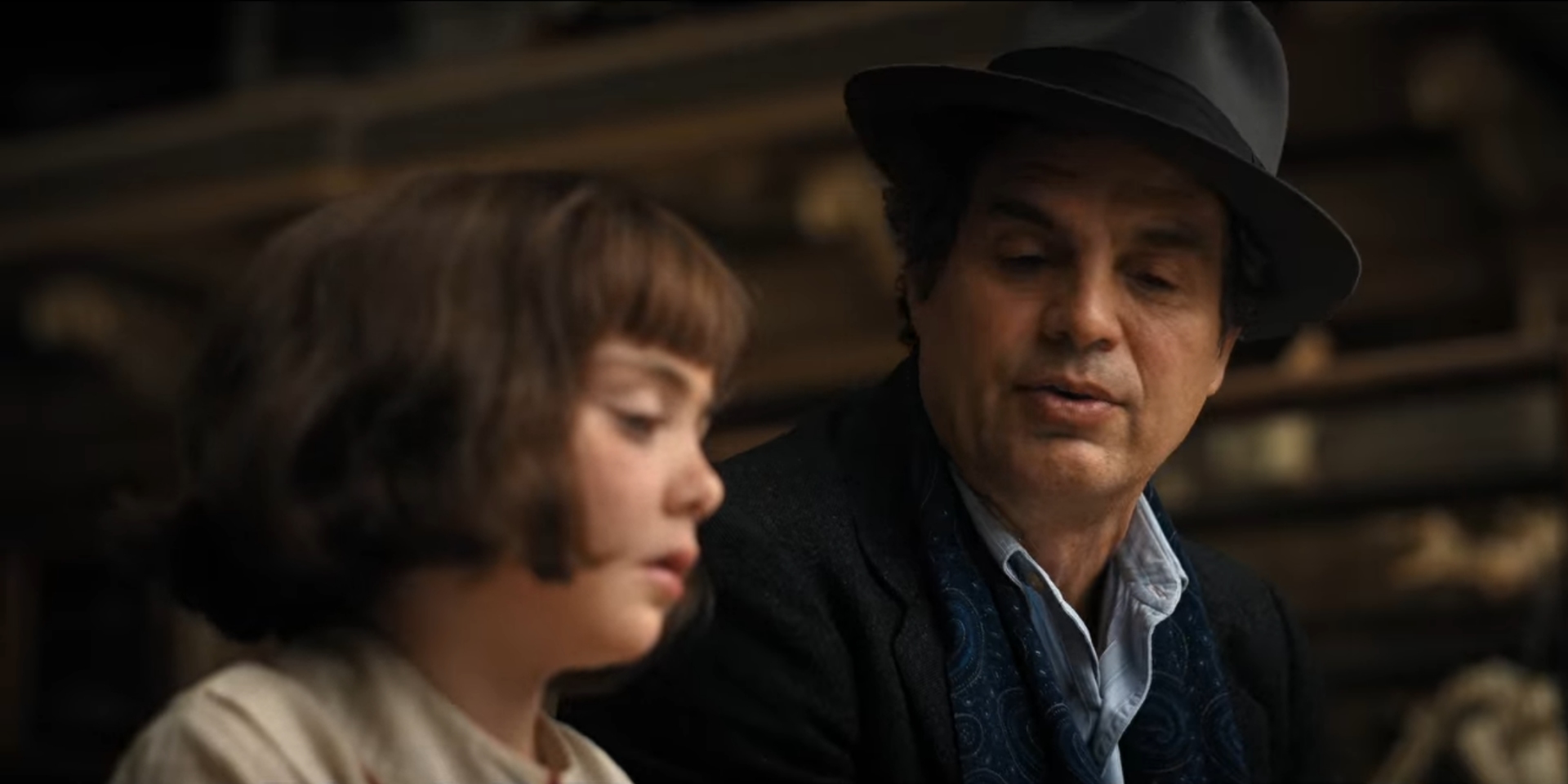
Most obsessed with locating Marie is the snarling evil Nazi commander Reinhold von Rumpel (Lars Eidinger). Reinhold interrogates, tortures, and murders the town’s locals demanding they tell him where Marie lives, but none will give her up. This bargain basement Hans Landa cares less about stopping her broadcasts than about a priceless jewel called the Sea of Flames that Marie’s beloved Papa (played by Mark Ruffalo in flashbacks) rescued from the museum in Paris where he worked at the outbreak of the war.
Allow me to digress for a moment here to say that I’ve actually been to Saint-Malo. The town is quite small, and if the Nazis really wanted to find the only blind girl in the area, they could easily do a door-to-door search and track her down in an afternoon. The absurdity of their inability to locate her is compounded immeasurably by the fact that Marie herself makes no attempt to hide. She lives in the house belonging to her uncle (Hugh Laurie), who has her same last name. Yet the genius Nazi villain never once considers looking for the LeBlanc girl at the LeBlanc house! Further, Marie leaves the house practically every day to walk all around town. She crosses paths with both Werner and Reinhold on several occasions, at every one of which they just happen to be looking in different directions and fail to notice the blind girl tapping her walking cane literally inches behind them!
As if that weren’t stupid enough, I have to mention that the reason Reinhold desperately wants the Sea of Flames isn’t just because it’s so valuable. No, he wants the jewel because it’s magic and will grant him immortality!
Yeah, really. That’s what this story is about. All the Light We Cannot See presents itself as a serious drama about one of the darkest periods in recent history, only to slowly reveal its true nature as a trashy paperback romance potboiler with a big Indiana Jones fantasy MacGuffin thrown in from out of nowhere.
As I said, I haven’t read the novel. I don’t know how much of this nonsense comes from there, or if screenwriter/producer Steven Knight tossed the book aside and foisted in some crap from another unproduced script he’d previously written. I’d like to believe the latter.
Not helping matters, director Shawn Levy dramatizes this ludicrous story with maximum schmaltz. This is just about the prettiest depiction of the horrors of war you’ll ever see. The scenery is lovely, the actors are all attractive, the photography is beautiful, the visual effects by ILM are first-rate, and James Newton Howard slathers a syrupy score over the whole thing. Levy also directs the actors playing good characters to make their performances as twee and precious as possible, while the broad and cartoonish Nazis shout every third line of dialogue.
Unsurprisingly, in this story about French and German characters that takes place in France, every single actor speaks English 100% of the time. That conceit reaches the height of hilarity during one particular scene where a German Nazi demands (in English) that a French villager translate and read (in English) a flier with text clearly written in English to him.
As for accents, Levy’s only direction for the cast appears to have been: “Eh, just do whatever you feel like. I’m sure it’ll be fine.” Poor Mark Ruffalo tries… something, bless his heart. It’s certainly not good, but you can practically feel the actor’s desperation to not humiliate himself too much radiate from the screen. Meanwhile, realizing what type of production he was in, Hugh Laurie – playing a French recluse named Etienne LeBlanc – wisely makes little to no attempt to disguise the fact that he’s actually British.
With just four episodes, about the only saving grace for All the Light We Cannot See is that the series is mercifully short. Had it been stretched out to a typical eight- or ten-episode season, I can hardly imagine what further inanities this creative team would inflict upon viewers.
Video Streaming
Netflix streams All the Light We Cannot See in 4K HDR with Dolby Atmos audio. In all technical respects, this is a first-class production. The 2.00:1 image may be dark and gloomy a lot of the time, but it’s never dim. The contrast is well-balanced with plenty of shadow detail and pretty good highlights. Colors are rich and lifelike.
The Atmos soundtrack is very loud and expansive. The first episode opens with bombers flying overhead and an aerial battle with booming explosions all throughout the listening space. Every episode has at least one similar scene of that nature. Episode 3 in particular includes a very startling overhead effect, and the big action climax in the finale envelops you with the sounds of gunfire, bombs, and artillery from every direction. Bass is rumbly and powerful. Gunshots crack with authority. In quieter scenes, the James Newton Howard score is presented with warmth and pleasing fidelity.
Related
- Shawn Levy (director)
 The Video File Blog