
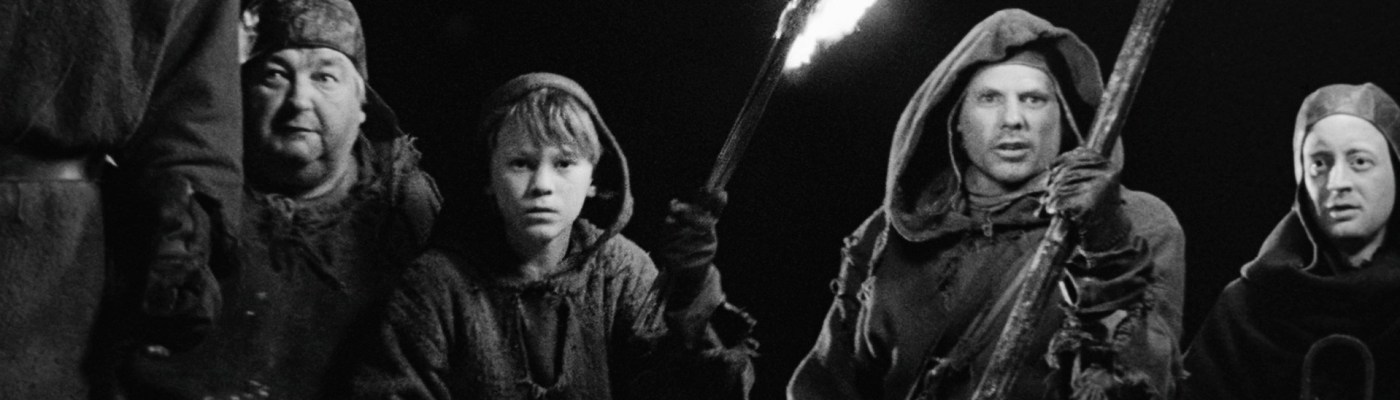
With a narrative premise that sounds like a gimmick, if not the basis for a comedy, The Navigator: A Medieval Odyssey is in fact a very heavy drama with significant physical, emotional, and spiritual stakes for its characters. Although imperfect, the movie is quite an impressive artistic achievement that seemed at the time to signal the emergence of New Zealand filmmaker Vincent Ward, only 32-years-old when he made it, as a major new voice in cinema. Unfortunately, the director never fully capitalized on that early promise, completing only a handful of subsequent features, none of which did well commercially.
The Navigator itself was a minor sensation at festivals, even scoring a nomination for the Palme d’Or at Cannes, and cleaned-up with a bunch of big wins at the Australian Film Institute Awards, but only made a pittance of money even in its home and barely penetrated the American market. The picture is largely forgotten today, except by the smallest niche of art film enthusiasts. That’s a great shame, as both this and all of Ward’s works deserve rediscovery.
| Title: | The Navigator: A Medieval Odyssey |
| Also Known As: | The Navigator: A Time-Travel Adventure The Navigator: An Odyssey Across Time |
| Year of Release: | 1988 |
| Director: | Vincent Ward |
| Watched On: | Blu-ray |
| Also Available On: | Kanopy Tubi Various VOD rental and purchase platforms |
Marketing for The Navigator labeled it a “time-travel adventure,” and that phrase was even used for an alternate title on one of its home video releases. The “adventure” part makes the movie sound a lot more whimsical and fun than it was ever intended to be. This isn’t Time Bandits. Rather, it’s an often harrowing and dour tale of suffering people in the worst of circumstances.
The story begins in the 14th Century, at a remote English mining village near the Scottish border. As the Black Death sweeps across Europe, killing millions, the local townsfolk wait in terror for the plague to reach them and likely claim all their lives. Deeply religious and superstitious people, the villagers believe their only hope of salvation is to make an offering to God, in the form of a cross made from their best copper, which must be placed atop the steeple of the greatest church in all of Christendom. Unfortunately, the bravest man in town, Connor (Bruce Lyons), has just returned from a journey to the nearest city seeking help, and reports that none is to be found there. Having seen the Black Death for himself, he warns that any trip back that direction can only bring disaster.
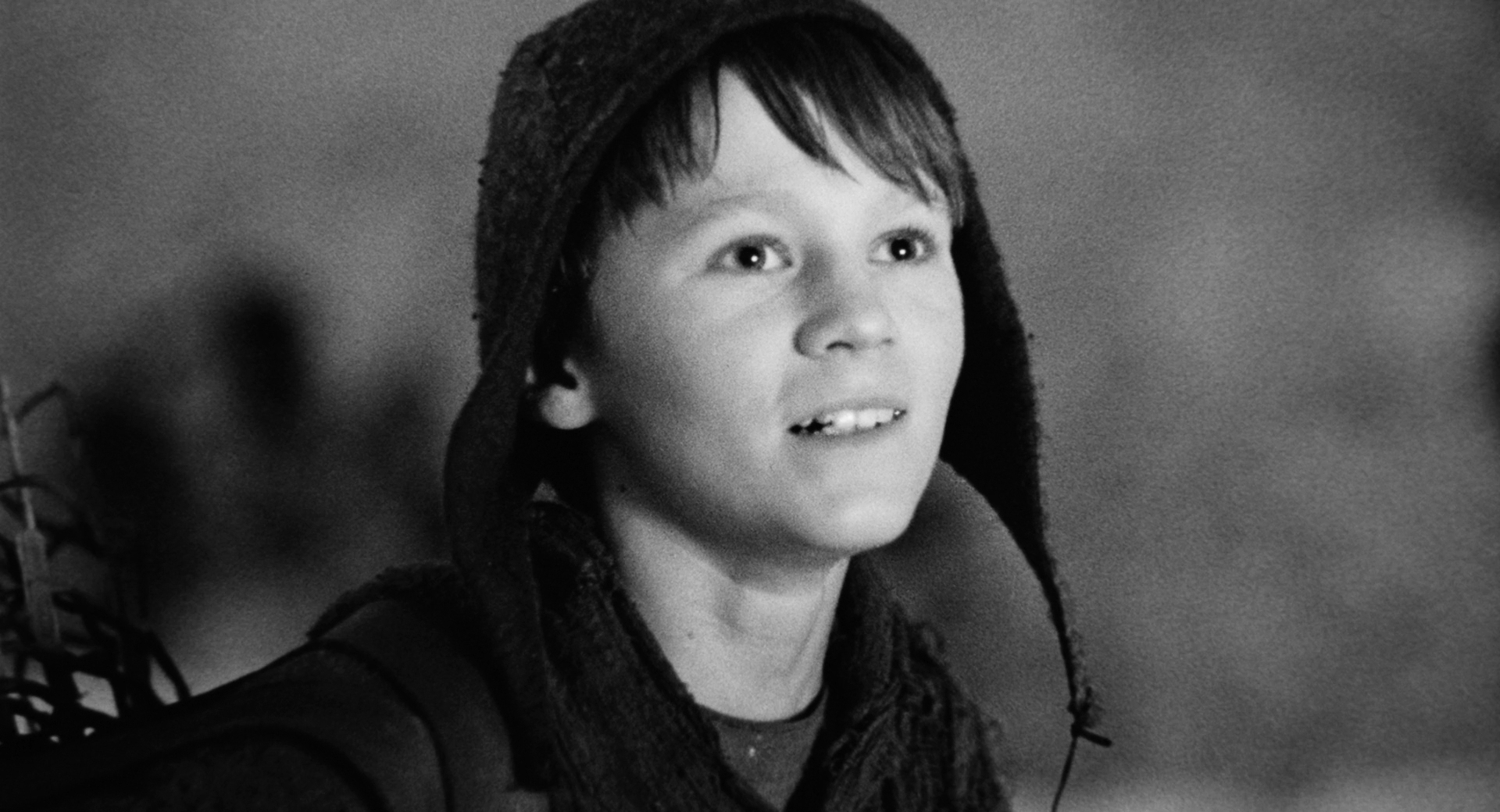
Connor’s younger brother, a boy named Griffin (Hamish Gough, né McFarlane), regularly experiences vivid, enigmatic visions he can only half understand, some of which involve a deep hole and a church. Believing these to be messages from God himself, Connor and a small group of other men lower themselves into their mine and start digging a hole deeper than any man has ever dug before, trusting that it will bring them to the other side of the world (Medieval peasants having no idea how big that really is), where they will find the great church.
And so they dig, and dig, and dig, until indeed that’s exactly what happens. Eventually, their tunnel leads into a sewer, with a ladder, and a manhole cover, from which they emerge into late 20th Century New Zealand. No science is involved in this expedition through time, nor magic. Faith alone is responsible for their deliverance into a strange world full of sights they cannot comprehend, including electric lights, automobiles, and monstrous construction equipment. Focused on their mission and with Griffin guiding them the best he can (insufficiently at times), the group struggle to find the promised church and mount their cross to it before the sun rises.
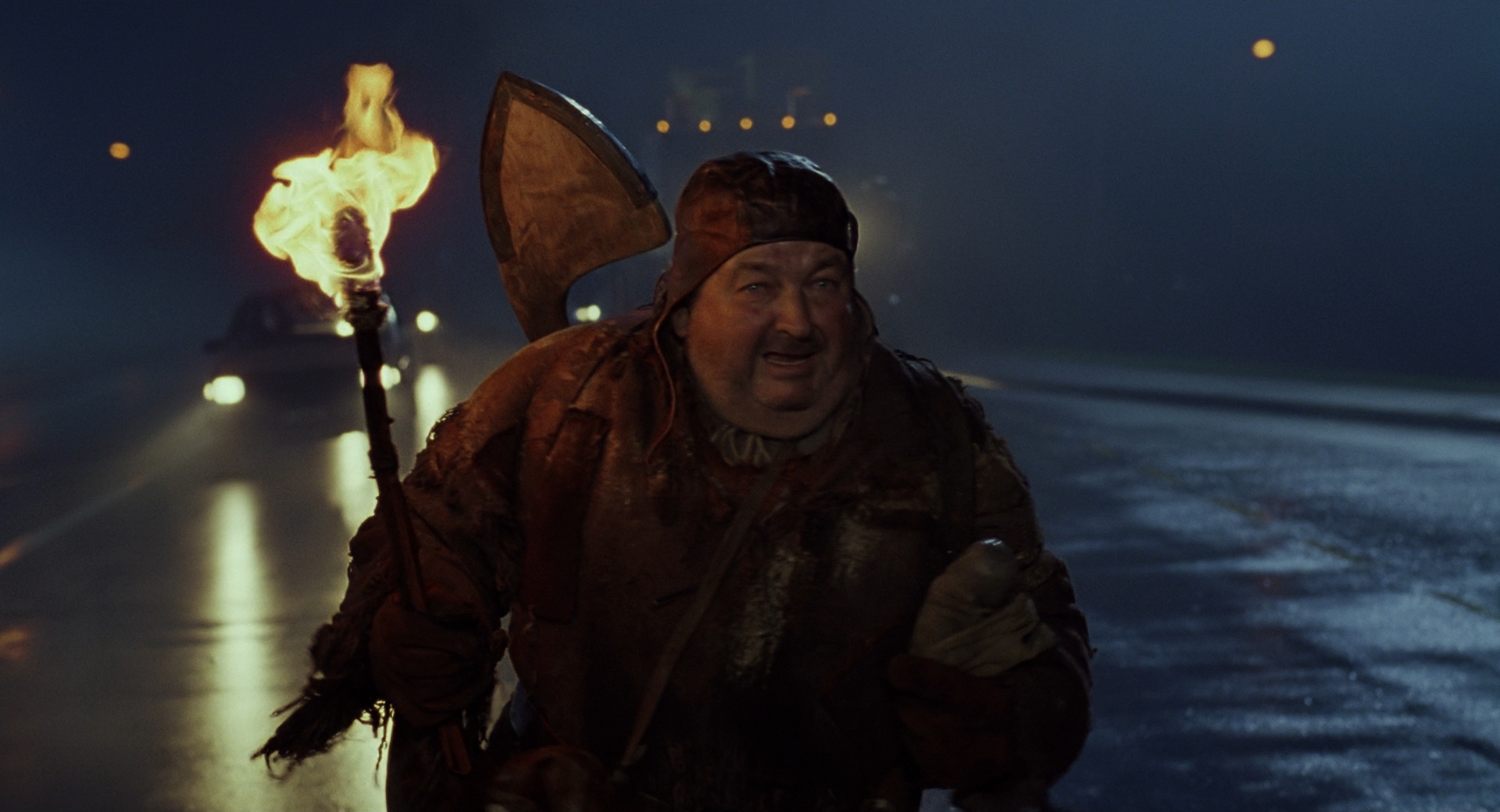
A lesser movie would indulge this conceit for fish-out-of-water hijinks, as men from the Middle Ages bumble their way through the modern world. That’s pretty much just what happened with the silly 1993 French comedy Les visiteurs and its 2001 America remake called Just Visiting (both starring Jean Reno). However, director Ward has little interest in that sort of nonsense. His film has only a few brief moments of levity, such as the first of the miners exiting their tunnel afraid that he might fall off the Earth, and another who separates from the pack because he’s terrified of cars and refuses to cross a highway.
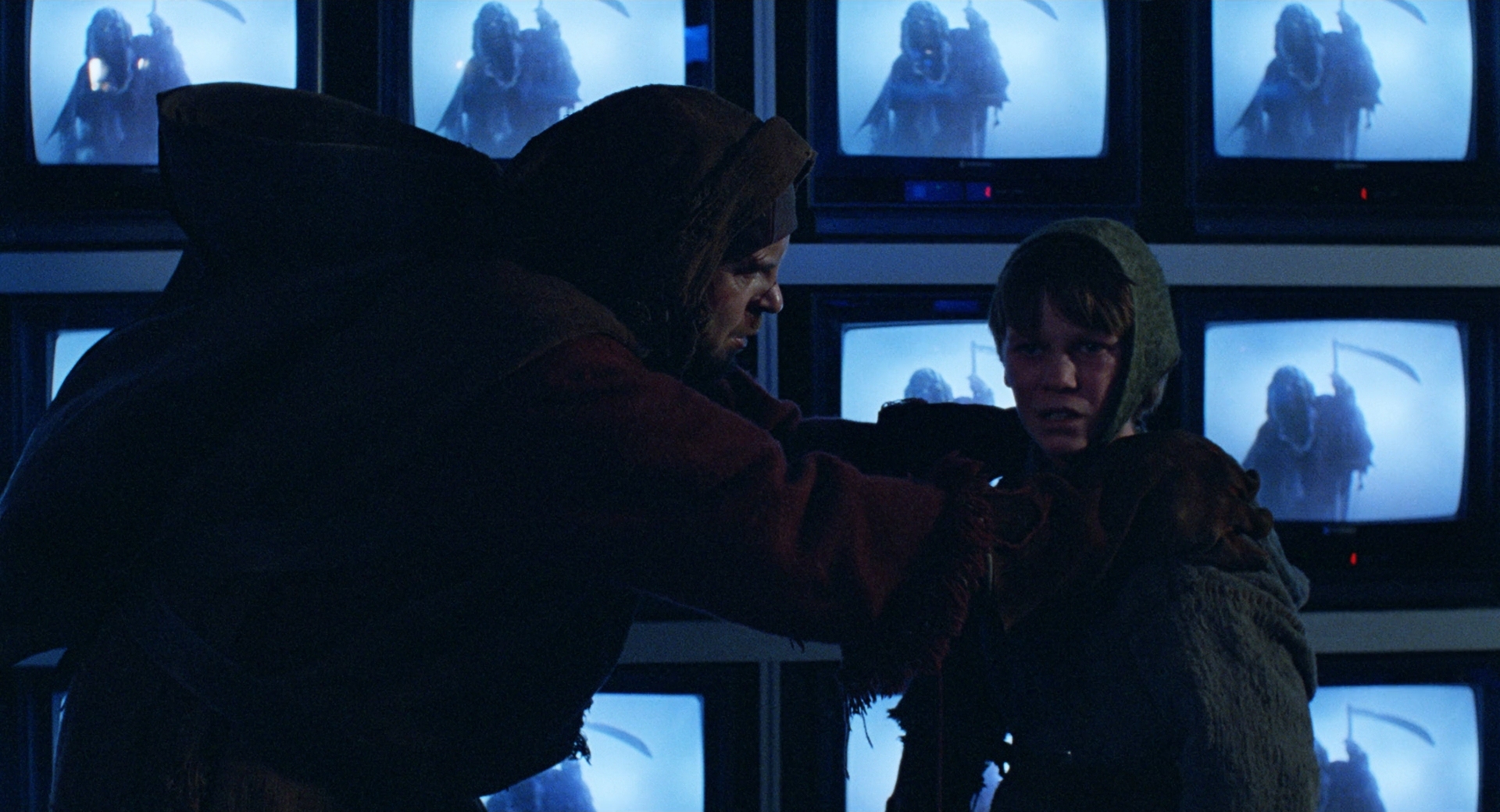
The Navigator is decidedly not a comedy. This is a story of tragedy and faith. In a key moment, Griffin encounters a wall of televisions in a store window and is confounded by what he’s seeing. The scene isn’t played for laughs. At first, the boy assumes the screens are more messages from God, but then also worries that they may be portents of Death. As he wanders lost through the city, unable to find the church, some of his companions lose their trust in him and fear their loved ones at home will be dead by morning. Their despair is real, and not unjustified.
Movie marketing people love to toss around the word “visionary,” usually undeservedly, any time a filmmaker achieves some degree of acclaim or success. Whatever you think of them, the word loses all meaning when it’s applied to populist directors like Zack Snyder or James Gunn, and I’ve seen it used for the both of them. Vincent Ward is a genuine artist who may actually merit the term. Even when working with low budgets, as this one does, his films are filled with powerful images and themes, and speak with a distinct and unique voice.
The first half of The Navigator is photographed in stark black-and-white, evoking the cinematic grammar of silent films. Carl Theodor Dreyer’s The Passion of Joan of Arc is a strong reference point. These scenes are punctuated with vivid bursts of color in Griffin’s visions. The transition to 1988 comes with a shift to full color, used strikingly and with purpose. The blues in particular are quite beautiful. Ward conjures a real sense of wonder, even when showing the most commonplace of things a modern audience would otherwise take for granted.
As just Ward’s second feature, The Navigator is sometimes a little rough around the edges. The beginning of the story is overly confusing, and the ending not entirely satisfying. Some of the acting is amateurish. The characters speak in terse dialogue, sometimes using only two or three words to convey the minimum of their intent. That part at least is done deliberately, but lines like, “Cast copper, now” have an awkwardness (almost like a comedy sketch about cavemen) that viewers may find unintentionally funny. Nonetheless, the movie is dazzling and emotionally moving enough to overcome such relatively minor flaws.
Even though it wasn’t a financial success, The Navigator brought Vincent Ward to the attention of Hollywood, where he was hired to write a screenplay for the franchise sequel Alien 3. The producers ultimately found his ideas too unconventional, and little of his story treatment was used in the final product. Later, his largest-budget and most ambitious project, the Robin Williams afterlife drama What Dreams May Come, was hampered by the clash between the director’s vision and the studio’s insistence that it be married to a disappointingly pedestrian and treacly script by screenwriter Ron Bass. That movie failed to win over either critics or audiences, but did win an Oscar for Best Visual Effects, mostly due to Ward’s imaginative use of them. Sadly, his later efforts received next to no distribution and the filmmaker fell into obscurity.
The Blu-ray
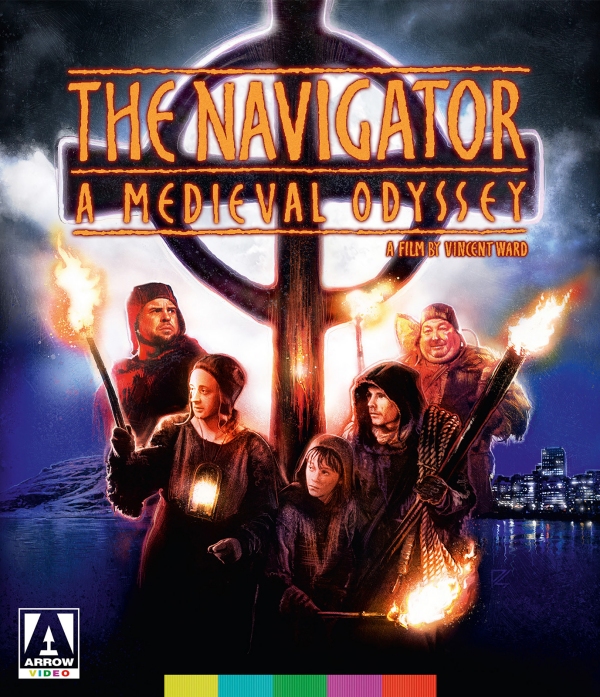
The Navigator was first released on DVD by Hen’s Tooth Video back in 2001 under one of its alternate titles, The Navigator: A Time-Travel Adventure. The same label later reissued the film in 2013 using its original Medieval Odyssey title. Another decade and a half later, Arrow Video took an interest in director Vincent Ward and released both his debut feature Vigil and The Navigator onto the Blu-ray format in 2018. At the time of this writing, no plans for 4K Ultra HD have been announced or even suggested.
Fortunately, the Blu-ray edition of The Navigator is a high-quality affair that doesn’t really scream for needing an upgrade. Keeping in mind that the movie was a low-budget production and that parts of it were intentionally styled to emulate silent films, its photography and visuals are quite striking, and that aspect comes through nicely in the high-definition transfer.
The black-and-white sections are grainy by design, but the 1.85:1 image is pleasingly sharp, and close-ups (of which the film has many) are very detailed. Grayscale is well-balanced, though whites (especially the sky in the background behind actors) sometimes look blown-out. Again, I assume that was a deliberate choice to give those scenes a dreamlike tone. The shift to color, both in the lead character’s visions and eventually the transition to modern times, is bold and eye-catching.
Director Ward has a really stunning control over colors in this movie, not just the vibrancy of them, but also in knowing exactly how and when to use them. Every splash of color serves a purpose, chosen with precision on the screen like an artist painting onto canvas.
Originally released theatrically in Dolby Stereo surround format, the DTS-HD Master Audio 2.0 soundtrack has quite a bit of surround envelopment when decoded by an appropriate upmixer. Wind blows all through the listening space, and echoes reflect from the rear speakers. Specific sound effects, such as the clang of a church bell or the tromping of horse hooves on pavement through the city at night, come across crisply.
Unfortunately, the track has little dynamic range and sounds very flat most of the time. Dialogue is also soft in the mix, perhaps due to original production issues but perhaps also due to too much noise reduction in the restoration effort. Combined with the actors’ thick accents, dialogue can be frustratingly muddy and hard to discern.
Bonus features consist of a 9-minute appreciation for the film by British critic Nick Roddick (created for Arrow in 2018), a vintage half-hour documentary about Vincent Ward made for New Zealand television in 1989, and a trailer.
 The Video File Blog