
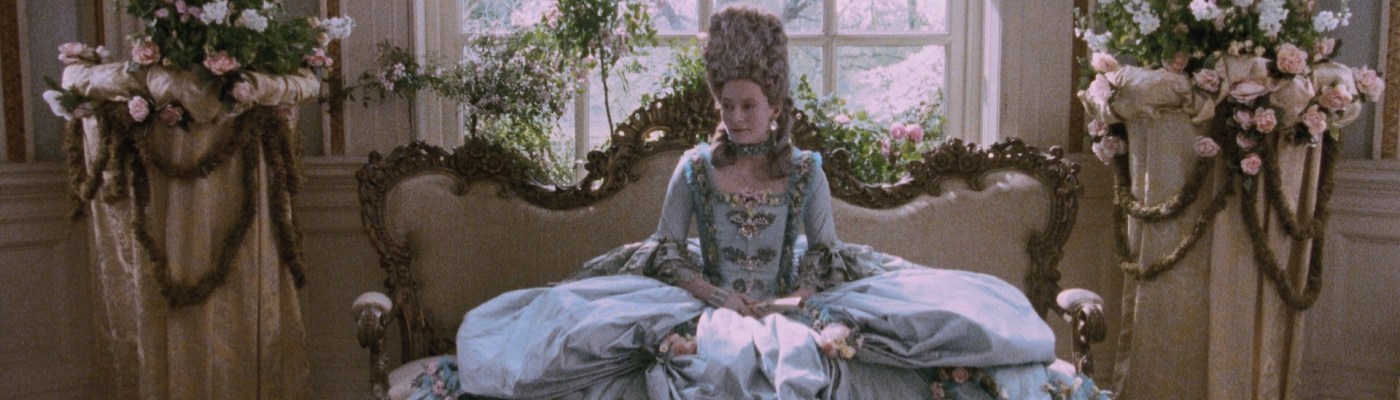
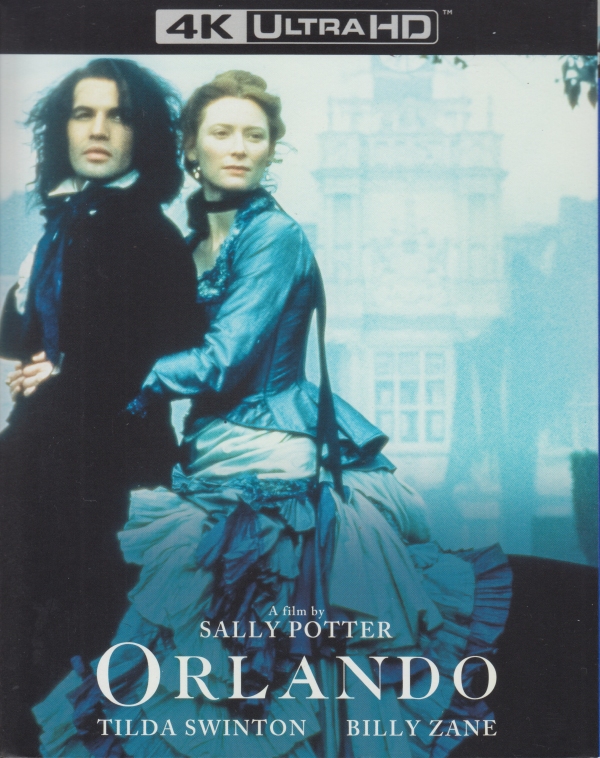
Adapted from a supposedly unadaptable 1928 novel by legendary author Virginia Woolf, Orlando was a key work of the early 1990s independent film movement and continues to reverberate in select areas of popular culture decades later. Spanning a period of some four hundred years, the story is a sweeping meditation on historical significance, personal identity, and gender roles, among other things, all handled with a deft touch and packed into a tight 94 minutes.
Written for the screen, directed by, and parts of the musical score composed by acclaimed theater director and filmmaker Sally Potter, the movie was a modestly-budgeted production with more scope, artistry, and ambition than most studio period pieces ever muster. For all that, it’s also enormously fun, even funny. It remains a tremendous achievement, and should have been the type of breakout that would lead the director to more work and acclaim. Unfortunately, that didn’t happen. However, the film did bring star Tilda Swinton into the spotlight, where she has fostered a very successful career in projects both big and small, even landing an Oscar win in 2008. While she’d worked on stage and in some art films previously (particularly several by Derek Jarman), Orlando was the piece that really put Swinton on the cinematic map.
| Title: | Orlando |
| Years of Release: | Festivals and select international territories – 1992 United States theatrical release – 1993 |
| Director: | Sally Potter |
| Watched On: | 4K Ultra HD Blu-ray |
| Also Available On: | Blu-ray Roku Channel Tubi Various VOD rental and purchase platforms |
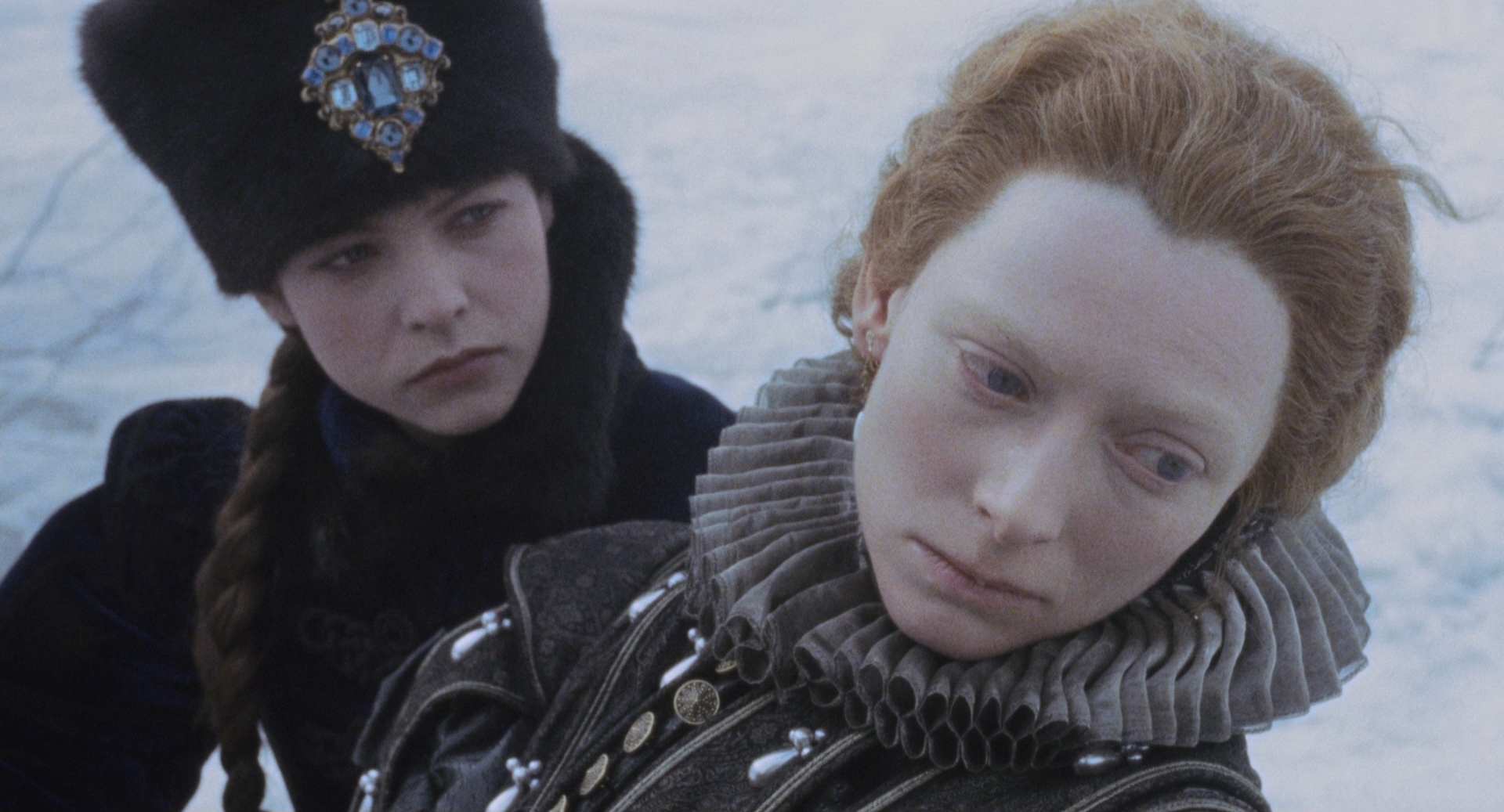
Beginning in the year 1600, the film recounts the exploits of a young English nobleman, born to wealth and privilege, but also to great ennui. By virtue of his family’s stature, Orlando is brought into the company of Queen Elizabeth I (played by queer icon Quentin Crisp, delightfully cast). Enchanted by the boy’s youthful visage, so handsome in an effeminate way as was fashionable at the time, the aged and gnarled monarch chooses him to be her royal favourite and live in her palace, acting as a proxy son, of which she had none of her own. Though he serves little real purpose there, the queen, before her death, bequeaths to Orlando ownership of his family’s estate (pointedly defined as belonging to the queen, not to the family), with but one condition: that he, “Do not fade. Do not wither. Do not grow old.”
And thus, he doesn’t. No magic spell nor curse is cast. No supernatural power intervenes. Orlando simply endures, unchanged, over the years. At first, this condition goes unnoticed. For a decade or two, those around him assume that Orlando has merely been graced with a remarkable stamina and vitality. He goes about his life, frivolous as it often is, becomes engaged to an appropriately-matched young noblewoman, tosses her aside when falling instantly in love with a Russian ambassador’s daughter, and in turn has his own affections spurned. Distraught by this betrayal, Orlando falls into a sleep from which he takes six days to awaken, the first and most minor of time jumps to follow.
Years pass. Kings and queens come and go, but Orlando remains as he is, following new pursuits and passions as his whims allow. At one point, he develops great enthusiasm for poetry, but has his own hopes of becoming a poet dismissed by a pretentious tutor.
By 1700, he’s drafted to serve as an ambassador himself, to the Ottoman Empire, where he first experiences war, and does not care much for it. Another prolonged sleep ensues, and upon waking, Orlando discovers he – or rather, she – is now a woman. Greeting this transformation with a detachment that can only be afforded one who has witnessed just about everything else the world can offer, she dispassionately observes: “Same person, no difference at all. Just a different sex.”
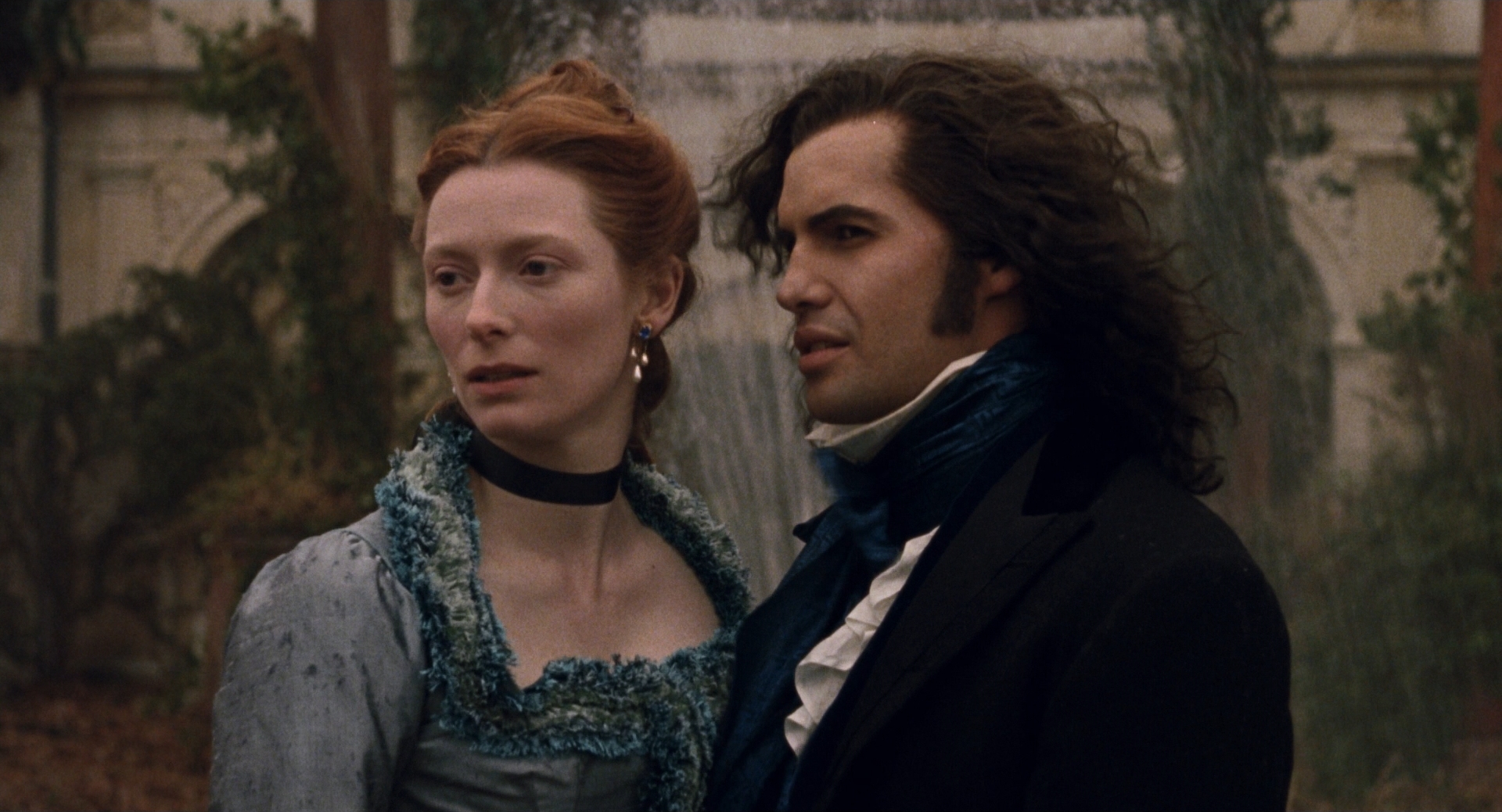
Another century and a half later, Orlando has a grand but doomed romance with a dashing American (Billy Zane at his dreamiest), who becomes her lover but won’t commit to more. In this time, her gender having been noticed, she is also legally declared female by Queen Victoria, which means Orlando will lose all her property and possessions unless she can produce a male heir. The cruel irony of a new queen disenfranchising women is not lost.
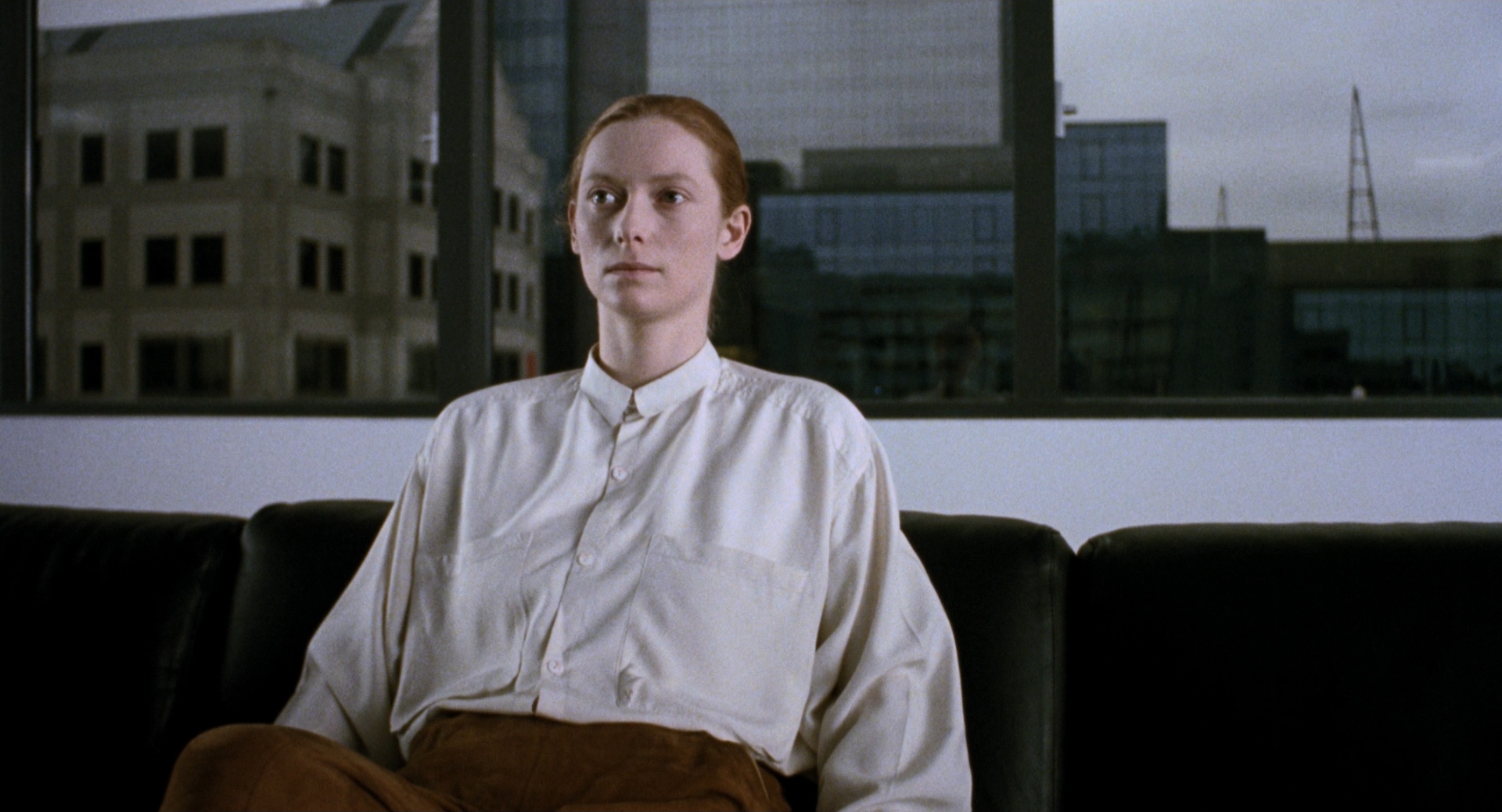
Orlando continues to slip through time, not always by sleep, sometimes in leaps unexplained. Where Virginia Woolf’s story ended in her own present day of 1928, Potter’s film follows a similar course into the 1990s of which it was made. Through this journey, Orlando changes not just sex but temperament. Originally quite passive as a man, she becomes more assertive as a woman, and refuses to be treated as property by men, even as she had once believed was an entitlement during her time in that gender. In the final iteration in which we see her, if still decidedly female, she appears her most androgynous. As was fashionable at the time.
By quick glimpse of a performance of Romeo and Juliet, we are reminded that, in the Elizabethan era, it was accepted practice for male actors to portray female characters on stage. Why then should not a woman play a man in the storytelling media of the modern day? A female filmmaker and artist, Sally Potter ruminates on this question and others like it, in a most playful manner. Her adaptation captures the spirit of the novel, if not every word or detail. By necessity, Potter condenses and abridges Virginia Woolf’s lengthy, winding text, converting much of it into visual poetry instead, yet retains its wit and satire. A scene where Orlando holds court with Jonathan Swift and Alexander Pope, two literary giants of the 18th Century, and finds them to be insufferably sexist boors, lands quite a punch to the pomposity of the supposedly enlightened classes.
As a cinematic work, Orlando is gorgeous in both visuals and sound. Shot across multiple countries, some considered inaccessible to Westerners until that time, the movie’s exquisite production values belie its meager budget. The lavish wardrobe and art direction were both nominated for Academy Awards (the film’s only recognition there). Sandy Powell’s sumptuous costumes were celebrated as recently as the 2020 Met Gala, almost three decades past the movie’s creation.
For obvious reasons, Orlando has often been embraced as an important landmark in queer cinema, though the filmmaker has resisted being labeled one way or another. Much like the original author, her film examines gender and sexuality but defies traditional concepts of them. Most impressive of all, these themes are explored without taking a heavy hand or feeling a need to lecture the audience.
This movie is a true treasure. I’ve watched it on several occasions and could do so again at any moment.
The 4K Ultra HD Blu-ray
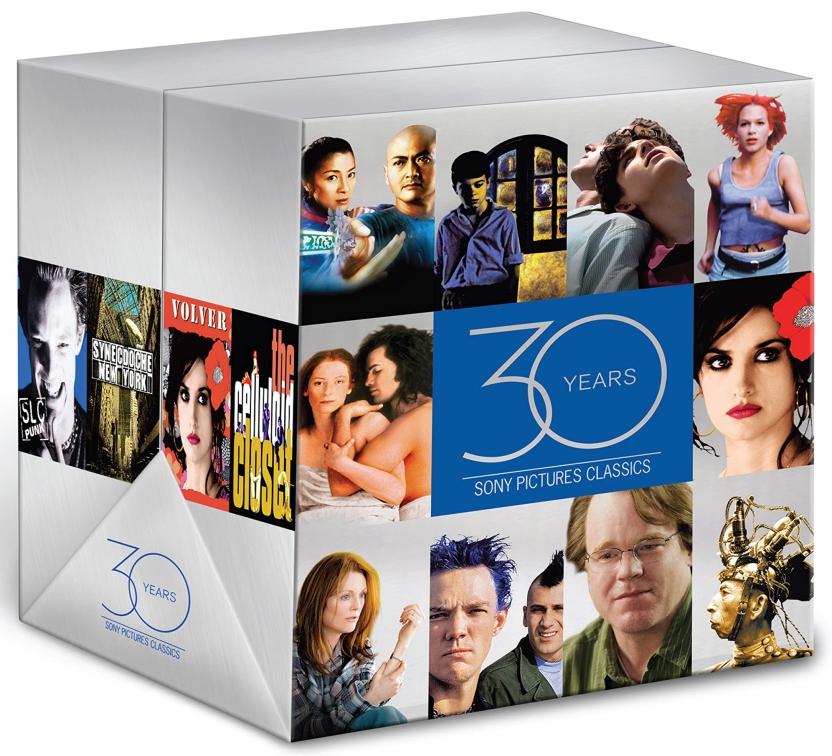
Although Orlando has a copyright date of 1992 in the end credits, it only played at festivals and in a handful of overseas markets at that time. The film didn’t receive a general theatrical run in the United States until the middle of 1993, with home video releases on VHS and Laserdisc in 1994. A DVD followed in 1999 and a Blu-ray not until 2010. Most recently, the movie was upgraded to 4K Ultra HD Blu-ray in 2022 as part of the 11-film Sony Pictures Classics 30th Anniversary box set. While a few of the other titles in that collection were later broken out to their own standalone 4K copies, Orlando remains exclusive to the Anniversary set as of this writing, at least in the American market. A deluxe Limited Edition in fancy packaging was released by Curzon Film in the UK and can still be purchased from import specialist retailers, if desired.
All the movies in Sony’s 30th Anniversary box include only a 4K disc, with no standard Blu-ray for backup. Inside the box, each movie is stored in a standard keepcase with a slipcover that has its own artwork.Unlike some of the others packaged with it in the same set, the Orlando disc has a mostly sensible menu system that isn’t agonizing to navigate.
Filmed in locations from England to Russia to Uzbekistan, with a Russian cinematographer behind the camera, Orlando was photographed in part to resemble the work of classical painters from the time periods depicted. Rembrandt is a clear influence on the beginning of the story, set in the 1600s, where scenes are often bathed in rich darkness. It’s an intensely visual film, yet at the same time, was also a fairly low-budget production and most of the money was spent on the ornate production design and costumes.
The 1.85:1 image is often grainy, with some detail loss (whether intentional or not isn’t entirely clear) in the darkest scenes. Close-ups can be quite striking, but medium and wide shots are notably softer and rarely exhibit much sense of 4K detail. Colors are also limited by design, typically a little flat and delicate. The HDR grading is subtle to the point that it’s hardly noticeable at all, with few highlights that visibly extend beyond Standard Dynamic Range.
I had the 2010 Blu-ray on hand, and comparing the two, that disc still holds up very well. The 4K UHD is a small improvement, but the two formats look more similar than not for this particular film. In my opinion, a fan who has the Blu-ray need not necessarily buy the entire Sony Pictures Classics box set just for this title. If, however, one finds the other movies in the collection appealing as well, the Orlando disc does offer a modest upgrade over the older Blu-ray.
The DTS-HD Master Audio 2.0 soundtrack was ported directly from the Blu-ray, and it sounds terrific. The movie has a lush score, and the track has a surprising amount of bass, both in music and sound effects. Dynamic range is impressive, from the highs of a castrato singing to the booms of muskets and cannons during the war scenes. Sound effects are crisp and well-delineated at all times. Chirping birds in fair weather and the sounds of skates on ice in winter especially stand out.
I all too regularly encounter collectors on social media or other internet forums acting aghast when an older movie soundtrack isn’t remixed into at least 5.1, if not full Dolby Atmos. I see little point in that here. Know that Dolby Stereo was always a surround sound format in theaters. Even when matrixed into two channels, this soundtrack was fully intended to be decoded by an upmixer, such as (at the time) Dolby Pro Logic, or its modern iteration Dolby Surround Upmixer. When doing so, the track expands well (if subtly) to surround speakers. Train and plane effects late in the movie should pan to the back of the room.
The 4K Ultra HD carries over all the bonus features from the Blu-ray, starting with a disappointingly dull audio commentary by director Sally Potter and star Tilda Swinton. That’s followed by 10 minutes of selected scenes commentary by Potter alone, a half-hour video diary about filming in Russia, a similar hour about filming in Uzbekistan, 8 minutes of behind-the-scenes footage from the movie’s final scene with singer Jimmy Somerville, a 23-minute Venice Film Festival press conference, a vintage 13-minute interview with Potter, and a trailer.
Related
- Sony Pictures Classics 30th Anniversary box set
- Tilda Swinton
Note: Screenshots on this page were taken from the 2010 Blu-ray edition of the film and are used for illustration purposes only.
 The Video File Blog
Wow, this is the first time I ever hear or read anything at all about a movie called ‘Orlando’. I’m ashamed. Sounds like a delightful motion picture. Need to check it out.
LikeLiked by 1 person