
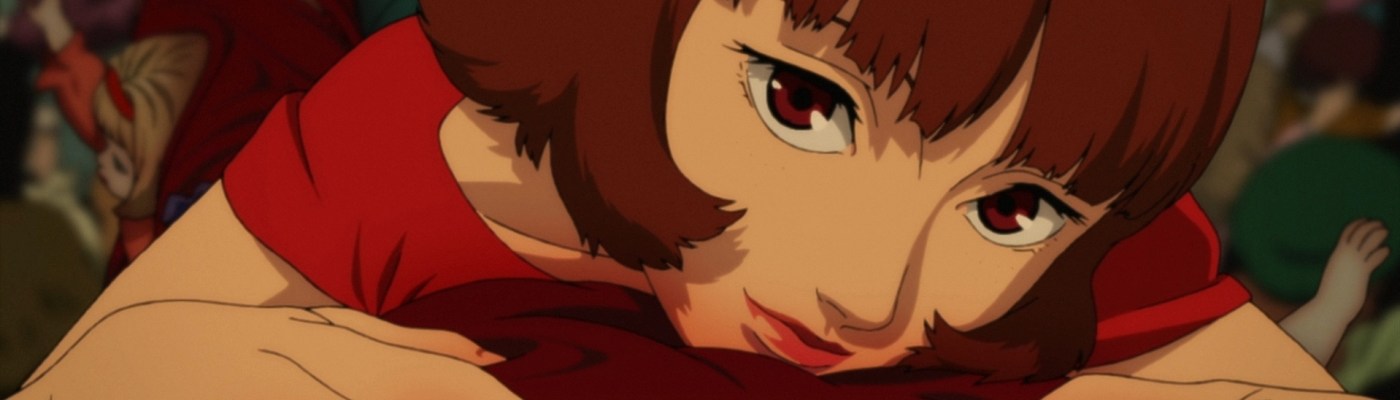
The human mind’s dream state has fascinated filmmakers since the earliest days of cinema. Arguably, no other artistic medium has come closer to being able to capture and depict the peculiar logic, or illogic, of dreams than the movies have. The animation medium seems well-suited to that task, and Japanese anime in particular even more so, as capably demonstrated by the 2006 mind-bender Paprika, from celebrated anime director Satoshi Kon.
Paprika is often cited as an obvious influence on Christopher Nolan’s sci-fi blockbuster Inception a few years later. While Nolan has never, as far as I’m aware, openly acknowledged as much, a revisit to both films makes the connections hard to deny.
| Title: | Paprika |
| Year of Release: | 2006 |
| Director: | Satoshi Kon |
| Watched On: | Blu-ray |
| Also Available On: | 4K Ultra HD Blu-ray Tubi Various VOD purchase and rental platforms |
At 33-years-old, Satoshi Kon made a stir both in Japan and internationally with the 1997 animated psychological thriller Perfect Blue, which has regularly been hailed over the years as one of the greatest anime films ever made. If a tough act to follow, his subsequent works Millennium Actress, Tokyo Godfathers, and the TV series Paranoia Agent were also widely acclaimed. In 2006, Paprika was the director’s final completed feature before an untimely death from cancer. At just age 46, Kon left an impressive legacy in his wake.
A common recurring theme in the director’s work was the thin line separating reality and illusion. In Perfect Blue, that boundary was broken by the lead character’s mental instability. Paprika crashes through it from a science fiction angle. Very loosely based on a 1993 novel by author Yasutaka Tsutsui, the film is about a group of medical researchers who’ve invented a potentially revolutionary device. Developed for the purpose of treating trauma and other psychological disorders, the DC Mini will allow doctors to view and even interact with a patient’s dreams, for the goal of guiding them subconsciously toward confronting their fears or insecurities.
Even though it hasn’t yet been cleared for legal use, Dr. Atsuko Chiba has taken to using a prototype of the DC Mini on the sly to help a police detective troubled by an unsolved case. In doing so, Chiba creates a character known as Paprika to act as her avatar in the dream world. Their therapy sessions seem to be going well, until another prototype is stolen from the lab, presumably by a former employee the Chairman of their company is quick to label a terrorist. Because safety protocols hadn’t yet been enabled on it, the second DC Mini can tap directly into the dreams of anyone who’s ever used one before, either doctor or patient, without consent. Worse, it can also merge dreams together from separate consciousnesses. Over time, the extent of its power grows, to the point that it can infect anyone at all, whether or not they’ve ever tested a DC Mini. Soon, victims can no longer tell dreams from reality. As experienced users, only Paprika and Det. Konakawa may have any chance of preventing this disaster from spreading before dreams even start to intrude into the real world.
In making movies about dreams, a typical trap filmmakers fall into is depicting the dreams in too literal or logical a fashion. I would argue that Nolan’s Inception makes that mistake. Even if they defy physics or certain other bounds of reality, the dreams in that film are constructed with very rigid, structured rules that operate with consistency from dream to dream. Even multi-layered dreams-within-dreams have clear divisions separating each level, and guidelines for how to move between them. Nolan’s interest was less in understanding the way humans dream, than in making a convoluted heist thriller in a heightened setting.
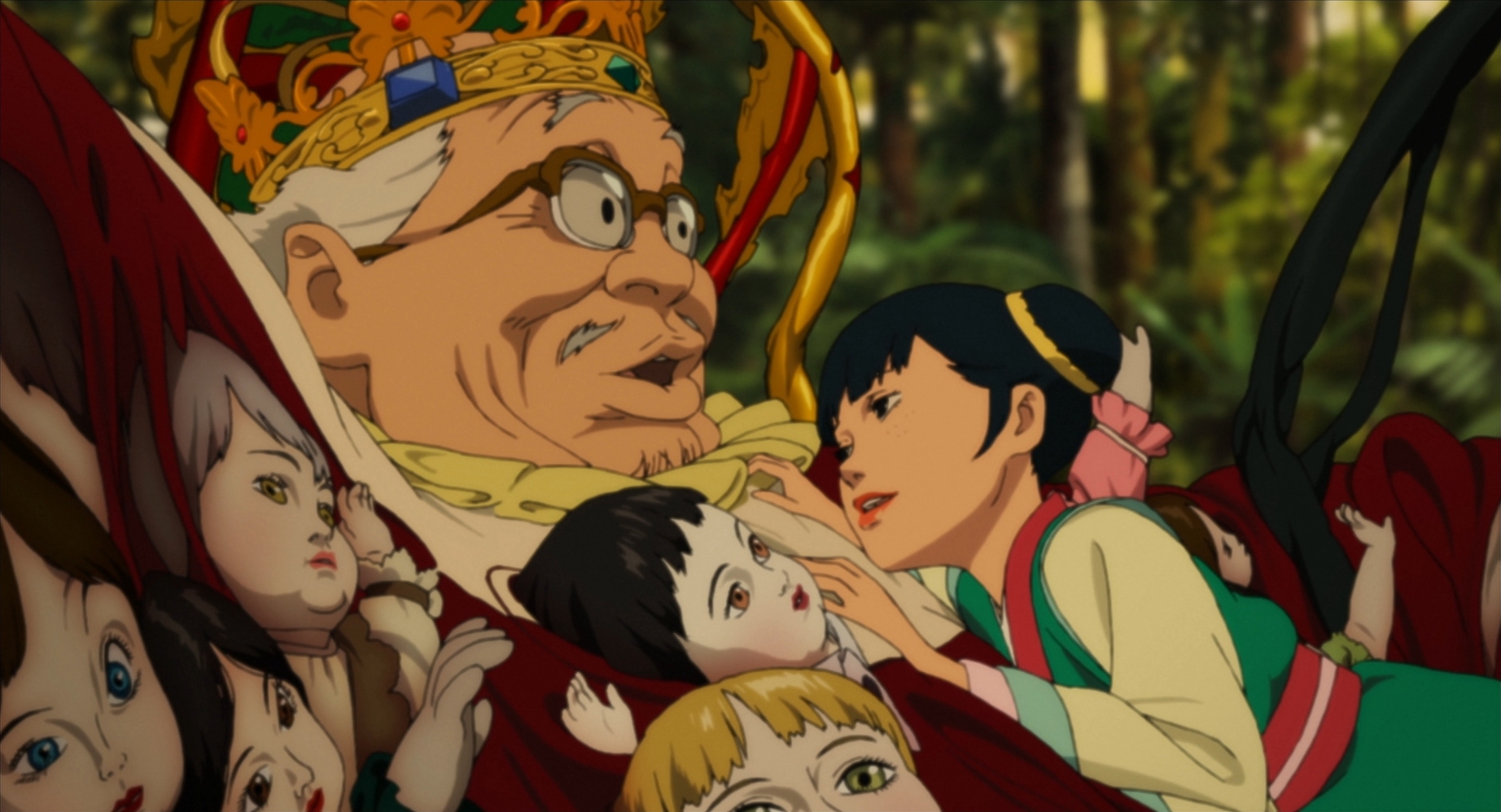
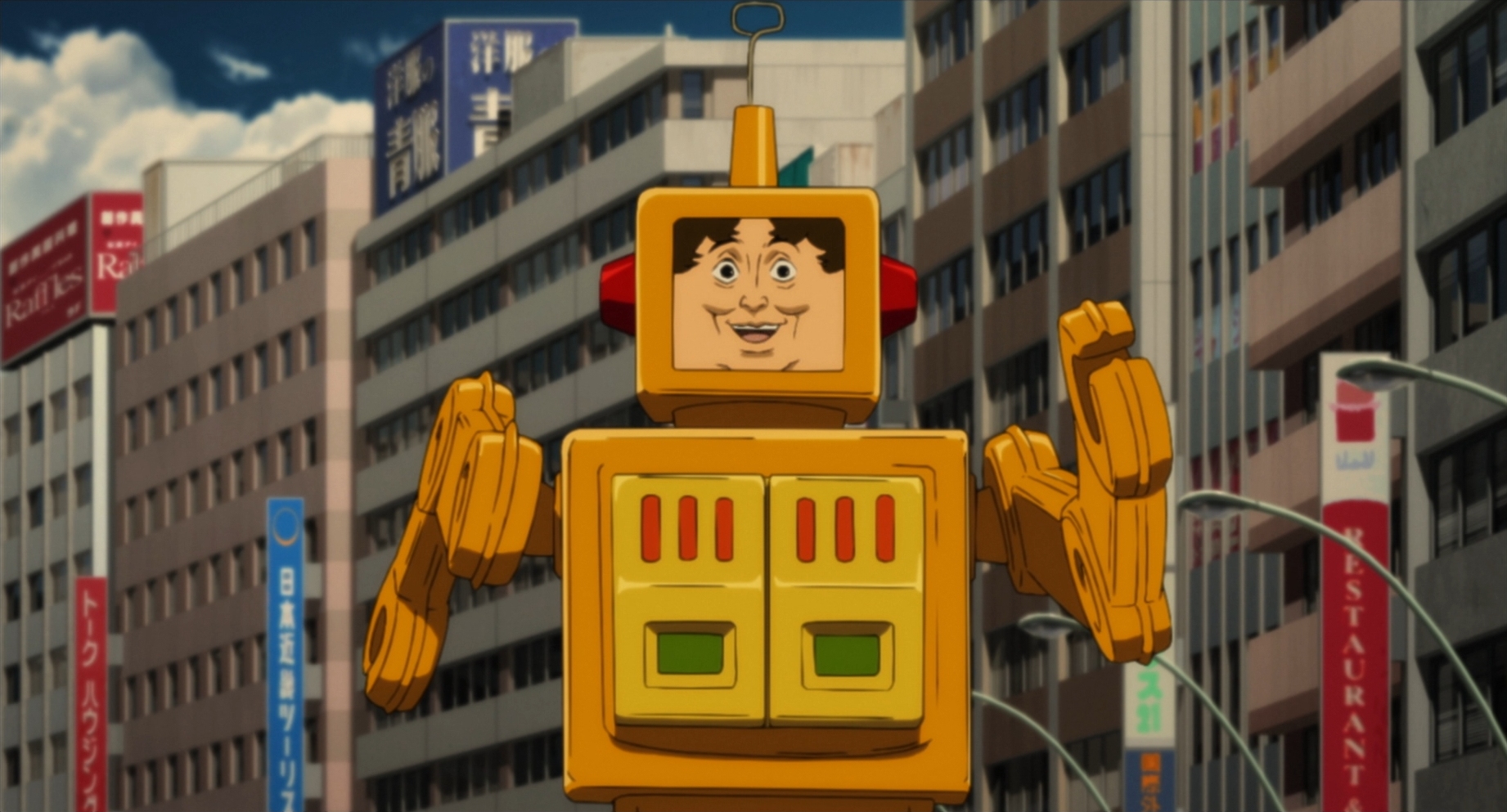
Paprika has a better handle on how dreams actually work, in my opinion. The dreams fluidly shift from setting to setting, event to event, in a manner that can only make sense (or feel like it) to the unconscious dreamer. What starts as a wacky parade of walking furniture and goofy anthropomorphic animals one moment turns to violent spy action the next, then to monstrous body-horror, each transition seamlessly blending as if all part of a smooth continuity. Kon’s dreams are also far more surreal, and sometimes funny, than anything the defiantly rational Christopher Nolan is capable of imagining.
All that being true, I didn’t fully love Paprika the first time I watched it a couple decades ago, and I’m not sure that I do now. While filled with great visual creativity, the film feels like it’s been created by someone at too much of an intellectual remove from the subject matter. Ultimately, the plot is too neat and tidy, and frankly makes too much sense. To my mind, the movies that best capture the truth of dreams are those made by genuine Surrealist artists unafraid to throw logic completely out the window, such as Buñuel’s Un chien andalou or Lynch’s Eraserhead. With Paprika, Kon holds back too much and never fully goes there.
Even in the real-world setting, many of the characters are exaggerated in a familiar anime style that detracts from the contrast with the dreams. Running fat jokes about a morbidly obese scientist with the mental maturity of a child don’t play especially well. Nor did I feel much engagement with the main characters’ emotional journeys. Chiba/Paprika remains a cipher throughout, and a last-minute romance plot-point comes from out of nowhere.
Despite these flaws, Paprika is a fun and inventive movie with a lot to offer. Although I still think Perfect Blue remains Satoshi Kon’s masterpiece, this one leaves me saddened for the lost potential of where his work could have gone had he lived a little longer.
The Blu-ray
Sony Pictures brought Paprika to Blu-ray way back in 2007, with a recent upgrade to 4K Ultra HD Blu-ray in 2024. I was skeptical of the need to release this movie in 4K for a number of reasons, the primary of which is that, from the best I’ve been able to ascertain, the film’s original animation was rendered at only 720p resolution during production. On top of that, it blends in a considerable amount of early-2000s digital effects that look even lower resolution. When choosing to rewatch it, I reasoned that Blu-ray ought to be good enough for this movie. I’m not sure I made the right call on that. Probably not.
I don’t recall my first impression of it when I last watched in 2007, but looking at it now, the old Blu-ray has significant failings. Even for 720p, the picture is frustratingly soft, almost blurry much of the time. I suspect it was subjected to some Digital Noise Reduction, likely in an attempt to disguise artifacts from upscaling the animation to 1080p.
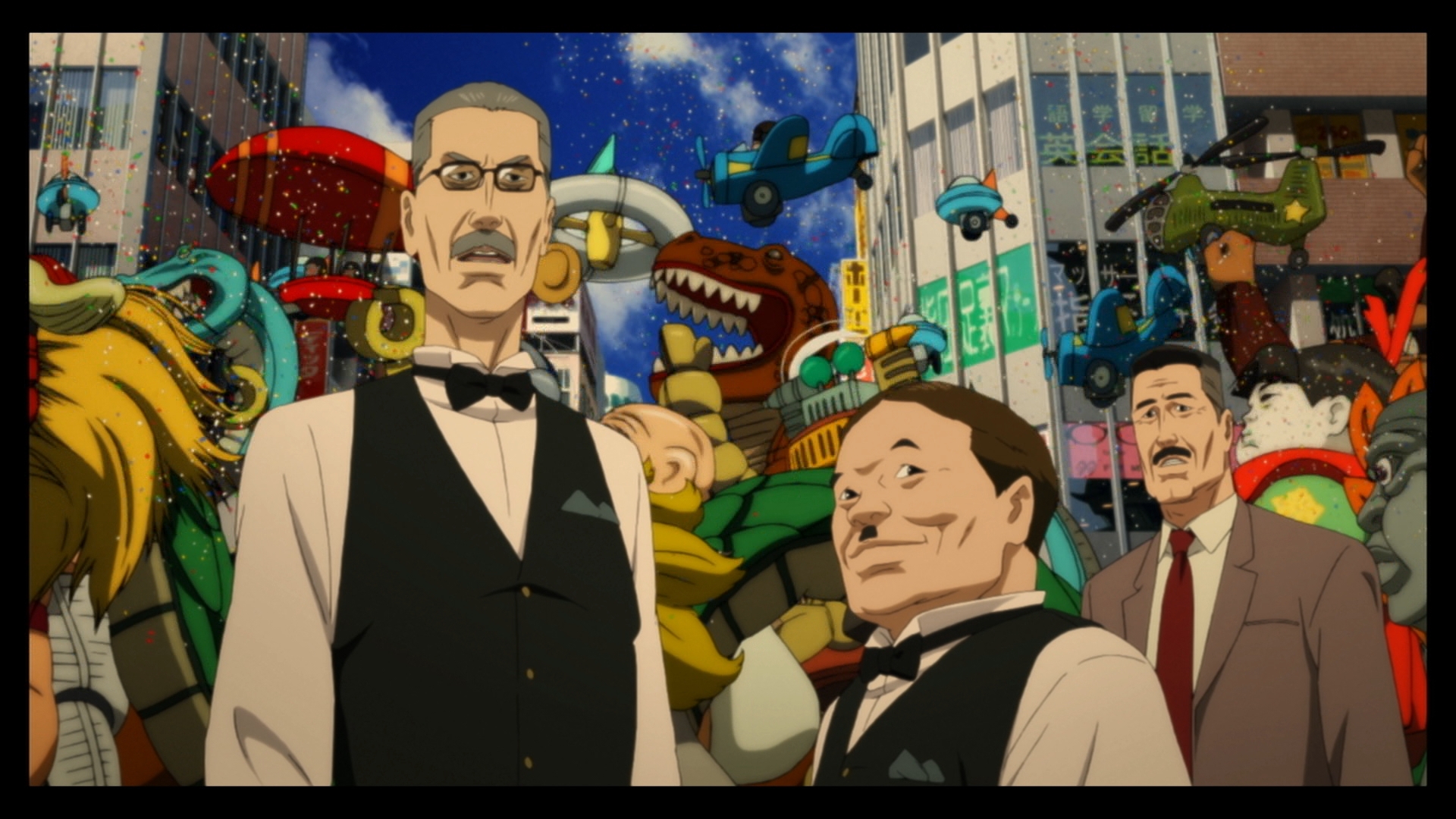
Just as annoyingly, the entire 1.85:1 image has been shrunken and windowboxed within the frame, black bars around all four sides. The active image measures only 1842×993 pixels, a reduction of about 4%. Windowboxing anime on video was a common practice in the standard-def era, as a means to counteract the picture loss due to overscan on analog CRT televisions. The practice was antiquated and no longer needed by the time Blu-ray came along. It has no benefit at all for anyone watching on a flat panel or projector with zero overscan today.
Reviews of the 4K disc state that it has removed the windowboxing and that the picture is noticeably sharper than the Blu-ray. Despite still originating at 720p, modern upscaling techniques likely improved enough to convince the studio to lay off the DNR.
I’d also be interested to see what HDR and Wide Color Gamut encoding do for the animation. Colors on the Blu-ray are fine, but lack vibrancy. Contrast is also nothing special, and highlights appear flattened. I still wouldn’t expect miracles from the 4K edition, but the Blu-ray leaves plenty of room for improvement.
In its main saving grace, the Blu-ray has a terrific Dolby TrueHD 5.1 soundtrack. The movie opens with an attention-grabbing bass thump as soon as a clown’s oversized shoe hits the circus stage. Surround activity is immersive throughout, dynamic range is impressive, and the full-bodied musical score draws you right into all the craziness on screen.
(I should note that I watched in the original Japanese language. The disc also has an English dub I paid no attention.)
For what it’s worth, the 4K Ultra HD offers a Dolby Atmos remix. Possibly that could take this track to an even higher level, but I feel no sense of disappointment with the 5.1.
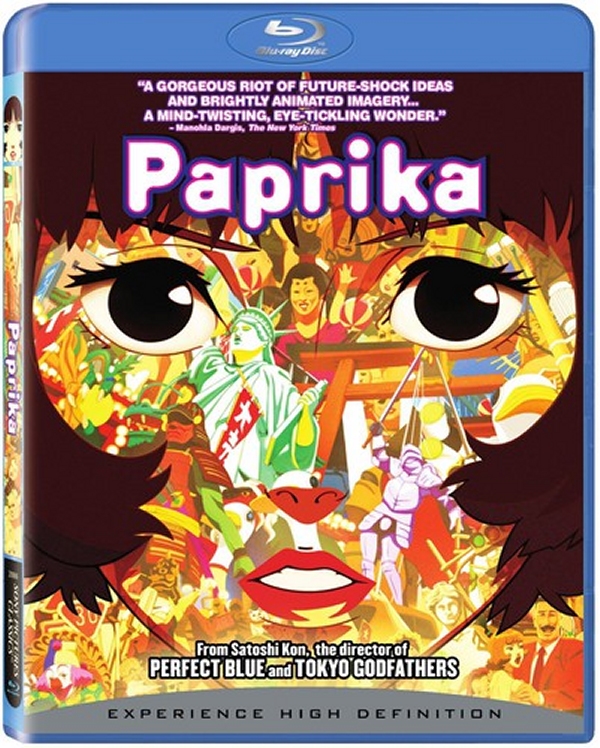
Like many Sony discs from the era, the Blu-ray opens with a forced trailer for other releases from the studio before the main menu. For some reason, the menus on this one are also extremely slow and unresponsive.
All bonus features on the disc are in Japanese with English subtitles, including the audio commentary with director Satoshi Kon, composer Susumu Hirasawa, and producer Tarô Morishima. That’s followed by a half-hour making-of documentary, a TV interview with the director (also about half an hour), a couple shorter interviews with the film’s art and CGI directors, and some storyboard comparisons that the disc makes extremely tedious to navigate.
Related
- Dreams
 The Video File Blog
720p? In 2006? What were they thinking? 🙂
So weird to NOT future-proof your work. (‘Tron Legacy’ maxxing out at 1080p always confused me too)
LikeLike
720p was pretty standard for anime at the time. Budget concerns, most likely. Those were still early days for digital production.
LikeLike
Yeah, but, even Attack of the Clones (four years earlier) was shot in 1080p
LikeLike
Attack of the Clones had nearly 50 times the budget of this!
LikeLike
Fair enough. I’ll stop my nerdy questioning 🙂
LikeLike
😂
LikeLike