
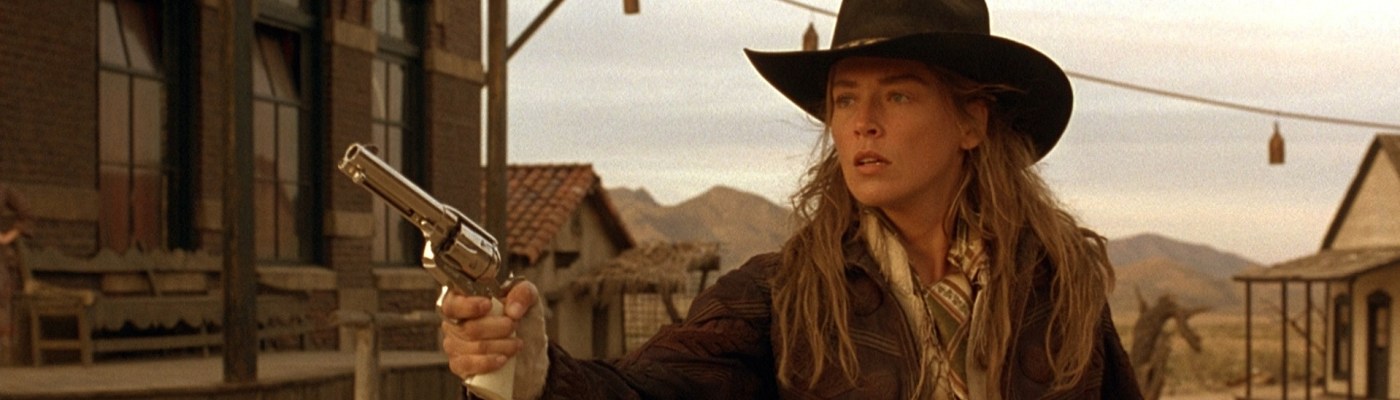
With the huge success of Dances with Wolves and Unforgiven, Westerns made a big comeback on cinema screens in the early 1990s. Not all of them were awards bait, however. The likes of Tombstone or Young Guns II were just rowdy fun, while director Sam Raimi (creator of the Evil Dead franchise) dabbled with a gungslinger shoot-’em-up heavily influenced by Sergio Leone and his Italian contemporaries. I like to call Raimi’s 1995 The Quick and the Dead a “SpaghettiOs Western.” It’s an Americanized pastiche of a European film genre itself built off the mythology of the American Old West. The spiral of influences spins around quite a bit with this one, nearly as much as Raimi’s camera spins around the dusty streets of the terribly familiar Old Tuscon Studios set.
The Quick and the Dead was also created as a starring vehicle for Sharon Stone, whose career was still hot from the blockbusters Basic Instinct and Sliver. If doing a Western seems like an uncharacteristic followup project, the actress was a producer on the film and seems to be having fun putting on her best Clint Eastwood impersonation in the lead role.
| Title: | The Quick and the Dead |
| Year of Release: | 1995 |
| Director: | Sam Raimi |
| Watched On: | 4K Ultra HD Blu-ray |
| Also Available On: | Blu-ray MGM+ Various VOD purchase and rental platforms |
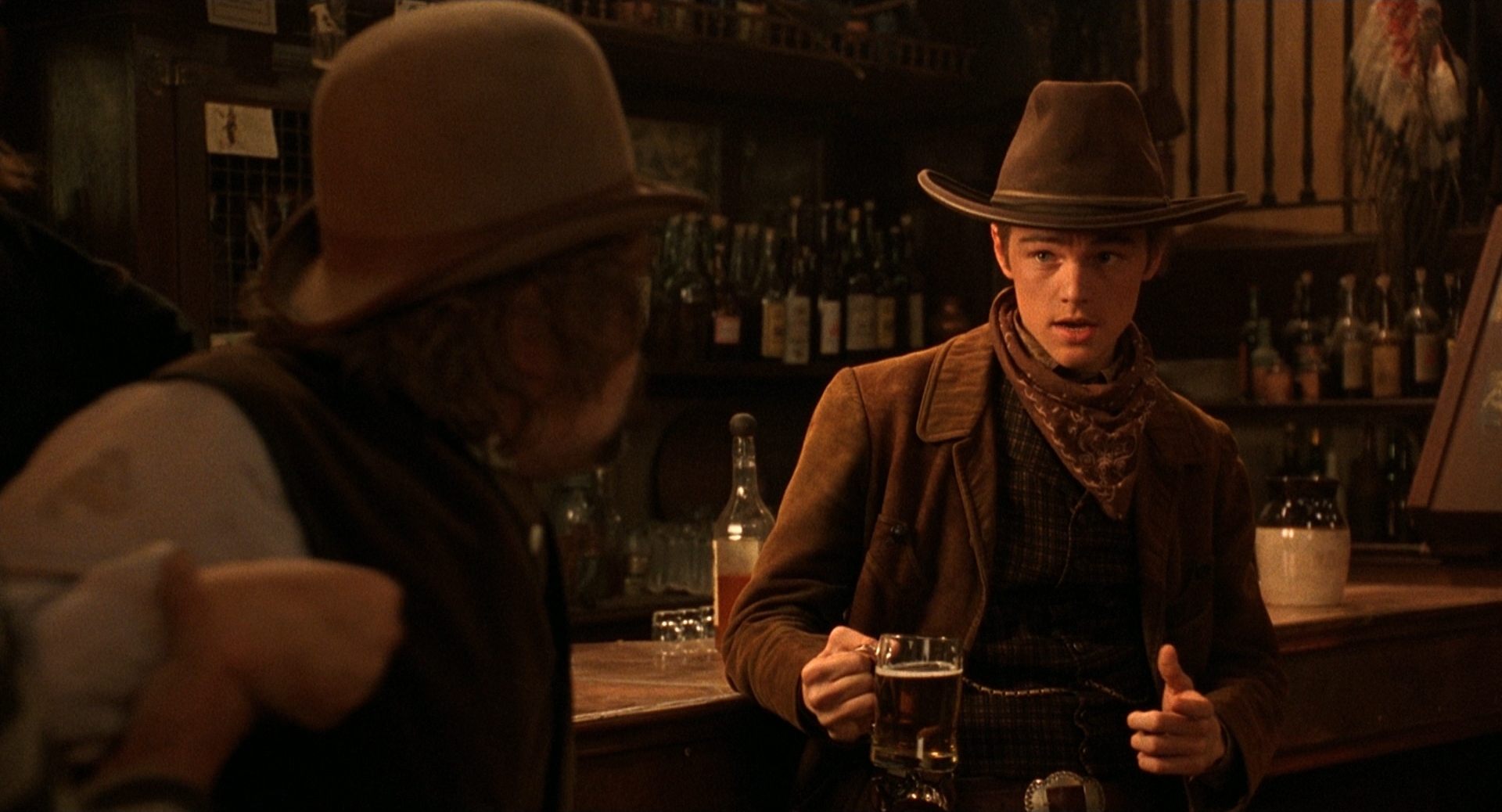
Stone’s star power was such at the time that she actually strong-armed the reluctant studio into casting up-and-coming actors Russell Crowe and Leonardo DiCaprio in supporting parts. Obviously, her instincts were right on that; both shot to superstardom soon after and eventually to Oscar glory. A safer bet in the studio’s eyes was roping in screen legend Gene Hackman to play the villain, not long after pulling similar duty on Unforgiven, with additional Westerns Wyatt Earp and Geronimo: An American Legend in between (though those two hadn’t done nearly as well). The rest of the cast is populated with colorful and reliable character actors, including Lance Henriksen, Keith David, Gary Sinise, Tobin Bell, and Pat Hingle. The director’s Evil Dead star Bruce Campbell filmed some scenes that didn’t make the final cut.
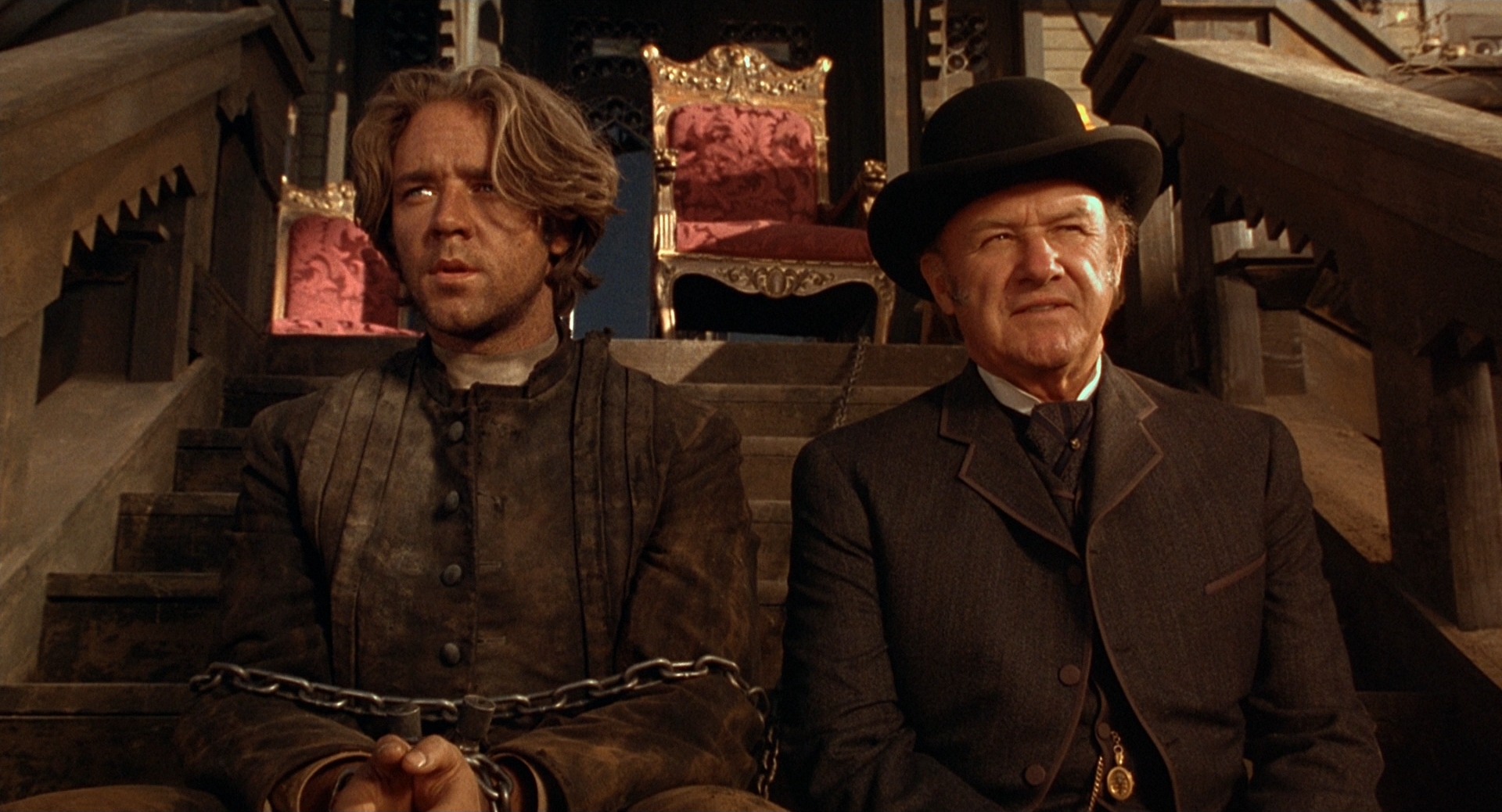
Unrelated to the 1973 Louis L’Amour novel of the same title (or its prior TV movie adaptation), Raimi’s Quick and the Dead follows the mold set by Leone’s “Man with No Name” trilogy. Stone plays a female desperado known mainly just as The Lady. You might almost call her The Woman with No Name, until she’s given an arbitrary name in the last act, never referenced before, in a perplexing bit of dialogue from Crowe’s character, who would have no way of knowing it. Sauntering into an oppressed town unsubtly named Redemption, the Lady proves her skill with a six-shooter (to the surprise of the sexist locals) and joins the annual quick-draw competition, in which gunslingers from territories all around convene to demonstrate their talents. At scheduled times per day, two competitors will face off, with life-or-death consequences. After successfully advancing through all the rounds, the ultimate winner will take home a huge cash prize arranged by the town’s tyrannical self-appointed mayor, a former outlaw named Herod (Hackman). Losers get hauled away in caskets.
Herod himself will compete, and that intimidates most of the townsfolk, given his reputation as the fastest and most accurate shot around. Other notable contestants include a cocky young hotshot called The Kid (DiCaprio, looking positively baby-faced), and a former member of Herod’s gang named Cort (Crowe), who’d given up his wicked ways and become a preacher, but has been dragged to town and forced by Herod to participate. For her part, the Lady seems disinterested in the jackpot. Her real motivations for coming to Redemption are doled out in flashbacks.
During the years surrounding the movie’s release, entertainment media of the day was eager to label any movie set in the Wild West a “revisionist Western,” meaning something that would deconstruct or re-imagine the genre with more depth than the John Wayne cowboy pictures of yore. Dances with Wolves qualified for giving Native American characters some voice and perspective on the story, and Unforgiven for exploring the moral consequences of a life of violence. Other examples were more of a stretch. The year before, in 1994, Drew Barrymore, Madeleine Stowe, and Andie MacDowell tried to bring a feminist spin to their cowgirl outlaw antics in Bad Girls. The Quick and the Dead was often lumped into the same category as that one, but the truth is, beyond having a woman as the hero, the film isn’t particularly revisionist for the genre in any meaningful way. It obeys classic Western tropes and conventions closely, just exaggerated in Raimi’s hyperbolic style. With its repeated clock-ticking standoffs, it’s High Noon on steroids, times ten or so.
In its theatrical run, The Quick and the Dead was not a box office hit. Potential audiences didn’t buy the idea of Sharon Stone headlining a Western, and neither Crowe nor DiCaprio had yet hit big enough stardom to lure any in. Critics also weren’t especially impressed with its silly excesses. However, the movie did later find cult fandom, mostly drawn to Raimi’s direction. Although the plot may be thin and predictable, the filmmaker seizes a viewer’s attention with his delirious camerawork and cartoonish stylization. The picture overflows with wildly canted angles, rapid zooms, and trick shots, as well as plenty of slo-mo, dissolves, and montages. The stuntwork is acrobatic, and whenever one character shoots another, the camera is sure to let you see straight through the hole in the victim’s body to the other side. Realism was pretty far from the director’s agenda here, but fans of his work will find much to enjoy.
I’m a little hit-or-miss on Sam Raimi, myself. I like his Evil Dead flicks and selected later efforts like Drag Me to Hell, but really disliked Darkman and was bored senseless by his Spider-Man trilogy. From that perspective, The Quick and the Dead falls somewhere in the middle of the director’s output. The movie is fun, yet insubstantial. It lacks the demented genius of, say, Evil Dead II, though it’s certainly not as awful as that Wizard of Oz prequel thing he did with James Franco, which is best left forgotten to history. I may watch the film from time to time, but doubt I’ll ever go out of my way to do so.
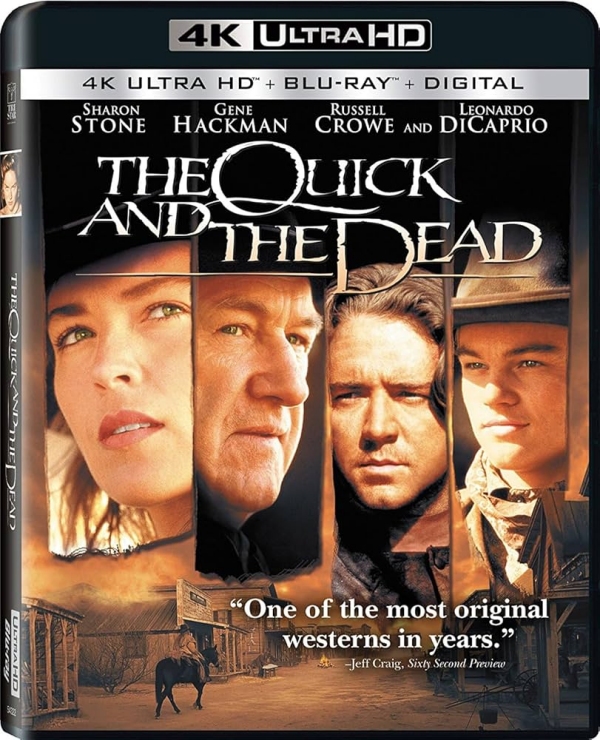
The 4K Ultra HD Blu-ray
Sony Pictures Home Entertainment brought The Quick and the Dead to Blu-ray in 2009 and to 4K Ultra HD Blu-ray in 2018. A 30th Anniversary Edition SteelBook double-dip followed in 2025. My understanding is that the latter is basically the same 4K transfer as before, but with a new encoding that adds Dolby Vision functionality. My projector doesn’t support Dolby Vision, so that didn’t seem too important to me. Nor did I care about the SteelBook case. I bought the 2018 disc in a sale.
The 4K UHD disc is burdened with Sony’s horrible menu interface system. Laid out like a maze of pages scrolling in every direction, it’s confusing to navigate and a huge step backward from the ease and intuitiveness of Blu-ray pop-up menus. I can’t imagine what anyone at the studio was thinking when deciding to inflict this on every 4K release from the label. I hate it so much.
The film is presented in its original 1.85:1 theatrical aspect ratio, and the framing often feels cramped. That may be intentional for some reason, but given the Western setting, it still seems like a missed opportunity for Sam Raimi to branch out to a wider ratio. The movie makes many visual references to the Spaghetti Westerns of director Sergio Leone, which were mostly composed for 2.35:1, and I don’t understand why Raimi didn’t follow suit.
In other respects, the 4K image is fairly sharp and detailed, though the photography by Dante Spinotti often toys with soft focus. It’s also really grainy, in a way that I think may be exaggerated by the 4K resolution and the HDR grade. I can’t compare this disc to the later Dolby Vision encode, but colors and contrast both run very hot here, with ruddy orange flesh tones, and bright highlights that sometimes clip on my screen. I’ve read some other sources claim that the movie has always had oversaturated colors, and maybe that’s true (the older Blu-ray in the package isn’t immune), but they still feel a little artificially pushed in HDR. I played around with the tone-map settings in both my disc player and projector, and was able to tame these issues somewhat, but I never found a fully satisfying compromise, at least not with the hardware I have available.
Both Ultra HD editions, from 2018 and 2025, provide the movie’s soundtrack in a choice of either DTS-HD Master Audio 5.1 or a newer Dolby Atmos remix. In a lot of instances, I find that Atmos remixes wind up filtering bass out of older movie soundtracks. The opposite is true here. The Atmos track opens right off the bat with deep, sustained low-end rumble, more so than the 5.1 option. Gunshots crack with authority, and explosions are big and loud. While a Western like this doesn’t offer a ton of opportunity for overhead effects, the surround channels are very busy and height speakers are active enough to immerse the room. The Atmos is pretty fun.
Bonus features on the 4K disc are technically new, though quite limited, consisting only of some deleted scenes and a trailer. Locating them in the menus is a pain.
The Blu-ray in the case is a copy of the old disc from 2009. Its BD-Live “MovieIQ” feature is long-since disabled.
Related
- Gene Hackman
- Leonardo DiCaprio
- Lance Henriksen
- Keith David
- Western genre
Note: All screenshots on this page were taken from the standard Blu-ray edition of the film and are used for illustration purposes only.
 The Video File Blog
You dislike ‘Spider-Man 2’, haha? I mean, it sure ain’t my favourite superhero offering, but 99,8% of the world loves it. That’s some Armond White Zyberism.
LikeLiked by 1 person
I consider double dipping most Sony early 4K releases just to get rid of that horrible menu system. I haven’t done so yet for The Quick and the Dead, but I might do it eventually.
LikeLike
Did they get rid of it? I think every Sony disc I own has it. I might not have any newer releases from the studio.
LikeLike
I’ve double dipped on Bram Stoker’s Dracula, Air Force One, Black Hawk Down, Labyrinth, Cliffhanger, Godzilla, Glory(although I can’t quite remember if that one had it) and perhaps a few more and yes they have got rid of that tedious menu system. The Patriot is getting a Steelbook reissue and will also include the extended cut this time around. I’ve been waiting for a Leon, The Professional as well. It’s worth it for me for that alone.
LikeLiked by 1 person
A stacked cast and a director whose work I admire… and yet I’ve never been able to get into this one.
LikeLiked by 1 person
This seems to have been a for-hire job for Raimi, hoping to get bigger work within the studio system, not something he developed himself.
LikeLike
I remember liking this, mostly for Leo, but I can’t remember much about it. I only saw it once when it came out, so it’s been a minute.
LikeLike