
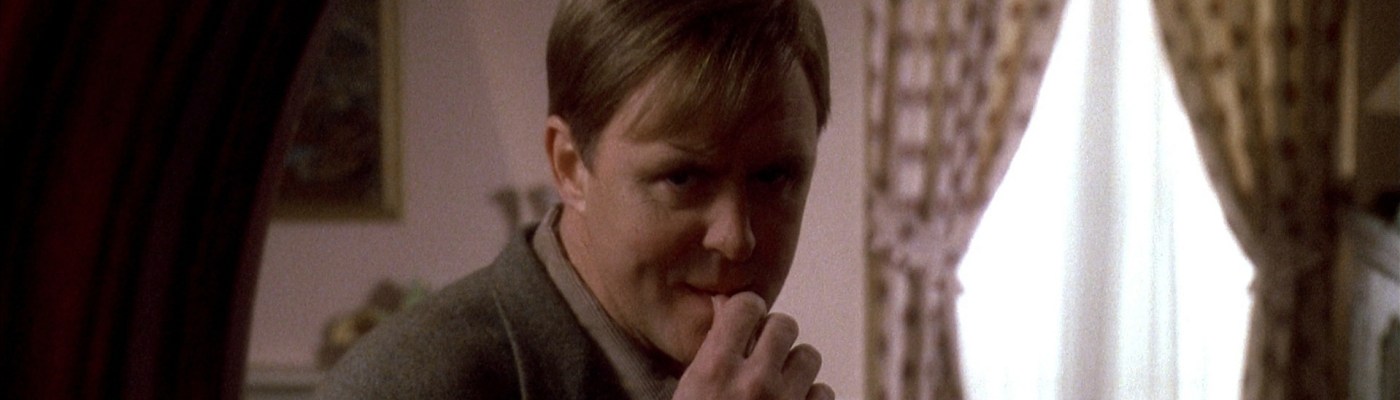
Still smarting from the critical lashing he took for his troubled 1990 adaptation of The Bonfire of the Vanities, director Brian De Palma retreated to what he felt was safer ground, on both figurative and literal levels. For his next outing, Raising Cain would be a return to the type of Hitchcock-flavored suspense thriller that had served De Palma so well in the past, and he arranged to shoot it without too much fuss close to his home at the time near San Francisco. The movie should have been an easy layup for a filmmaker who’d suffered a big stumble but still wasn’t too far from the peak of his career and his abilities.
When released in 1992, Raising Cain received mixed reviews from critics and was only a moderate box office success that faded quickly from memory. Over the years, the picture has generally never been rated by fans within the top half of De Palma’s filmography. I’m not here to argue that it should be. Looking at it again for the first time in decades, Raising Cain feels less like a return to form than a retread of the director’s earlier work, a tossed-off effort he threw together just to stay busy while waiting for a better project he cared more about. Even that being the case, the movie still has some cult appeal and is not without its pleasures, modest though they may be.
| Title: | Raising Cain |
| Year of Release: | 1992 |
| Director: | Brian De Palma |
| Watched On: | Blu-ray |
| Also Available On: | Various VOD purchase and rental platforms |
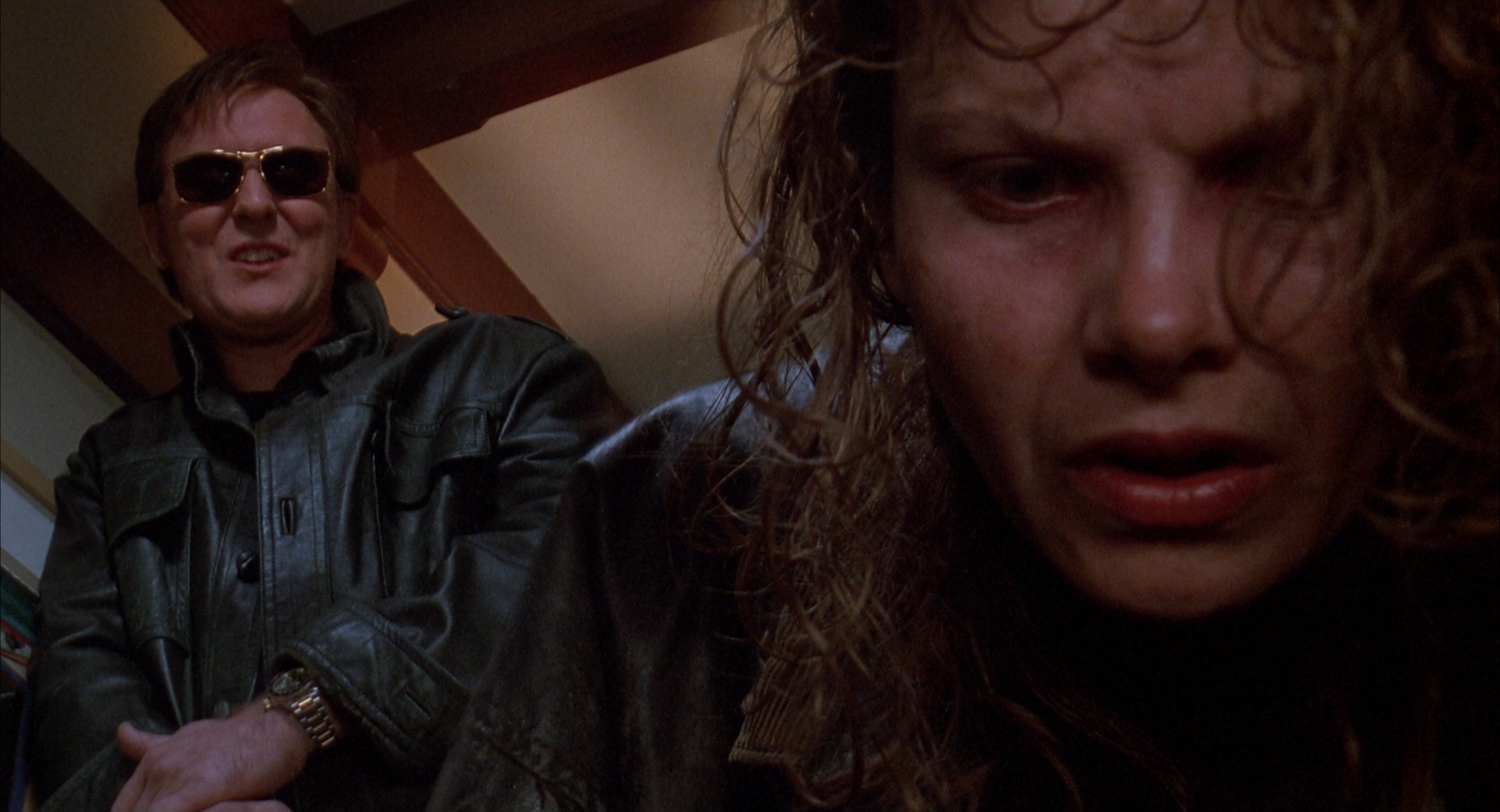
In addition to putting Brian De Palma back in the same Hitchcockian mindset that brought about Dressed to Kill and Body Double (and others), Raising Cain also reunited the director with John Lithgow, an actor who’d worked for him twice before, on Obsession and Blow Out. Here elevated leading man, Lithgow plays Dr. Carter Nix, a respected child psychologist with a gorgeous wife (Lolita Davidovich) and an adorable young daughter he dotes on obsessively. Very obsessively. While he presents himself outwardly as a stable pillar of the community and loving family man, Carter is secretly a deranged lunatic suffering from Multiple Personality Disorder.*
As much as he tries to keep the voices in his head at bay, they manifest during moments of anxiety. Carter catching wife Jenny cheating on him with a handsome studmuffin (Steven Bauer) qualifies for that in a big way. The chief of his alternate personalities is an alleged twin brother named Cain, a gleeful psychopath who regularly pops in to clean up Carter’s messes or cause his own, the likes of which include kidnapping children for dubious scientific research and maybe a murder or several.
*Needless to say, the movie’s depiction of mental illness is quite far-fetched and very likely offensive to both the medical community and to anyone who’s ever actually experienced a psychiatric ailment. All of De Palma’s ideas about Multiple Personality Disorder come not from speaking to any real doctors about it, but just from the way it’s been presented in other movies, especially thrillers and horror flicks. If supposedly set near San Francisco, Raising Cain takes place in a heightened film universe that follows movie logic, irrespective of any connection to reality.
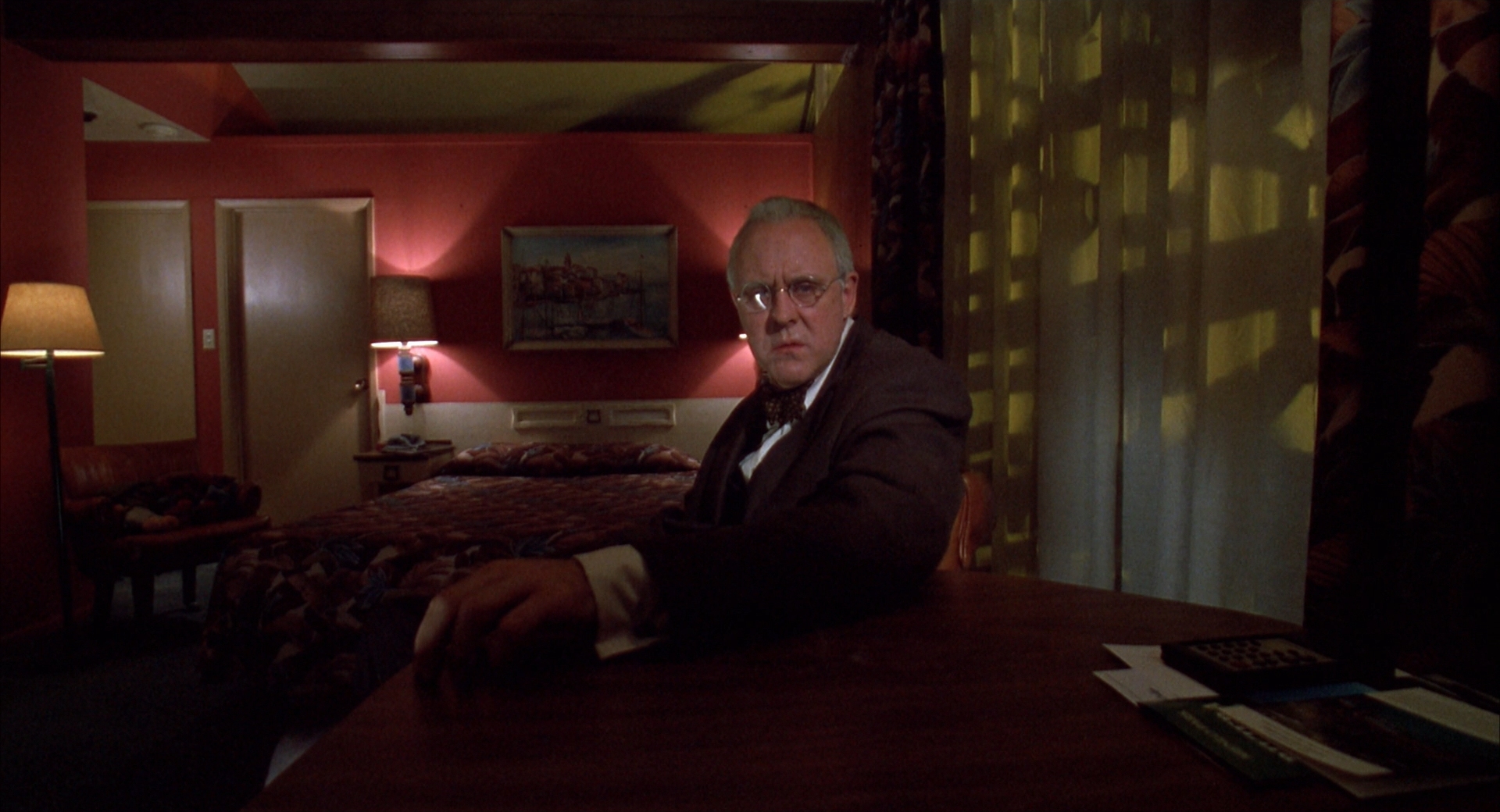
To that end, John Lithgow plays at least five characters trapped in the same physical body, and the actor has a blast pushing his performance(s) into full ham mode at every change in personality. He hits exactly the right note of camp for the material he’s working from. Meanwhile, De Palma orchestrates several elaborate set-pieces of the sort that had become his filmmaking signature. De Palma’s camera is its own character – twisting, turning, and tilting through scenes in a highly show-offy manner designed to call attention to itself – all flowing along to a lush musical score by Pino Donaggio shamelessly aping Bernard Hermann. If nothing here quite reaches the heights of the train station sequence at the end of The Untouchables, a very long unbroken tracking shot through a police station (hilariously laid out like a shopping mall inside) and the delirious Rube Goldberg-style climax are highlights certain to delight the director’s fans.
I was 18-years-old in the summer of 1992, and Raising Cain was among the last few movies I went to see at the local theater near my home before setting off for college a couple weeks later. Brian De Palma was one of my filmmaking idols that had inspired me to want to go to film school in the first place, and I was enthusiastic to see anything he made on the big screen. Even though I could recognize, even at that age, that this wasn’t a top-tier effort from the director, I still had a lot of fun with it.
At least some of that affection still lingers today, but I must admit that I had less patience for the movie on this revisit than I used to. The plot is very dumb and makes no pretense otherwise. While Lithgow is terrific, and Davidovich suitably adequate (and quite easy on the eyes), Steven Bauer has the charisma of a block of wood in his supporting role, and his character never earns the heroic payoff he’s given in the end. On the whole, Raising Cain plays like a greatest-hits package for Brian De Palma, and is somewhere only approximately half as effective a Hitchcock knockoff as Dressed to Kill had been.
Fortunately, Brian De Palma would bounce back to full strength one year later with my personal favorite of all his films, the 1993 crime thriller Carlito’s Way.
Theatrical Cut vs. Director’s Cut
Apparently, Brian De Palma himself wasn’t entirely satisfied with the theatrical release version of Raising Cain. During development, he’d written the film’s screenplay in a non-linear structure, with a lot flashbacks, flash-forwards, and scenes doubling back on each other. When it came to post-production, his editor, Paul Hirsch (who’d cut Carrie and Blow Out for him, as well as huge blockbusters like Star Wars and Footloose) convinced him that it wasn’t working and re-arranged the narrative into a mostly straightforward chronological order instead. De Palma now claims he had some reservations about this.
In 2012, a Dutch filmmaker named Peet Gelderblom took a DVD copy of the movie and created a fan-edit that re-organized scenes into an order more closely resembling early script drafts. This was posted online. De Palma saw it, thought it was great, and enlisted Gelderblom to supervise a high-definition version that would be branded the “Director’s Cut.”
This alleged director’s cut contains no new scenes, only footage culled from the theatrical version reworked into a new order (with a little bit of repetition of one scene to create a new flashback). Among other notable changes, this prioritizes wife Jenny’s infidelity storyline right off that bat and delays the introduction of Carter.
Having watched it now, I have to say, I think Hirsch was right and the theatrical cut works better. The jumbled Director’s Cut is needlessly confusing and stalls the film’s momentum. I wouldn’t be surprised if watching the Director’s Cut first for this viewing was a major contributing factor to my losing interest in the movie. The next time I pull it off the shelf, I’ll go straight for the theatrical cut.
The Blu-ray
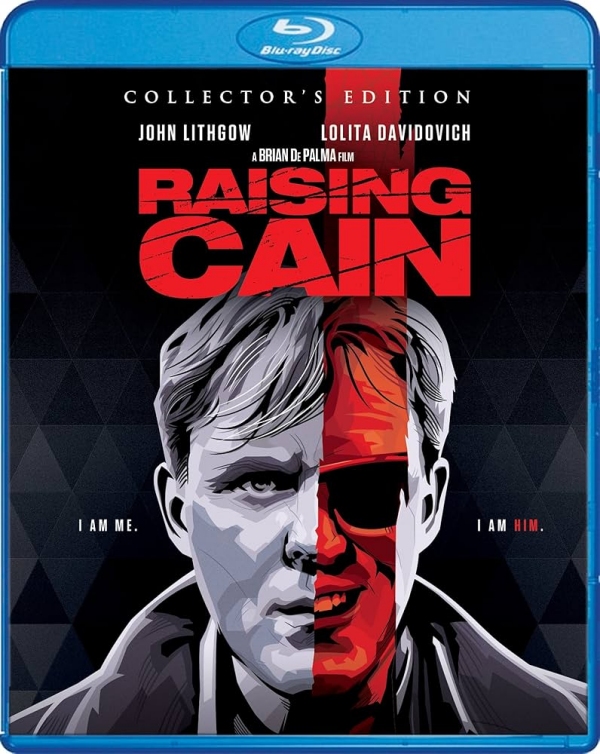
Raising Cain wasn’t especially popular in theaters, nor on home video. It was a late arrival on the Blu-ray format when Shout! Factory (via the Scream Factory sub-label) licensed the movie from Universal for a Collector’s Edition in 2016. (I guess Universal couldn’t be bothered to release its own copy any earlier.) The two-disc set contains the movie’s original theatrical cut on the first disc and the re-arranged Director’s Cut on the second. As the featurette dedicated to it makes clear, the so-called “Director’s Cut” is actually a fan-edit that Brian De Palma liked enough to give his blessing and claim as his own. As of this writing, I’m not aware of any plans for a 4K upgrade.
As far as I can tell, both versions of the movie are derived from the same film scan and underlying video master, just with some footage re-edited into a different order for the Director’s Cut. The recurring presence of dirt, scratches, and specks on the film elements suggests that this was not a scan from the camera negative. The picture’s also quite grainy, in a way that looks like a secondary source a few generations away from the negative. I’d expect grain on the negative to be in tighter control and less gritty. A modern film scan should also have a lot less wobble and movement during the opening credit text.
For all that, the transfer looks respectable enough. The 1.85:1 image is decently sharp and has nice (if not particularly flashy) colors. Even if presumably an older master the studio pulled off a shelf, it doesn’t suffer egregious Noise Reduction, artificial sharpening, or other digital manipulation. Although I’m sure it could (and probably should) look technically better with a fresh remaster, the Blu-ray reminds me of watching a 35mm print projected in a theater back in the day.
Both the theatrical and the Director’s Cut provide the movie’s soundtrack in a choice of DTS-HD Master Audio 2.0 or 5.1 formats. Back in 1992, the movie played in theaters in Dolby Stereo 4-channel surround, and the matrixed 2.0 track is probably closer to that when played back through Dolby Surround Upmixer. The 5.1 remix originated on DVD several years later. That said, the two options sound more similar than not.
I defaulted to 5.1 after sampling both for a few minutes. The 5.1 has more aggressive surround activity, which is used to fun effect during the early scene set in a clock store. Disappointingly, the audio sounds a little flat and sterile overall, with little dynamic range. The score by Pino Donaggio could use more heft and swell.
Bonus features on Disc 1 include substantive interviews with actors John Lithgow, Steven Bauer, Gregg Henry, Mel Harris, and Tom Bower. Perhaps most interesting is the interview with original editor Paul Hirsch, who explains why the non-linear structure of De Palma’s script wasn’t working when he put together the theatrical cut. Those interviews are followed by a trailer and a still gallery. Disc 2 then offers an introduction by fan-editor Peet Gelderblom and a featurette making an argument for the Director’s Cut edit.
 The Video File Blog