
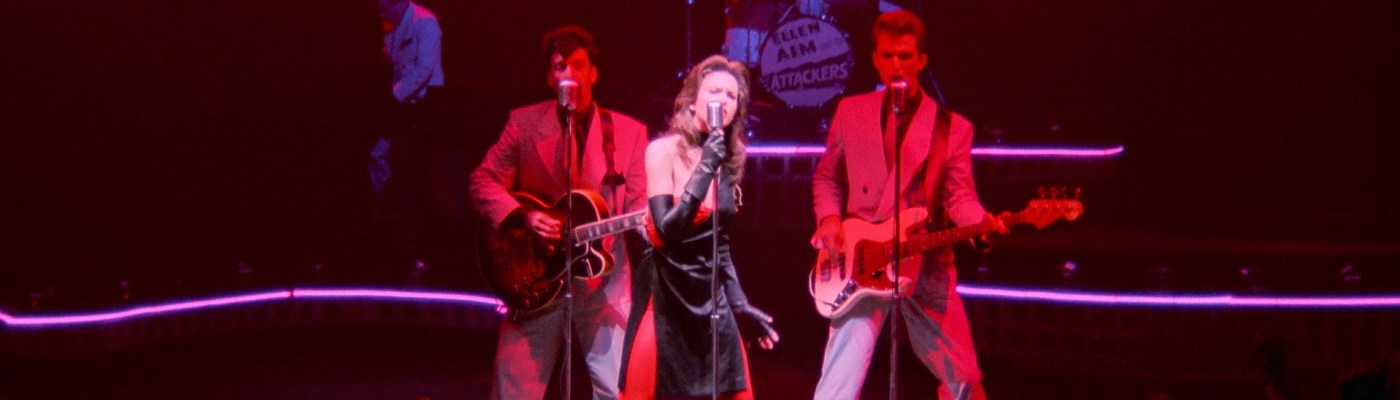
A movie that could only possibly have been created at the specific moment it was made, yet also simultaneously ahead of its time, Streets of Fire perplexed both critics and audiences during the summer of 1984, but has endured as a delightful cult property that, quite honestly, only gets better with age. I’ve watched the film a number of times over the years, and I think I love it a little bit more every time I do.
Still riding high off the success of his breakthrough blockbuster 48 Hrs., macho action filmmaker Walter Hill decided that his next project should be an ambitious rock ‘n roll biker musical fantasy. At any other point in history, the man’s agent would have talked him out of this potential career suicide and he’d never find any studio in Hollywood willing to bankroll it. In early 1983, however, the stars aligned and all the right people thought it was a swell idea to rush into production.
By the time the finished product was released to theaters the following year, that attitude changed in a major way. The movie flopped, and Hill never made anything like it again. Perhaps that’s for the best and he shouldn’t try. Streets of Fire remains a singular creation, and that initial failure only endears it even more to the fans who discovered it afterward.
| Title: | Streets of Fire |
| Year of Release: | 1984 |
| Director: | Walter Hill |
| Watched On: | 4K Ultra HD Blu-ray |
| Also Available On: | Blu-ray Various VOD purchase and rental platforms |
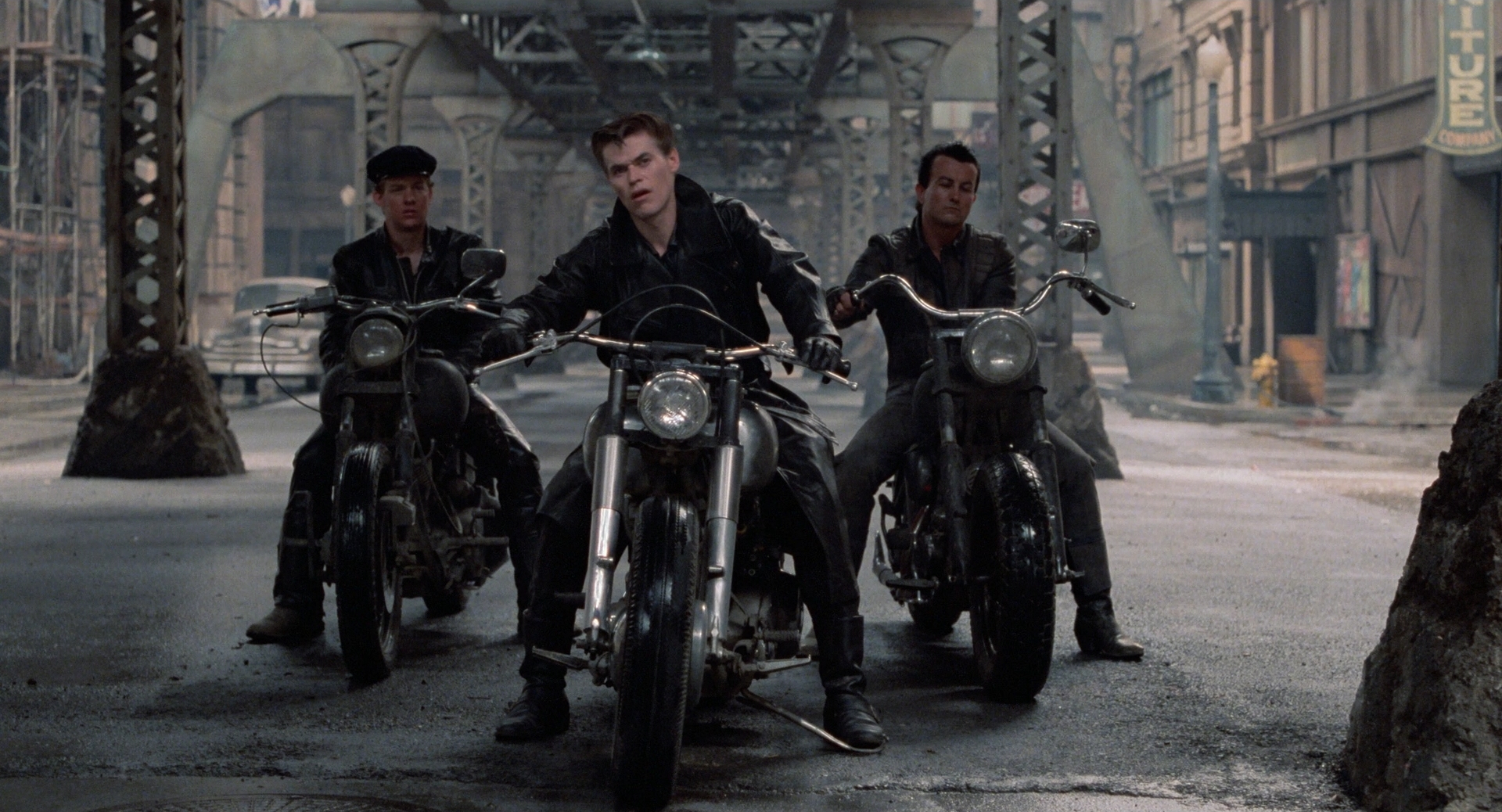
My enthusiasm for it aside, I fully understand why nobody could figure out what to make of Streets of Fire in 1984. The movie is a bizarre collision of disparate tones and styles that shouldn’t work together: part Western outlaw adventure, part hard-boiled film noir, part stadium pop-rock anthem – all shot and assembled in the flashy colors and quick-cut rhythm of the early MTV music video era, by a man previously known for making lean, muscular (and generally unpretentious) action pictures. The plot is threadbare, and lead star Michael Paré is a little short on the charisma needed to sell his role. Watching decades later, some of the sexism baked into the story also hasn’t aged well.
Regardless, any of those issues are easy to shrug off. As soon as the opening musical number hits, I am, without fail, mesmerized and fully on-board. This movie is a total blast.
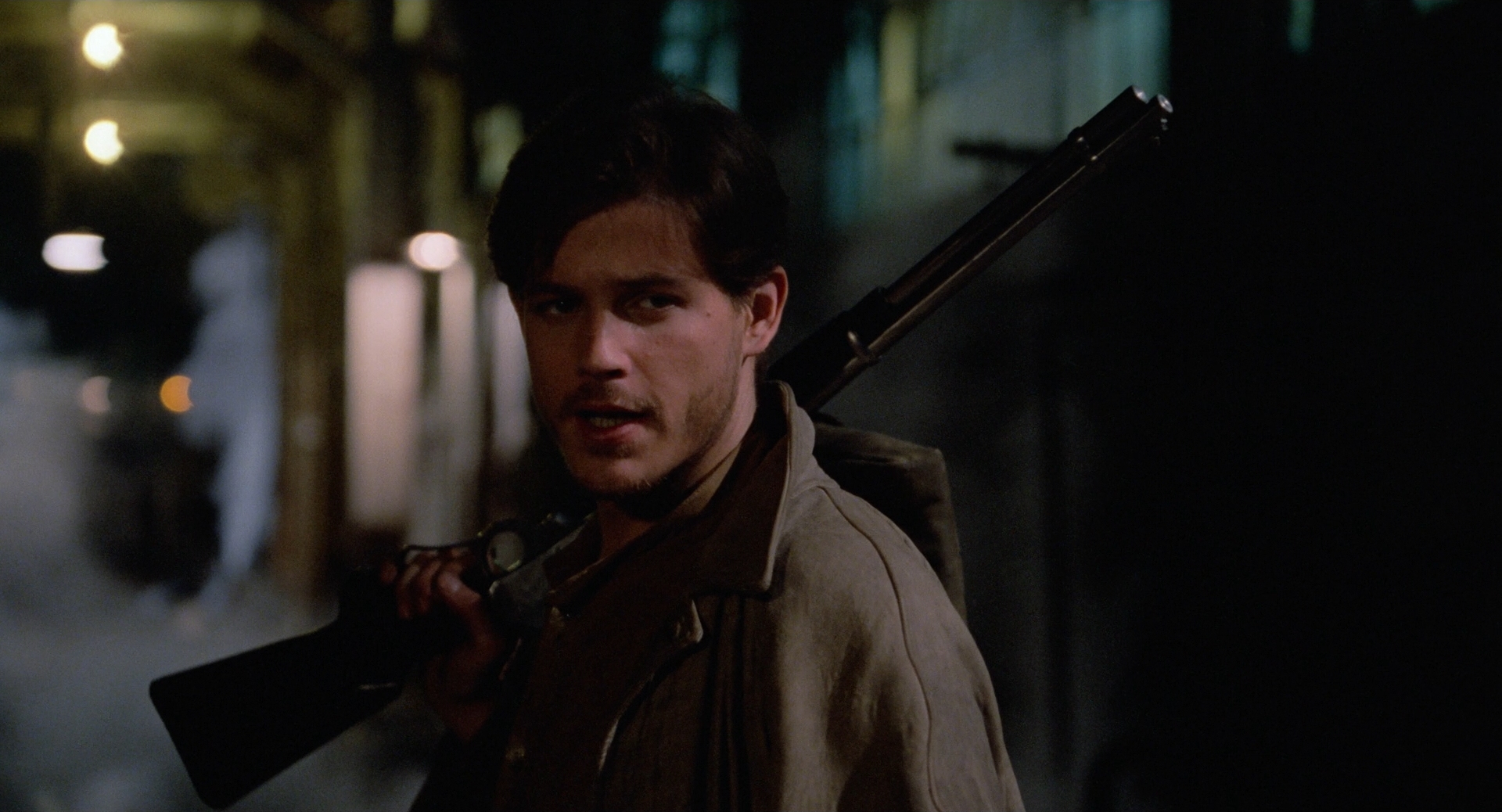
Identified only as “Another Time, Another Place…”, the story manifests in a neon-drenched urban dystopia trapped in a never-ending 1950s time warp. Playing a benefit concert in her old home neighborhood of The Richmond, superstar rocker chick Ellen Aim (Diane Lane, only 19-years-old but already an acting veteran) is kidnapped right off the stage by the malevolent Raven Shaddock (Willem Dafoe) and his army of biker hooligans. With the police too useless to do anything about this, the only man who can save her is Tom Cody (Paré), a classic tough guy of few words, and not-so-coincidentally Ellen’s ex. Still some hurt feelings between them, Cody agrees to find and rescue the singer, but only in exchange for a reward payout from her current boyfriend/manager, an obnoxious rich prick with plenty of money but few other redeeming qualities.
The plot doesn’t get much more complex than that. Cody travels to the even seedier district of The Battery and invades the biker compound. He gets the girl less than halfway into the picture, and spends the rest of the time making his way back home with her. All the while, Raven follows hot on their heels wanting revenge. At the end, the two men have a standoff. That’s it; that’s the whole thing. The script is, to put it charitably, just functional enough to string together some action and music set-pieces. Most of the characters are broadly sketched and have no particular development over the course of barely ninety minutes.
Without a narrative worth caring much about, Streets of Fire thrives instead on style. The film oozes with atmosphere. Nighttime in almost every scene, the city is illuminated primarily by neon lights reflecting off the rain-soaked streets, while clouds of steam continuously issue from every gutter and storm drain. Giorgio Armani provided the wild wardrobe (a shirtless Willem Dafoe in black leather overalls is quite a sight), and the soundtrack throbs with a terrific rockin’ score by Ry Cooder. All the songs are perfect ’80s pop confections, some written by big names including Stevie Nicks, Tom Petty, and Bob Seger. The opening and closing Ellen Aim performance numbers (well-mimed by Diane Lane but actually performed by a band called Fire Inc.) were penned by Jim Steinman, songwriter of Meat Loaf’s “Bat Out of Hell” album. Any of them could (and should) have broken out to their own success on radio airplay, but the only one to actually hit the charts was “I Can Dream About You,” when performed by its original artist, Dan Hartman (different from the version in the movie).
Diane Lane and Willem Dafoe more than make up in star wattage for whatever Michael Paré lacked. Meanwhile, the supporting cast is filled with memorable turns from Rick Moranis, Bill Paxton, Amy Madigan, and Rick Rossovich. Also be sure to keep an eye peeled for a walk-on cameo from Ed Begley, Jr. and early roles for Robert Townsend and Mykelti Williamson.
If Walter Hill may seem like entirely the wrong director for material like this, he pulls the whole thing together with a strong, coherent vision. Hill knew exactly what he wanted the movie to be, even if no one else could make any sense of it at the time. Thinking about it now, Streets of Fire could well exist in the same heightened universe as The Warriors.
I was too young in 1984 to see or appreciate a movie like Streets of Fire. I first encountered it a couple decades later, during a film school seminar given by cinematographer Andrew Laszlo. When showing footage from movies he’d shot, including some (The Warriors, First Blood, Innerspace) much more famous and successful than this one, his best stories were about production on Streets of Fire and he was very proud of the work he’d done for it. Watching those clips, I was fascinated and had to seek out the film on the best available source, which was then the niche Laserdisc format.
I fell in love with it immediately, and those feelings have never waned. Streets of Fire is the incredibly rare sort of movie I could watch on a non-stop loop, over and over again for days, and never tire of it. Hell, I may just put it on again right now.
The Blu-ray and 4K Ultra HD Blu-ray
Streets of Fire found a cult audience on home video and has been a reliable staple of all the major optical disc formats. In the high-definition era, Universal released the film on HD DVD in 2007 but neglected to follow-up with a Blu-ray after HD DVD folded. Instead, Shout! Factory licensed the title in 2017 for a Collector’s Edition Blu-ray, followed by a 4K Ultra HD Blu-ray in 2023. Both the Blu-ray and Ultra HD are labeled as part of the Shout Select collection, but have some notable differences beyond just the resolution upgrade.
The 2017 Blu-ray was credited as being sourced from a “New 2K Scan of the Interpositive,” much to the consternation of some spec-obsessed format zealots who probably never intended to watch the movie in the first place. Despite this, the disc looked pretty great, with a sharp and colorful image that I gave a very positive review at the time. Its main failing was the presence of some minor speckling on the source elements, most noticeable during the opening credits. Looking at it again today, I’m perhaps a little more critical of that disc, but am still willing to give it a pass.
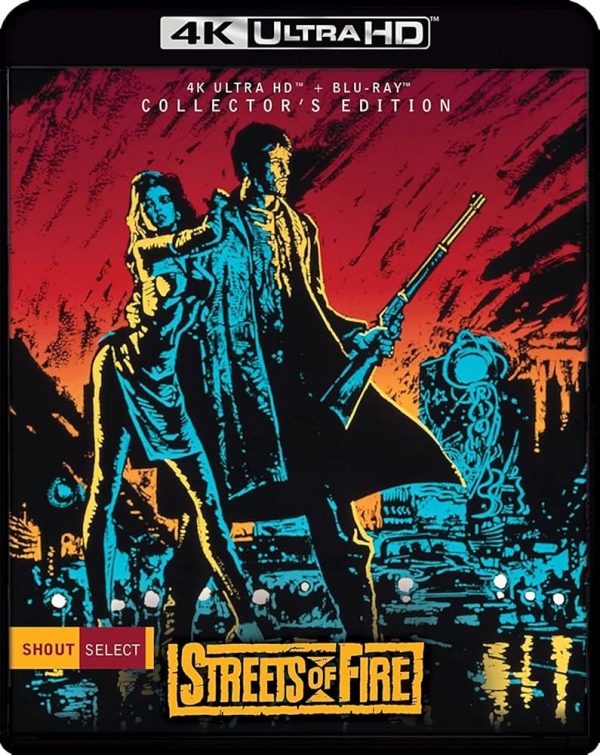
The 4K Ultra HD claims a “New 2023 4K Scan of the Original Camera Negative” on the case art. It also has a newly remixed Dolby Atmos soundtrack. Rather than just recycle the old Blu-ray as well (as some studios are apt to do), the corresponding Blu-ray in the 4K case has also been remastered from the new video scan and includes the Atmos track.
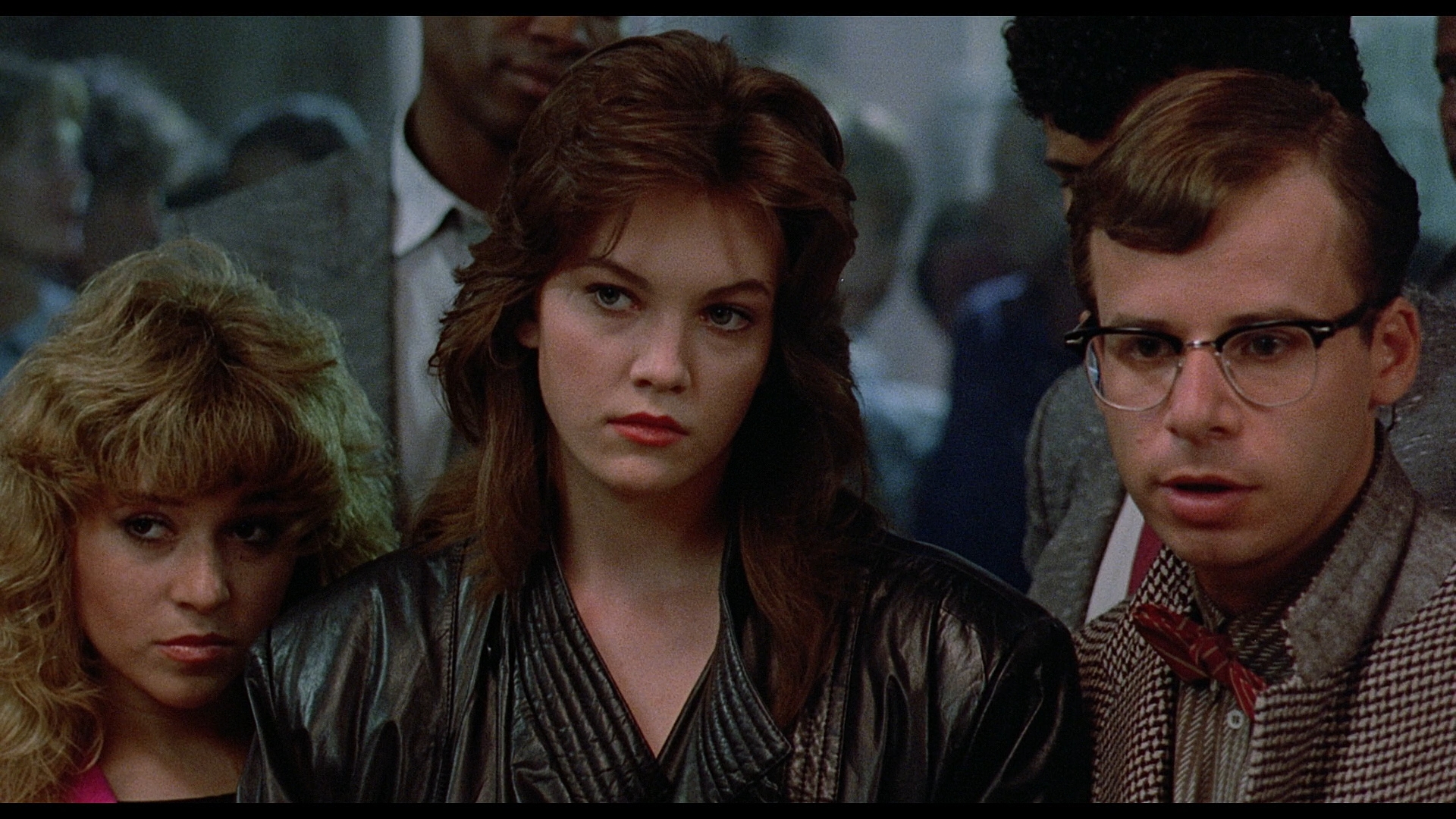
Because I’m not equipped to take 4K HDR screenshots, I’ll start with a comparison of Blu-ray versus Blu-ray. In general, the two discs look more similar than not. The 2023 remaster has slightly deeper colors, almost no speckling, and a small boost to mid-tones. These are all positives in its favor, but would not be enough to make me throw out the 2017 Blu-ray.
Most discernible on a large screen, the remaster also has less grain than the prior disc, yet doesn’t look artificially grain-reduced. Rather, being scanned directly from the camera negative, the 1.85:1 image bypasses any additional grain build-up from the second-generation IP. I hadn’t previously thought of the 2017 disc as excessively grainy, but scrutinizing it again now, that grain looks a little noisy. Not only is there more of it, the disc’s encoding doesn’t always handle it well. The remaster has both less grain and tighter control over what does appear.
Again, these are mostly small improvements. The 2017 Blu-ray still holds up well overall.
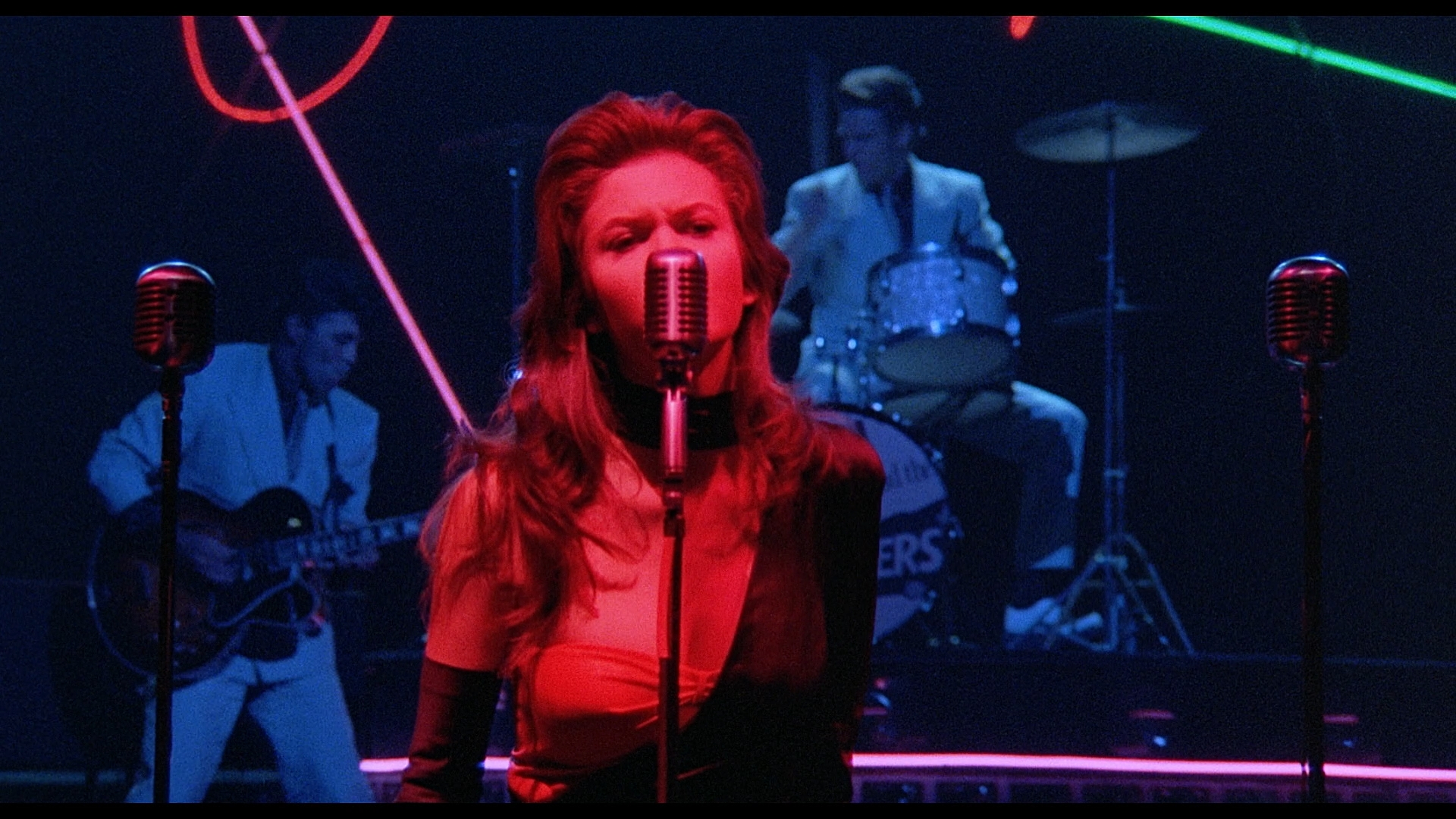
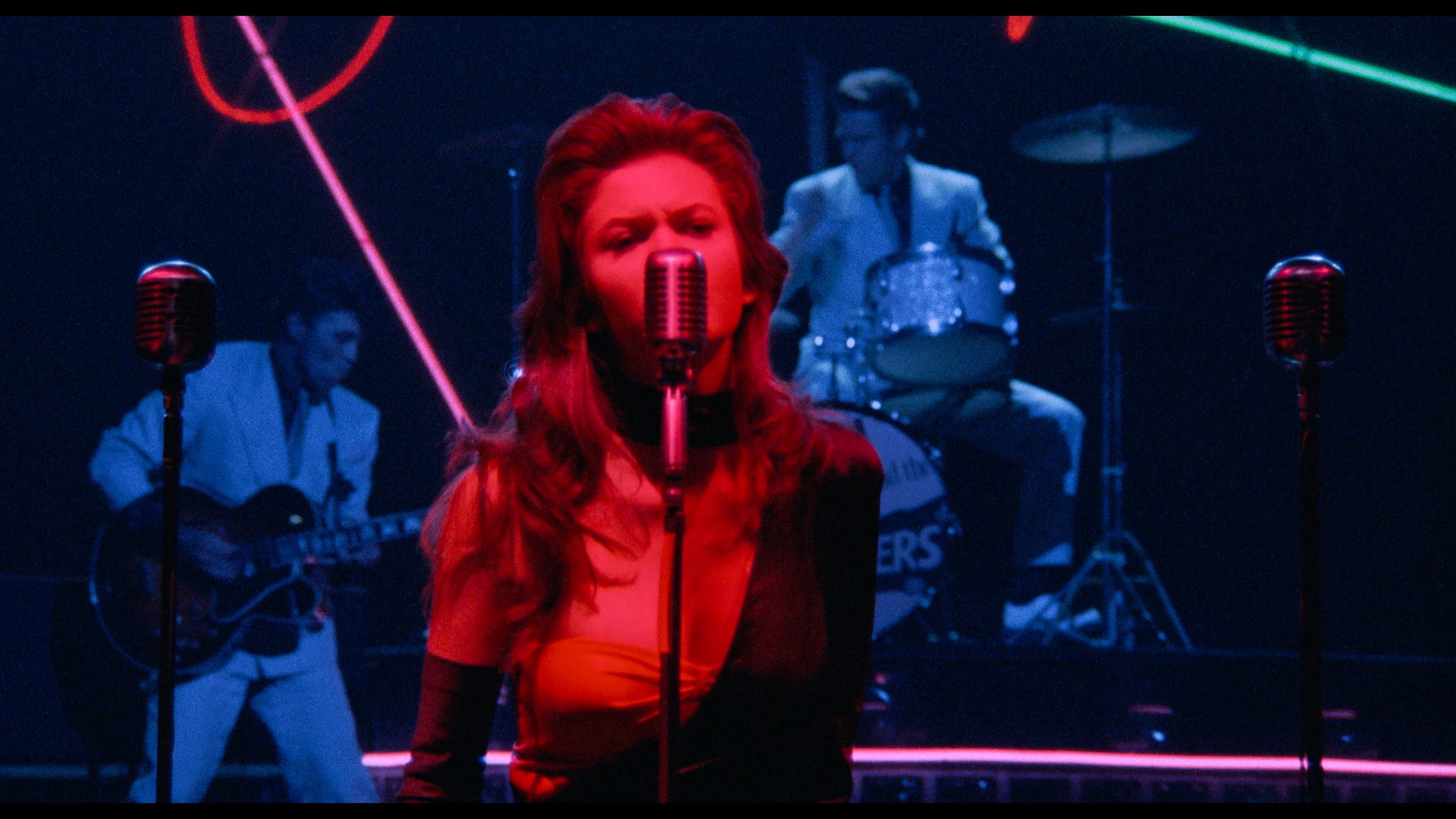
The two discs seem to run at slightly different speeds, like the 2017 disc is a tiny bit too fast. Early in the movie, the frame counter on the 2017 copy lags behind the 2023 disc, but later it runs ahead. From head to tail, the 2017 disc clocks in at 1:34:03, while the 2023 disc is 1:34:05. This isn’t something anyone is likely to pick up while watching, but it made getting an exact frame-match for screenshots difficult. I’ve done my best in the examples on this page. Click the links in the captions to expand the images to full size.
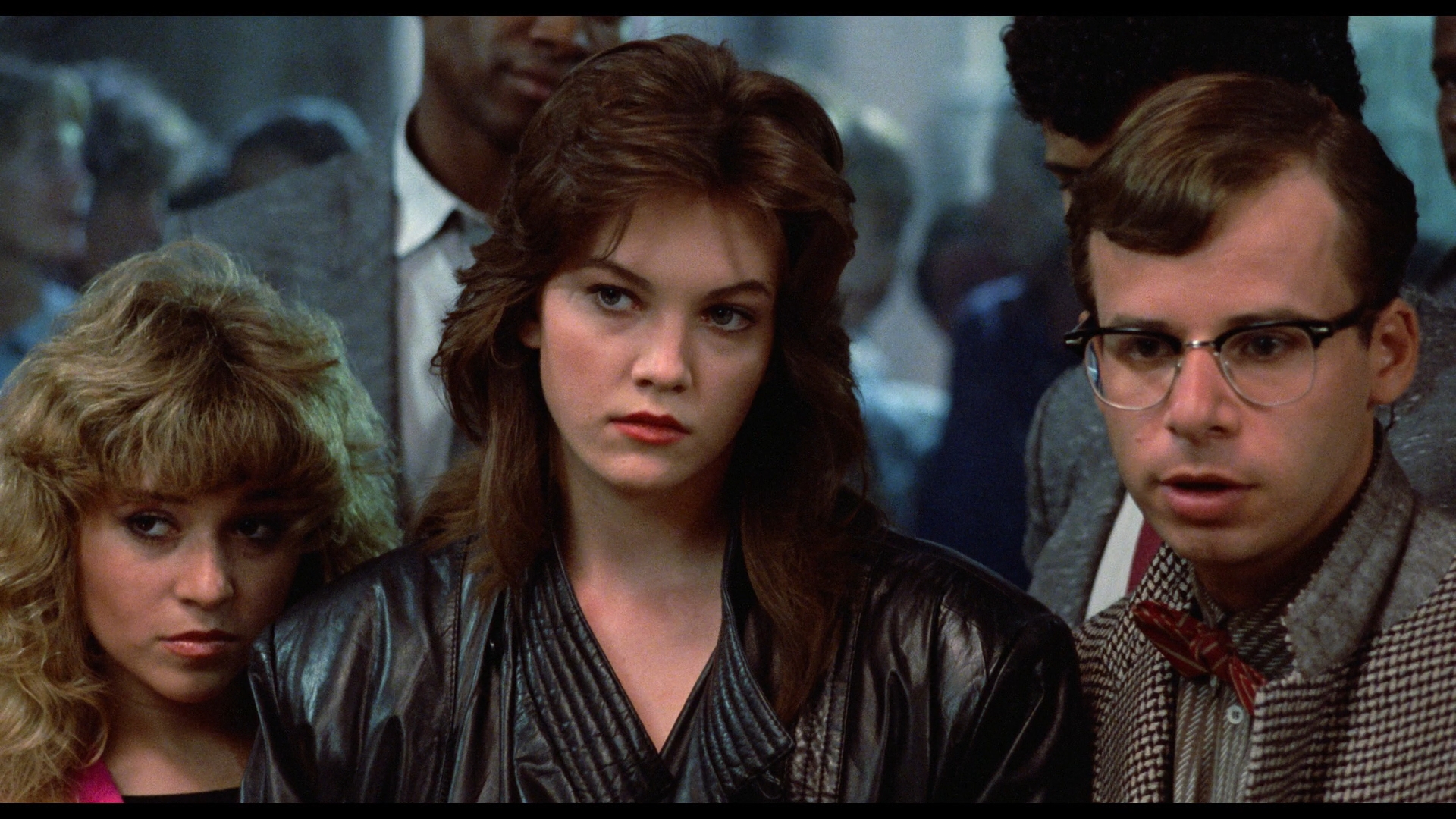
The jump up to 4K Ultra HD brings a modest but appreciable uptick in detail over either Blu-ray copy, and the light grain is resolved the best of the three. More importantly, the HDR grading is lovely, and brings out the photography’s vivid colors and rich contrast. The neon lighting, car headlights, and bursts of flame pierce the ever-present darkness beautifully. Streets of Fire is a heavily stylized movie, in a way that has always belied its modest budget. The vibrant and film-like 4K Ultra HD is the best I’ve ever seen it look.
Audio options have changed quite a bit since the last Blu-ray. The 2017 Collector’s Edition offered the movie’s soundtrack in a choice of DTS-HD Master Audio 5.1 or 2.0 formats. I assume the latter represented the original Dolby Stereo theatrical mix. When I reviewed that disc at the time, I found the 2.0 a little flat and preferred the 5.1. Sampling it again, I still agree with that.
The DTS-HD MA 2.0 is the only audio track to carry over directly to the new Blu-ray and 4K Ultra HD, both of which then serve up new Dolby Atmos or DTS-HD Master Audio 4.1 options rather than the previous 5.1.
Why 4.1? Looking up the details, I find that Streets of Fire had a limited run of 70mm blow-up prints in 1984 with 6-track audio (five channels across the front plus a mono surround). On home video, a 4.1 configuration is the closest to representing that.
I consider that a fun trivia footnote. Nevertheless, for this viewing I prioritized the Dolby Atmos track. I’m usually skeptical of Atmos remixes for older movies, and am pleasantly surprised when they’re done well. This one is done very well. The music (so critical to this film) is broad and spacious, filling the listening area, including overhead in the concert scenes. Directional sound effects, such as motorcycles driving all over the place, move in a naturalistic manner through the space. Bass has also been reasonably (though not obnoxiously) goosed to give the track more dynamic range. Motorcycle engines growl, explosions have decent rumble, and punches hit with authority. This track is great fun, enough that I’m happy to make it my default going forward.
Unchanged since 2017 is the final disc dedicated to bonus features. Items include an 82-minute retrospective documentary originally created by UK label Second Sight in 2013, a somewhat redundant 100-minute documentary created by Shout! Factory in 2017 that covers many of the same points, a handful of vintage Electronic Press Kit featurettes, music videos, on-air promos, a trailer, and a still gallery.
Related
- Streets of Fire
- Walter Hill (director)
- Willem Dafoe
- Bill Paxton
- Rick Moranis
Note: All screenshots on this page were taken from the standard Blu-ray editions of the film and are used for illustration purposes only.
 The Video File Blog
I’m a huge Jim Steinman fan, he’s my favourite lyricist. No one wrote lyrics like Steinman. ‘In the land of the pig, the butcher is king’, ‘If it ain’t broke, break it’, ‘You’ve been cold to me for so long, I’m crying icicles instead of tears’ … I have never seen ‘Streets of Fire’, but I do own the LaserDisc and the vinyl soundtrack. Need to check it out! Have the German in my wish list for quite some time. Hilarious title: Strasse in Flammen!!
LikeLiked by 1 person
I caught this on cable a few decades ago and thought it was cool. I’ve been intending to buy the BD or UHD for a while now. I NEED to see this film again.
LikeLiked by 1 person