

With his breakout 1987 directorial debut Hellraiser, Clive Barker seemed poised to establish himself as one of the horror genre’s great auteurs, as talented and successful at filmmaking as he was at writing bestselling novels. However, even while his books drew legions of fans, Barker’s second movie, 1990’s Nightbreed, fizzled with both critics and audiences. Despite that setback, Hollywood was still willing to give him another chance. Unfortunately, the 1995 supernatural thriller Lord of Illusions would bring the film side of Barker’s career to a sudden and decisive end.
Perhaps that outcome wasn’t entirely fair. Although Lord of Illusions was a box office failure, the movie was made for a modest budget that mitigated its losses, and had enough worthwhile elements for at least the author’s fans to take some interest in it. Other directors have recovered from much bigger bombs than this. Nevertheless, Barker became so discouraged by the experience that he decided to stick to writing and leave movie-making to others.
In fact, Lord of Illusions did about the same amount of theatrical business that Nightbreed had, and from a comparable budget. If not exactly much to brag about, movies like these tend to have strong afterlives on home video. Within six months of its theater run, studio MGM released a deluxe Laserdisc edition of the film with a longer Director’s Cut that was better received by viewers and has become the default standard on subsequent home video formats. Given that it continues to find release in new upgraded editions even three decades later, I have to assume the movie sells reasonably well to a niche audience and hasn’t been quite as forgotten as some of its contemporaries from the same era.

| Title: | Lord of Illusions |
| Year of Release: | 1995 |
| Director: | Clive Barker |
| Watched On: | Blu-ray |
| Also Available On: | 4K Ultra HD Blu-ray MGM+ Fubo Pluto TV Tubi Various VOD rental and purchase platforms |
Originally published in Volume 6 of the compilation series Clive Barker’s Books of Blood, the 1985 short story The Last Illusion introduced Harry D’Amour, an old-fashioned, hard-boiled private eye who often investigated cases involving the occult and supernatural. The character proved popular enough to recur in a number of Barker’s subsequent short stories, novels (notably The Great and Secret Show and its sequel Everville), and comic books, some of which even crossed over with Barker’s Hellraiser universe. Based rather loosely on that initial short story, Lord of Illusions marked D’Amour’s motion picture debut. Had the movie been successful, both the author and studio had ambitions to spin it off into a series of further film adventures for the character. Obviously, that didn’t work out.
The movie version of D’Amour (played by Scott Bakula) is a New York City private investigator whose participation in a controversial and highly-publicized exorcism leads to him being hired for a new case all the way in sunny Los Angeles. The client, a wealthy woman named Dorothea (Famke Janssen), is the wife of Philip Swann, one of the world’s most famous professional stage illusionists in the David Copperfield or Doug Henning mold. What his fans don’t realize is that Swann (Kevin J. O’Connor) uses real magic in the guise of all being sleight-of-hand and other gimmick trickery. Years earlier, he’d been part of a religious cult based on dark magic, but broke free when its psychotic leader, Nix (Daniel von Bargen), went too far by kidnapping a young girl for ritual sacrifice. As a result, Swann and a couple friends raided the cult compound to rescue the girl and kill Nix, then bound his body with magic and buried it deep in the desert where no one would find it.
Dorothea fears for her husband’s safety when rumors surface that some of Nix’s remaining true-believer culties are trying to find his body and resurrect their messiah. Being that this is a horror movie, naturally enough, that’s of course exactly what happens. D’Amour gets involved and some weird shit goes down involving magic, monsters, and other tropes from the Clive Barker canon. Mixed with these, disappointingly, are a couple easily-guessed plot twists, a ridiculously contrived and pointless love story/sex scene, and some pretty terrible 1995 CGI visual effects.
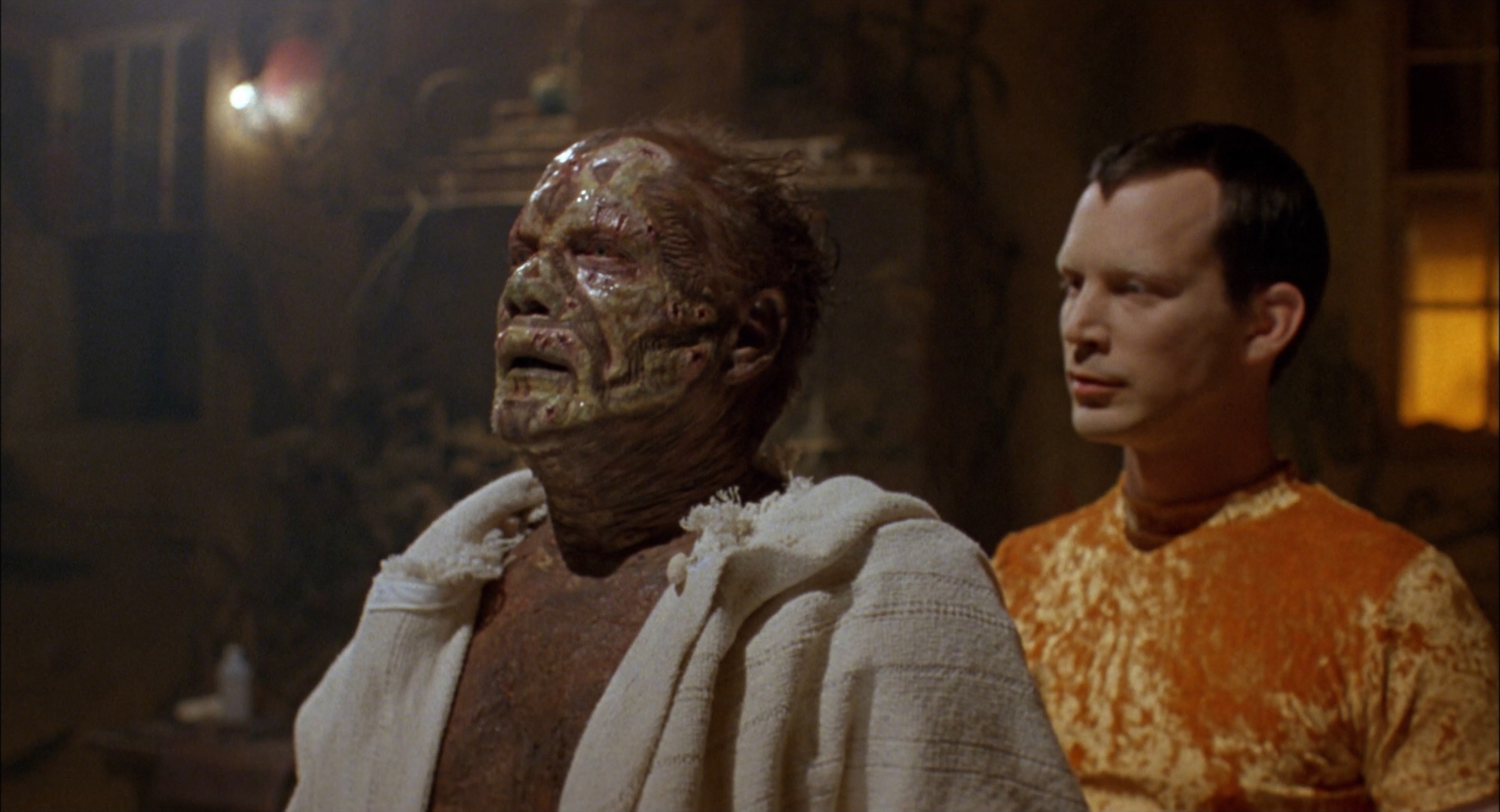
To be fair to it, Lord of Illusions isn’t really a bad movie, so much as just an underwhelming effort from an artist who should be capable of more. Unlike Hellraiser, or even to some extent the very messy Nightbreed, Barker’s third film feels like a by-the-numbers horror flick and lacks much sense of a distinctive voice or true vision. It has a couple good set-pieces and some decent makeup and gore effects (the ones that aren’t CGI), but nothing innovative enough to set it apart from dozens of other genre movies released around the same time.
In my opinion, the movie’s biggest failing is the casting of Bakula, who just looks like too much of a good-natured nice guy to sell the character as a grizzled, world-weary P.I. As I recall, Barker was so infatuated with the actor that he claimed to have tailored future literary appearances for the character after Bakula’s performance here, but I’ve never been able to see that, not even a little bit. Bakula feels deeply miscast. At the time, the movie drew many comparisons to director Martin Campbell’s popular 1991 HBO TV movie Cast a Deadly Spell, which starred Fred Ward in a very similar role and did a much better job smashing the film noir and horror genres together.
Not much more convincing is Kevin J. O’Connor’s very uncharismatic turn as Swann. It’s difficult to understand why paying audiences would ever turn up for a stage show by such a drip. Even Famke Janssen, an actress who would shoot to fame for her wickedly fun villainess role in the James Bond blockbuster GoldenEye just three months later (coincidentally, directed by Martin Campbell), is given nothing at all interesting to do here.
With twelve extra minutes of footage, the Director’s Cut makes a modest improvement over the version that played in theaters. The story is a little more coherent and flows better. Sadly, it can’t fix some of the movie’s fundamental problems. If anything, it just makes the whole thing feel too long and emphasizes its duller parts.
Had Clive Barker continued directing, I’d like to believe he could have eventually lived up to the promise of Hellraiser. As it stands, we’ll probably never know. While he’s dabbled in producing films to a limited extent (and very mixed results), the author hasn’t climbed back into a director’s chair again since Lord of Illusions, and I tend to doubt he’ll try anytime soon.
The Blu-ray
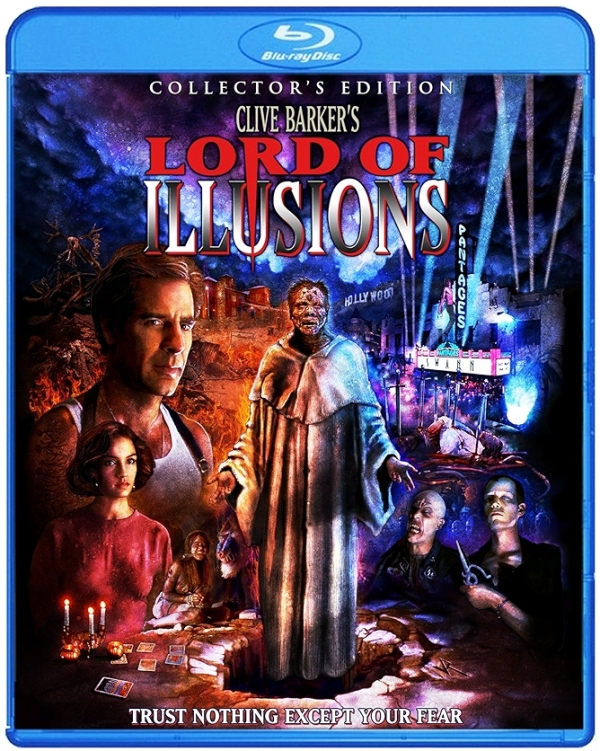
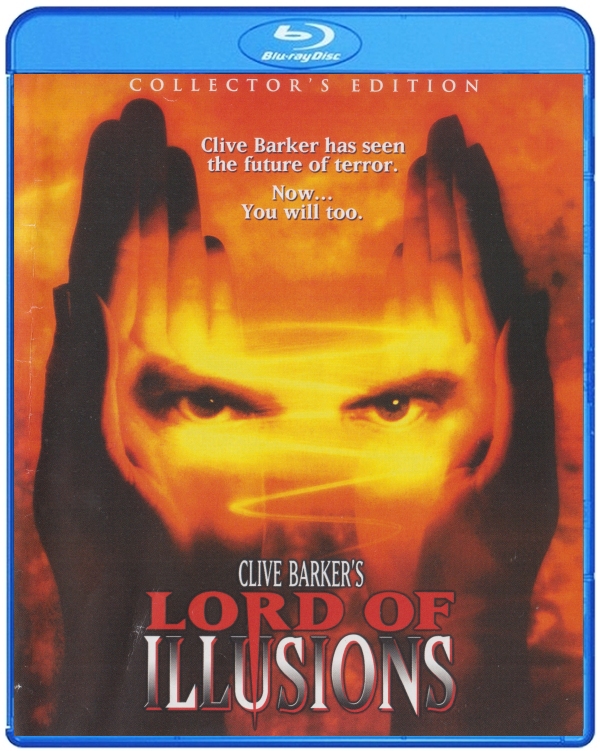
Shout! Factory released Lord of Illusions on Blu-ray in 2014, as part of its Scream Factory label. The two-disc Collector’s Edition was saddled with remarkably awful cover art. Thankfully, the keepcase sleeve is reversible, and the flip side features older poster art that’s at least marginally less of an eyesore. Rather than use seamless branching, the distributor chose for some reason to author the 109-minute Theatrical Cut and 121-minute Director’s Cut versions of the movie onto separate discs.
More recently, Shout! Factory remastered the Director’s Cut for 4K Ultra HD Blu-ray in June of 2025. As far as I can tell, the 4K edition only includes the Director’s Cut. I didn’t make that upgrade, because I reasoned that Blu-ray would be sufficient for this particular film. Having now finally watched the disc, I may rethink that decision.
I focused my viewing on the Director’s Cut, which is Clive Barker’s preferred version of the movie, and I feel rightfully so. The disc’s video quality may not be terrible, but is decidedly mediocre, which seems to be the fault of mastering the transfer from a source a few generations away from the camera negative. Right from the opening credits, the film elements regularly suffer dirt and speckles that are frequently distracting. The 1.85:1 image is also rather soft, noisy, and has flat contrast and colors. For a horror movie, the picture looks overly-bright in general. If not for the note claiming an “All-New High-Definition Transfer of Clive Barker’s Director’s Cut” on the back of the 2014 disc case, I’d assume this was a much older video master. If it has any saving grace, the image is at least free of overt edge enhancement or DNR processing.
Wondering if perhaps the Theatrical Cut had been transferred from a different source, I watched a little of that disc as well. Unfortunately, both versions of the movie look identical to my eye, even down to the speckles.

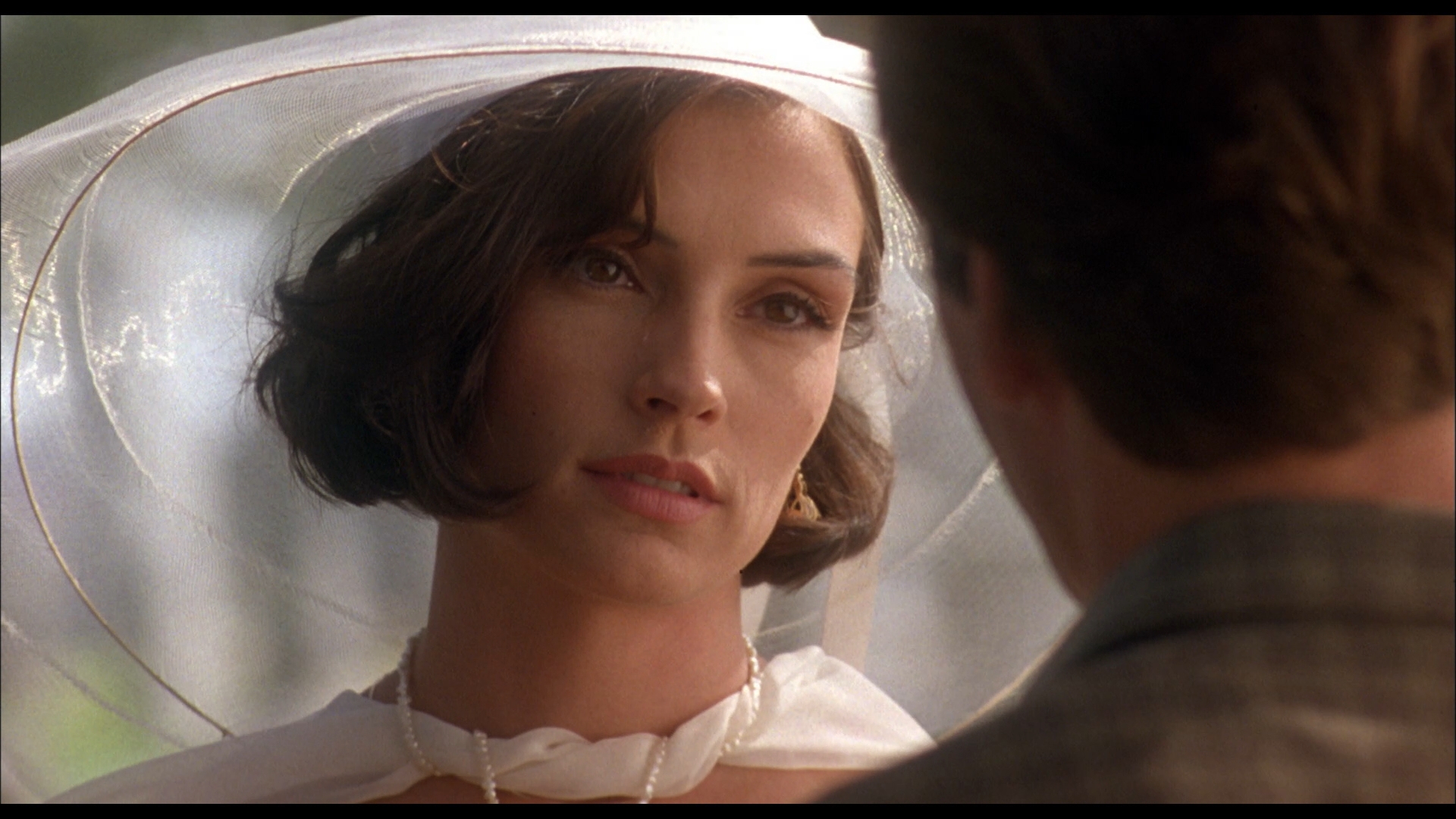
Although I haven’t yet seen the 4K remaster, the Blu-ray leaves plenty of room for improvement in many areas. A new scan of the film negative (which the 4K release claims to have) and HDR grading could do a lot for this movie. However, before I rush to spend any money on that, I need to seriously think about how much I like Lord of Illusions or how often I’ll realistically watch it again.
Both the Director’s Cut and Theatrical Cut offer a choice of DTS-HD Master Audio 5.1 or DTS-HD Master Audio 2.0 soundtracks. As a 1995 production, Lord of Illusions played in the relatively-new DTS 5.1 format in theaters equipped for it. Like many movies from the era, the 5.1 mix features a lot of attention-grabbing surround activity, including at one point the sound of a fly loudly buzzing from one side of the room to the other.
The track also has a bit of rumbly bass and very strong gunshot effects. On the other hand, fidelity of the Simon Boswell musical score sounds a little bland. The roar of the MGM lion before the opening credits is also disappointingly weak.
Most of the bonus features originated with a 1996 Laserdisc release. On the Director’s Cut disc, these include a text note from Clive Barker, an audio commentary by the writer/director, a featurette, some behind-the-scenes footage, deleted scenes, an interview with the storyboard artist, and a photo gallery.
The Theatrical Cut disc just has a trailer.
Related
- Clive Barker movies
- Clive Barker comics
- Famke Janssen
 The Video File Blog