

One of cinema’s all-time great political thrillers, John Frankenheimer’s 1962 adaptation of The Manchurian Candidate paints a depressing portrait of America unraveling from within, where the country’s government is torn apart by the collusion of its own leaders willfully (even happily!) allowing themselves to be manipulated by malicious foreign aggressors for personal gain at the expense of the nation they swore to serve.
The film was of course produced in reaction to the notorious Red Scare of the 1950s, but has continued to resonate with audiences over the years as cycles of corruption recur in the real world. What plays as paranoid fantasy in one decade can feel shockingly relevant again in another.
| Title: | The Manchurian Candidate |
| Year of Release: | 1962 |
| Director: | John Frankenheimer |
| Watched On: | Blu-ray |
| Also Available On: | 4K Ultra HD Blu-ray Amazon Prime Video Hoopla Kanopy PlutoTV Various VOD rental and purchase platforms |
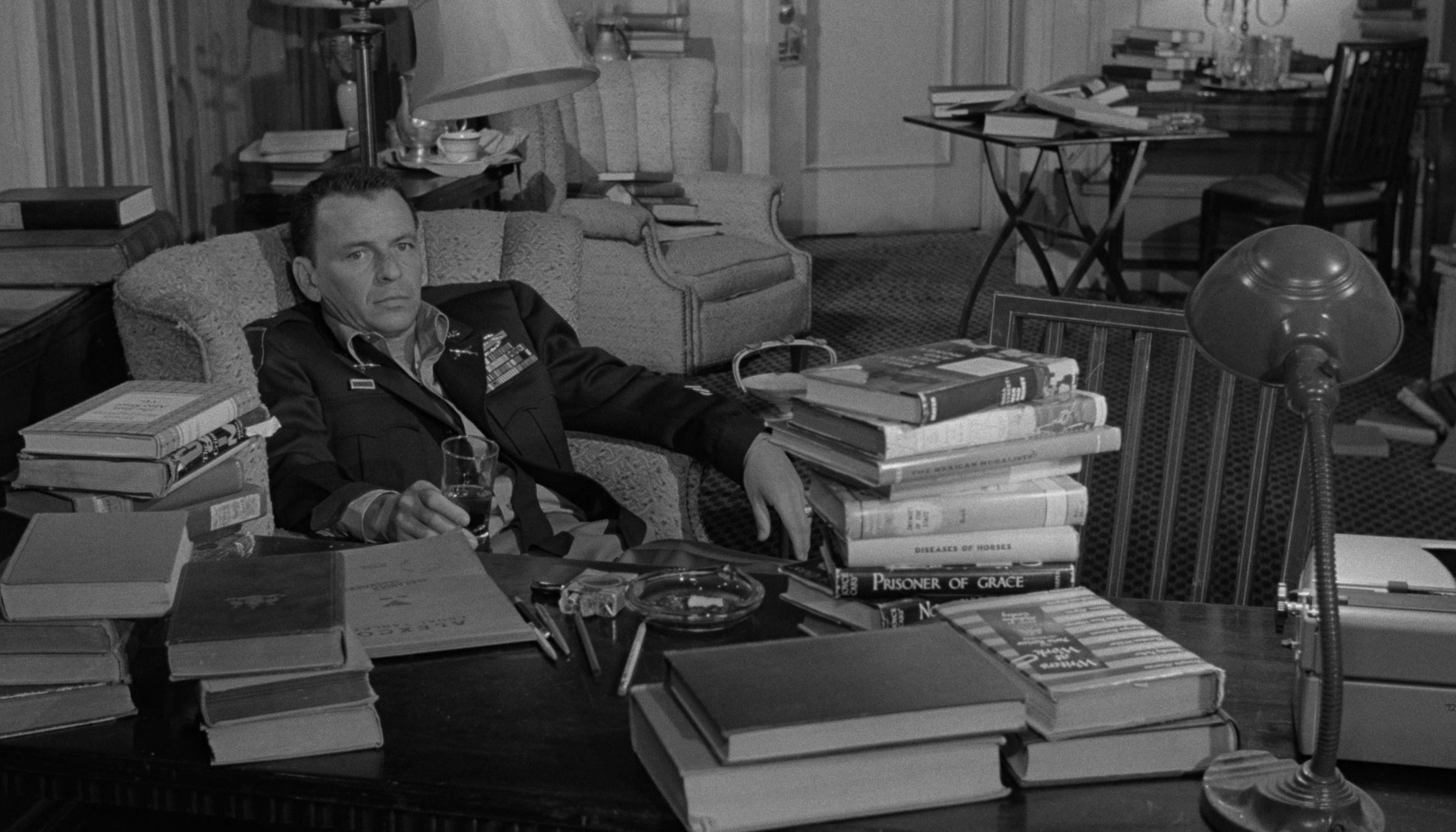
Rewatching it again for the first time in quite a while, The Manchurian Candidate is a very strange movie, much weirder than I’d remembered. The central story premise is based on far-fetched science that must have seemed dubious even at the time. The notion that a squad of American soldiers captured during the Korean War could be completely brainwashed by Communist agents, their minds wiped clean like computers forced through a factory reset, to the point they would robotically obey any orders given to them no matter how repellent to their natures, is frankly ludicrous.
The human brain just doesn’t work that way. As modern mass media and social media have aptly demonstrated, real brainwashing requires years of subtler insinuation and indoctrination, such that its influence slowly becomes part of the subjects’ own personalities and a fundamental part of their core beings. But I suppose this is just a movie, after all. Concepts like those need to be simplified and expedited for narrative purposes.
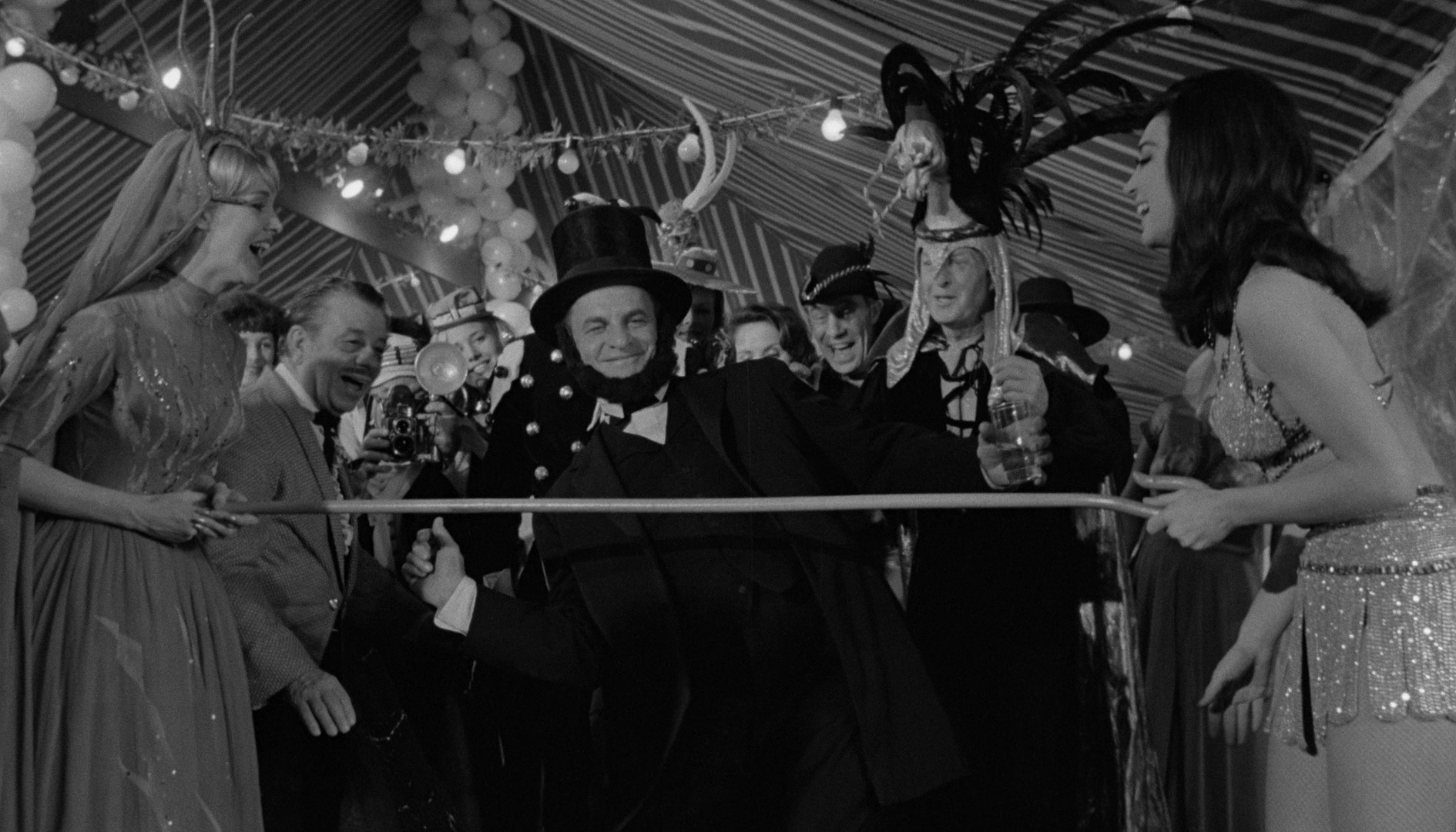
The original novel by author Richard Condon is reportedly more overtly satirical in tone. Some of that still comes through in the film, most notably in the character of Johnny Iselin (James Gregory), an imbecilic politician who riles up the populace with xenophobic fear-mongering while actually being controlled by foreign masters using him to dismantle and destroy the United States. For my money, the most potent image in the movie is of Iselin attending a costume party dressed up as Abraham Lincoln, at one point literally doing the limbo under a bar to demonstrate how low he can sink while parading around as a grotesque parody of a man whose values he pretends to share.
Iselin’s stepson, Raymond Shaw (Laurence Harvey), is the tragic pawn in a game being played at a level far above his head. One of the soldiers brainwashed by a cabal of North Korean, Chinese, and Russian scientists, Raymond is forced against his will to help maneuver the stepfather he loathes into position to assume the country’s highest seat of power. The more he struggles, his attempts to resist seem doomed to failure.
Shaw is a disagreeable, unlikable fellow even before he’s captured. The men in his unit can’t stand him. Eventually, Maj. Bennett Marco (Frank Sinatra) emerges as the true protagonist of the story. The first of the squad to break his conditioning, he’s tipped off that something has gone haywire in his brain by his rote compulsion to declare how much he admires and loves Shaw, a man he actually considers a contemptible jackass.
Angela Lansbury walks away with the juiciest role in the movie as Iselin’s wife and Raymond’s mother, a cunning schemer pulling everyone else’s strings. Amusingly, at 37, the actress was only three years older than Harvey, playing her son, but she so clearly commands and dominates every scene where she appears that you’d almost never think to question the discrepancy. The part would garner Lansbury her third Academy Award nomination and belongs on any shortlist of legendary movie villains.

Younger than any of his principal stars at just 32-years-old, John Frankenheimer had only recently segued into directing feature films after establishing a career in television that had imbued him with both a surge of creativity and a work ethic to deliver on his ideas quickly and efficiently. The Manchurian Candidate was his fourth movie in less than two years, and arrived on theater screens barely three months after Birdman of Alcatraz, against which it would compete for that Best Supporting Actress trophy at the same Oscars ceremony. (Both lost to Patty Duke for The Miracle Worker.)
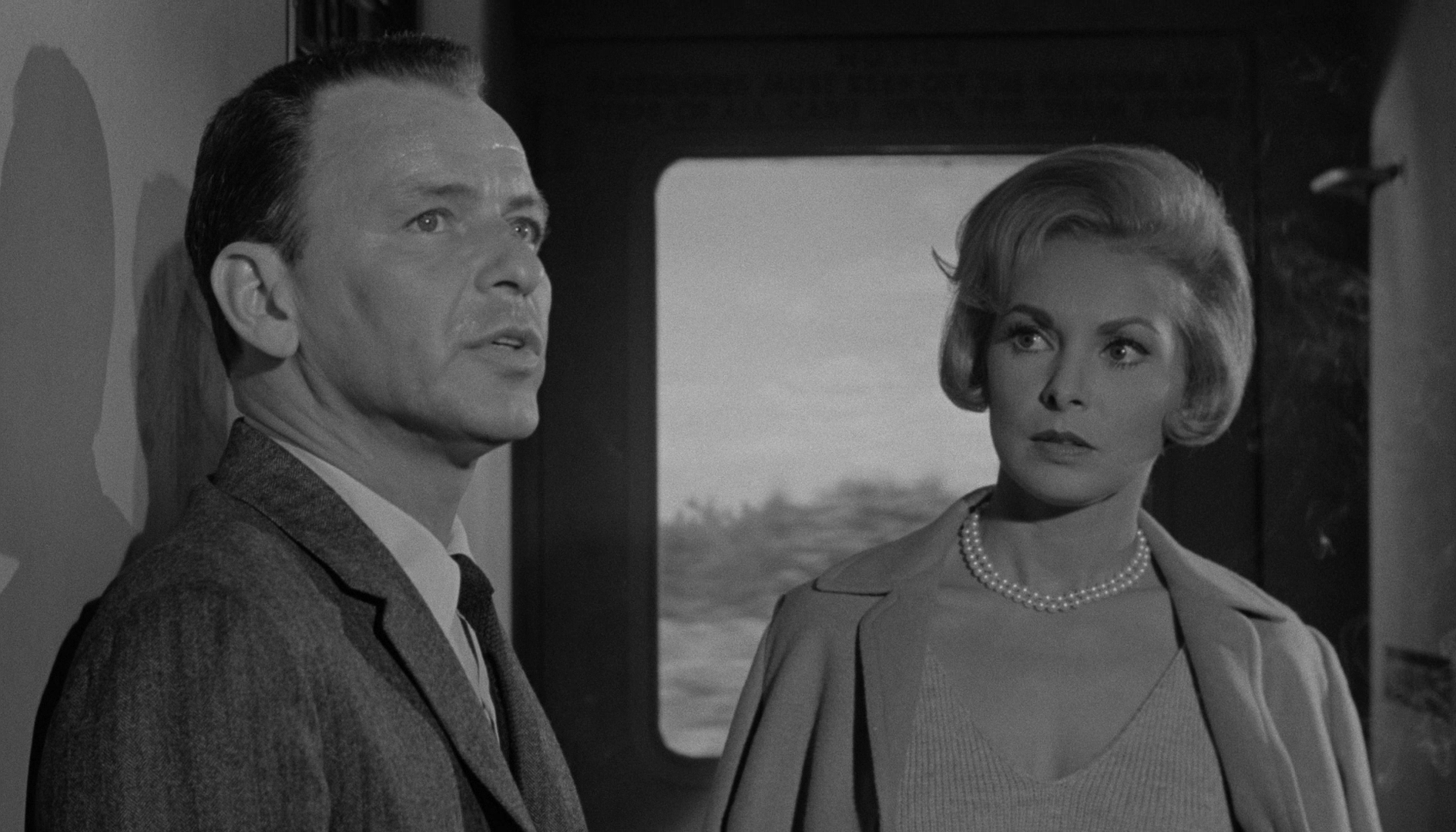
The film is slick, polished, and inventively staged. It’s suspenseful enough throughout to overlook some of the seams in its construction. As the troubled American army sergeant, Laurence Harvey tries hardly at all to conceal his obviously British accent. A storyline with Janet Leigh as a stranger who meets Marco on a train and immediately (with no motivation whatsoever) falls in love with him despite having approximately zero screen chemistry together is downright puzzling, both in its execution and its need to be in the movie at all. For a moment, it feels like the contrivance of Leigh’s character must be leading toward a plot twist, but the movie never follows through with it. A ridiculous scene where Frank Sinatra does karate to fend off an Asian attacker is also pretty hilarious, and may have been the template for Inspector Clouseau sparring with Cato in the Pink Panther sequel A Shot in the Dark two years later.
Ultimately, faults like these are minor and not worth quibbling about. The Manchurian Candidate is, with good reason, a classic of its genre and a tremendous piece of entertainment all around.
The Blu-ray
The Manchurian Candidate was released on Blu-ray first by MGM (via distribution through 20th Century Fox at the time) in 2011, then again later by the Criterion Collection in 2016. More recently, Kino Lorber licensed the rights to release it on 4K Ultra HD Blu-ray in 2023. For my collecting purposes, while I’ll concede that some room for improvement might be available, I’ve been content to hold tight with the Criterion Blu-ray, which I used for this viewing.
According to the liner notes in the enclosed booklet, Criterion’s video transfer was sourced from a 4K scan of the Original Camera Negative. The picture is presented at an aspect ratio of 1.75:1 (with very small pillarbox bars on the sides), stated to be director John Frankenheimer’s preference. The booklet also includes Criterion’s stock language about digitally correcting “thousands of instances of dirt, debris, scratches, splices, and warps.” How much of that was really needed in this instance, I can’t speculate, but a scene at about 39 minutes still has some light vertical scratches that survived the process.
In general, the image is fairly sharp, and often has nice detail in close-ups. However, the photography suffers from occasional focus issues – particularly badly in a shot at about 1 hr. 44 min. where the camera was obviously focused on the shoulder epaulets of Frank Sinatra’s military uniform rather than on the actor’s face. Optical composites, dissolves, and a few scenes that look like they were spliced in from dupe footage further soften the picture. I’m not convinced that a 4K rendering would really make much difference with problems like these.
Film grain is very faint. If anything, 4K encoding might resolve the grain with more clarity. How much that’s considered an improvement will be a matter of opinion. The contrast is also a little flat and perhaps overly bright. An HDR grading could help with that. Regardless, I think the Criterion Blu-ray holds up sufficiently well that I don’t feel compelled to upgrade.

The PCM mono soundtrack has clear dialogue and reasonably good fidelity of the musical score, though the high end is a little bright at times and analog hiss intrudes at others. A few sections here or there also sound quite poor with elevated noise levels, but not enough to be too distracting. This isn’t a showy sound mix, and I believe the weak gunshots in a critical scene are inherent to the original recording.
For supplements, Criterion provides a legacy audio commentary that John Frankenheimer recorded for DVD in 1997, as well as a vintage theatrical trailer and a TV featurette from 1988 that reunited Frankenheimer, screenwriter George Axelrod, and star Frank Sinatra. Newer interviews with Angela Lansbury, filmmaker Errol Morris (The Thin Blue Line, The Fog of War), and British film historian Susan Carruthers were recorded for Criterion in 2015. The booklet also has a printed essay by Film Comment critic Howard Hampton.
Related
- Remake
- Cold War Theme
- Political Assassination Theme
- Political Corruption Theme
 The Video File Blog