
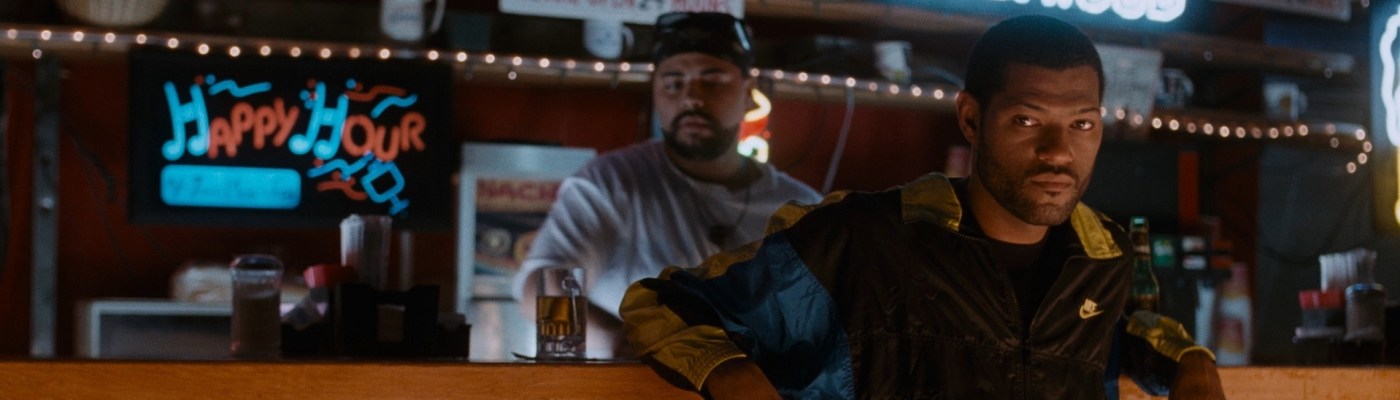
Released in early 1992, advertising for the crime thriller Deep Cover played up star Laurence Fishburne’s involvement in the previous summer’s breakout hit Boyz n the Hood and generally tried to connect the film to the run of other so-called ‘hood movies that had made waves during that period. Although it scored positive reviews from most critics, the picture failed to attract much of an audience and barely turned a meager profit off its low budget. However, decades later, the film still has a lot to offer.
In truth, Deep Cover never had much in common with the likes of Straight Out of Brooklyn or Juice, movies developed by Black filmmakers to tell stories typically about Black urban youth. Despite its Black director, Deep Cover had been written by a pair of white men who conceived it as a noir-ish genre piece for a white star, and then had to retool it around the casting of Fishburne. Ultimately, the film probably turned out more interesting than it might have originally.
| Title: | Deep Cover |
| Year of Release: | 1992 |
| Director: | Bill Duke |
| Watched On: | Blu-ray |
| Also Available On: | DVD Various VOD rental and purchase platforms |
Throughout the 1980s, veteran character actor Bill Duke (Commando, Predator) had quietly but steadily built a solid side career as a journeyman TV director covering the broad range of network series from Hill Street Blues and Miami Vice to Dallas and Falcon Crest. In 1991, he parlayed that experience into his feature film directorial debut on the period crime comedy A Rage in Harlem. That movie may have bombed at the box office, but by the time that happened he was already well into production on his second outing.
The screenplay for Deep Cover is credited to Michael Tolkin and Henry Bean, from a story by Tolkin. According to the booklet essay included with the Blu-ray, Tolkin wrote the first draft, which was then revised by Bean. Tolkin would hit much greater success later in the year with his script for Robert Altman’s The Player. Bean, meanwhile, had written the Richard Gere thriller Internal Affairs, but would later be partly responsible for the notorious disaster of Basic Instinct 2.
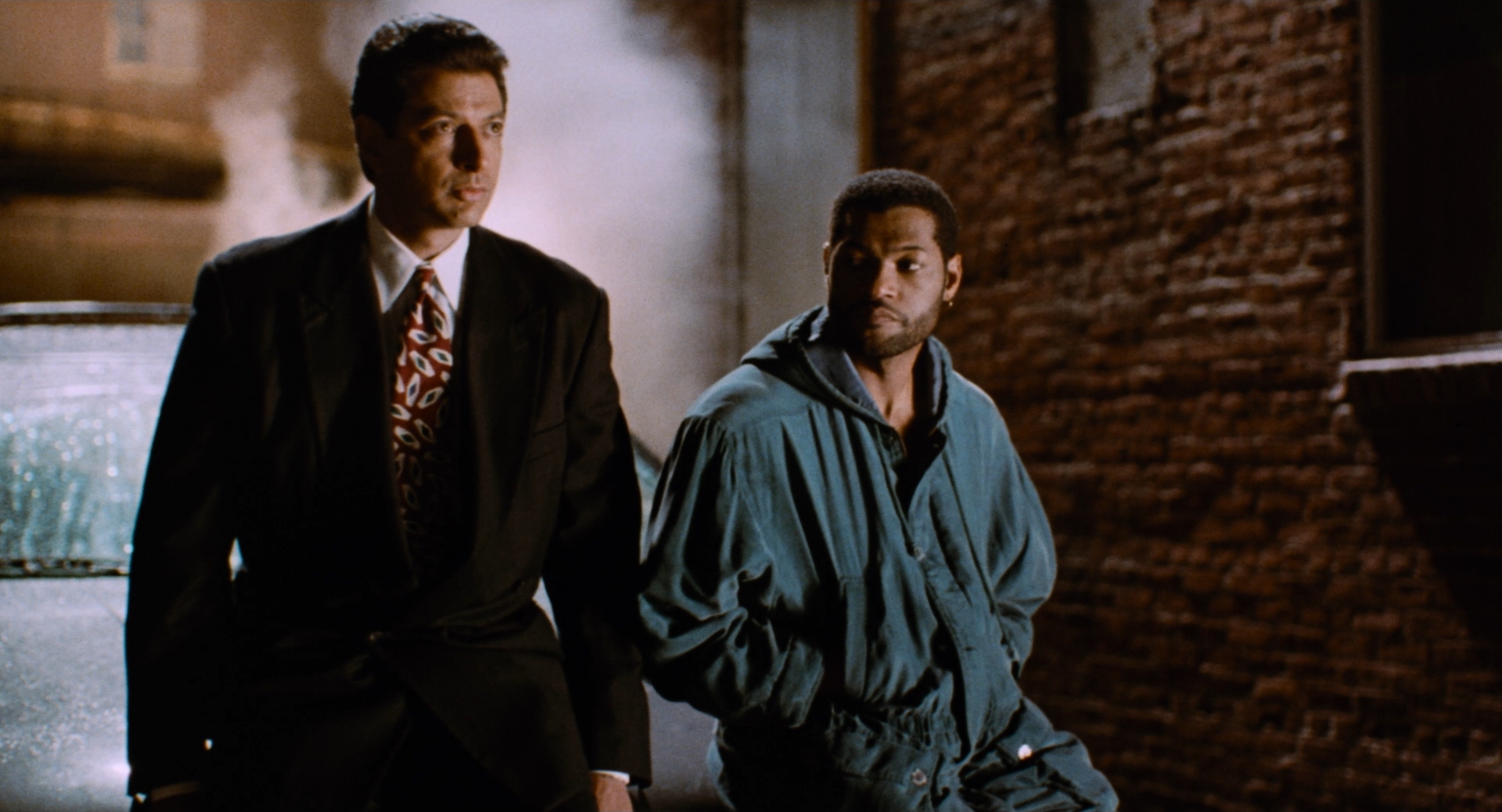
Fishburne plays Russell Stevens, a uniformed Cincinnati police officer recruited by a DEA agent (Charles Martin Smith) for a high-risk, long-term undercover assignment to infiltrate a drug ring in Los Angeles. His job won’t be to bust the expendable dealers on the street, but to work his way up through the organization and get close to the high-level players running the operation, including crooked attorney David Jason (Jeff Goldbum) and his cartel suppliers from South America. Doing so, Stevens must fully allow his new identity of “John Hull” to take over; he’ll sell drugs, murder rival dealers, and can never break his cover, not even when arrested and abused by other cops. The more he sinks into this new life and compromises his moral center, the more Stevens realizes that the line between good guys and bad guys isn’t as clear as he once believed.
Coming not long after the end of the 1980s, where cop movies tended to be more straightforward and less ambiguous in their macho heroics, the final script for Deep Cover has a lot on its mind regarding complex themes such as race, identity, and corruption. For the most part, it doesn’t get too obnoxiously heavy-handed with them. Duke directs with style, infusing the film with a vibrant urban atmosphere and a fun hip-hop soundtrack that has aged well, including a title song by Dr. Dre (his first track after leaving N.W.A) that marked the debut of an up-and-coming young talent then going by the moniker Snoop Doggy Dogg.
Fishburne delivers a charismatic and intense performance as a man who keeps his eyes on everyone around him at all times, carefully surveilling his environment and calculating his next move. Goldblum is in peak slimeball weasel mode, and Charles Martin Smith effectively puts a darker spin on his more wholesome character from The Untouchables a few years earlier.
On the other hand, the movie’s storytelling can feel pretty jumpy at times, like it’s skimming over plot details to move the narrative along. That’s most noticeable in how quickly Russell/John advances up the chain in the drug syndicate, from a nobody on the street to David’s business partner in no time at all. After the climax, the story also closes out with a disappointingly pat climax that tries to tie up everything with a neat little bow and deliver a heavy hammer of judgmental preachiness it really doesn’t need.
Imperfect though it may be, Deep Cover has more than enough positive attributes to merit a revisit from time to time. Not wanting to be pigeon-holed as a filmmmaker, Bill Duke would follow this immediately with the comedies The Cemetery Club (which notably had no Black leads) and Sister Act 2, and would subsequently bounce back and forth between movies and TV. Still working today, nothing he’s made since has stood out as nearly as memorable, though I get the impression that Duke never had any pretensions of calling himself an auteur.

The Blu-ray
Until recently, Deep Cover didn’t have a particularly distinguished history on home video. After its original bow on VHS and Laserdisc back in 1993 (nothing notable about either one), New Line Home Video released the movie on a flipper DVD in 1999 that sported widescreen and full-frame transfers on opposite sides of the disc. Boasting a trailer, some cast and crew filmographies, and “Interactive Menus!” as its only special features, that DVD served as the film’s only representation on home media until the Criterion Collection rescued it from obscurity in 2021 with new DVD and Blu-ray editions listed under spine #1086.
Even though the new video master is sourced from a 4K scan of the 35mm negative, Criterion chose not to release a 4K Ultra HD edition of the film. I assume some analysis of potential sales went into that decision. Regardless, the Blu-ray’s 1.85:1 image is quite sharp with a nice sense of detail and light grain texture.
While the color transfer looks very good overall, the brightness of some scenes looks a little boosted to my eye, leaving black levels just a touch elevated and colors slightly washed-out. Meanwhile, the contrast looks very rich and vibrant in other scenes, where director Duke’s expressive use of color comes across nicely. Given that the disc sports a “director-approved” sticker on the packaging, this must be either what he wanted, or at least the best balance that could be struck. It’s not much of a problem, but I do wonder whether a 4K release with HDR grading might have yielded some improvement.
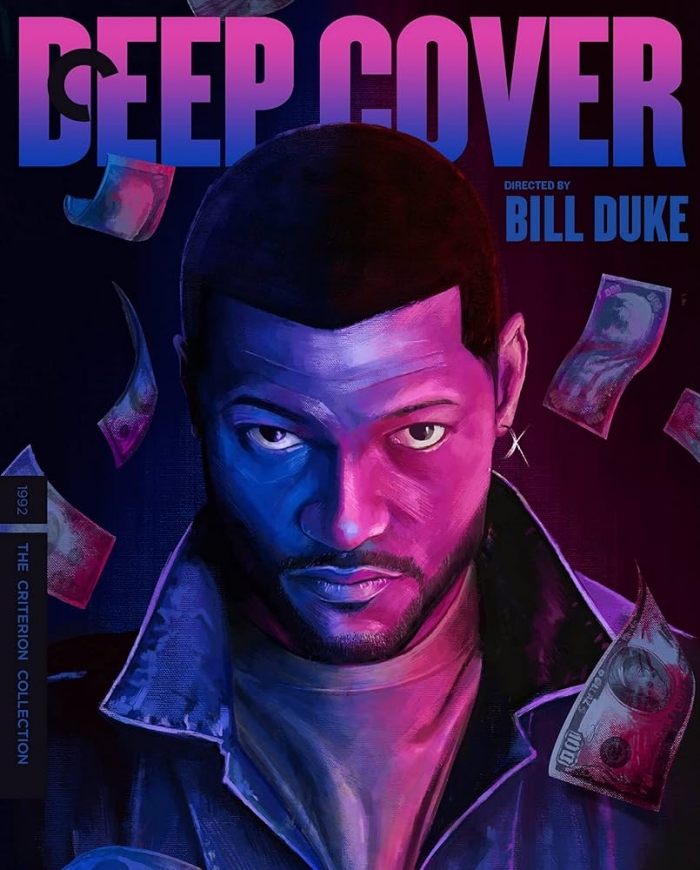
The old New Line DVD may have had Dolby Digital 5.1 audio, but Criterion presents the movie’s soundtrack in its original 2.0 configuration, encoded in lossless DTS-HD Master Audio format. However, note that this is a matrixed surround track, intended to be decoded using Dolby Pro Logic or a modern equivalent (such as Dolby Surround Upmixer or DTS Neo:X). The track has very nice musical fidelity and breadth, and expands well to the surround speakers. Although this may not be a showy sound mix, Laurence Fishburne’s gravelly voice has some nice deep texture, and the many early ’90s hip-hop songs on the soundtrack throb with bass.
Aside from the 44-second trailer, other bonus content on the disc is new to Criterion. These include an 18-minute interview with Bill Duke, an hour-long AFI seminar from 2018 with Bill Duke and Laurence Fishburne, a very interesting half-hour discussion between film scholars about the movie’s place in the early 1990s Black film boom, and a 17-minute discussion about the title song. The enclosed booklet has an essay by author and film professor Michael B. Gillespie.
Related
- Laurence Fishburne
- Bill Duke
- Jeff Goldblum
 The Video File Blog