
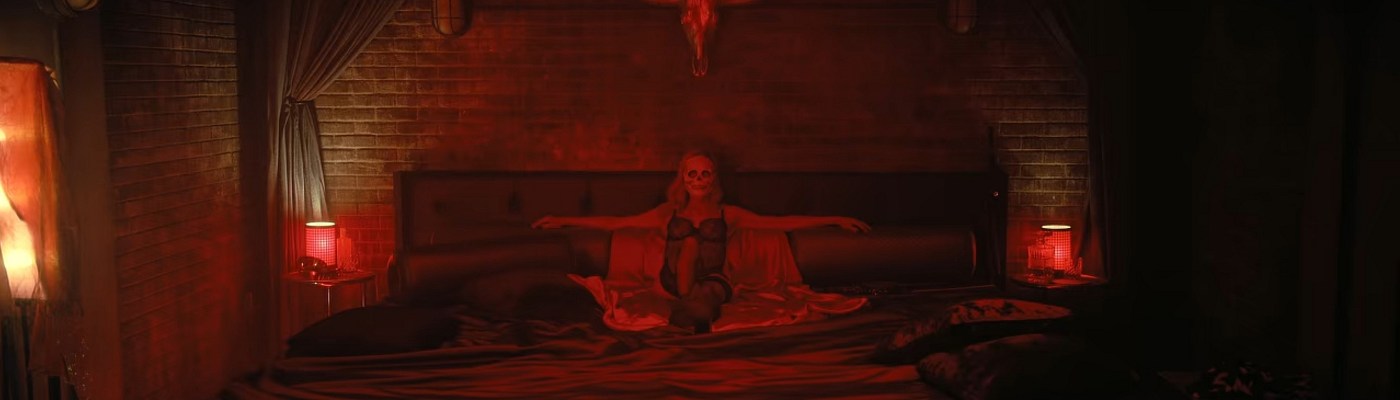
October is the season for spooky delights, which makes it a fine time for Netflix to roll out the latest horror miniseries from producer/director Mike Flanagan. These things are getting to be nearly an annual tradition for the streamer. This year’s is The Fall of the House of Usher, based (extremely loosely) upon a mash-up of stories and other writing by Edgar Allan Poe. Like Flanagan’s prior projects, the show is stylish, well-crafted, and a fair bit of fun.
The Poe connection is pretty thin, admittedly. The series is much more a Flanagan story with a few Poe themes, character names, and perhaps a familiar phrase or two sprinkled over it for flavoring. As far as that goes, the man who previously served up The Haunting of Hill House (2018), The Haunting of Bly Manor (2020), Midnight Mass (2021), and The Midnight Club (2022) has seemingly settled into a formula that works for him, and many of the players who’ve worked as part of his repertory in the past have happily returned for the newest offering.

| Title: | The Fall of the House of Usher |
| Season: | 1 |
| Number of Episodes: | 8 |
| Release Date: | Oct. 12, 2023 |
| Watched On: | Netflix |
Bruce Greenwood (of Flanagan’s Gerald’s Game and Doctor Sleep) leads the cast as Roderick Usher, a man of obscene wealth and the patriarch of a powerful dynasty. As head of Fortunato Pharmaceuticals, Usher currently stands trial on fraud and conspiracy charges related to the company’s signature product, an opiod drug called Ligadone that, the prosecution alleges, has been falsely promoted as non-addictive despite being nothing of the sort.
Not long after the trial commences, all six of Usher’s adult children die under bizarre circumstances, one after another over the span of a week. Despite the suspicious timing, all of the deaths are investigated and ruled either accidental or self-inflicted. Nevertheless, Usher invites the Assistant District Attorney (Carl Lumbly from Alias) for a private conversation late one night, in a run-down house in a seedy neighborhood. He promises to offer up a confession, not just for all the crimes he’s accused of committing, but for other terrible acts that he claims directly led to his children’s deaths.
Over the eight-episode season, the narrative is framed as Usher’s recounting of his rise from a child of humble origins to a man of immense power. Intertwined with this are the stories of how his children were killed – the middle six episodes of the season each detailing a new death. Common to all these tales are appearances by a mysterious woman (Carla Gugino, also from Flanagan’s Gerald’s Game, Hill House, Bly Manor, and Midnight Mass) who takes many guises – a bartender, a security guard, a sickly heart patient, and more – but whose appearance never changes despite decades of time elapsing. As Usher’s empire comes crashing down, this dark angel hovers over the proceedings to claim payment on a wicked deal struck many years earlier.
In addition to Greenwood and Gugino, other prominent faces in the cast include Mary McDonnell as Usher’s brilliant and heartless sister, Henry Thomas as the eldest and most horrible of his offspring, and Mark Hamill in a very fun turn as a gravel-voiced attorney and enforcer. Performances across the board are excellent, even during some lengthy monologues that have become a hallmark of the creator’s style.
The series often strains to keep up the Poe references, especially in regards to a building called the R.U.E. Morgue and a character named Toby who exists seemingly only so that one of Usher’s daughters can repeatedly scream “Toby, dammit!” at him (a nod to the short story Never Bet the Devil Your Head and a Fellini film based on it). If you can forgive that contrivance, the show is otherwise well-written and handsomely produced.
What it’s not, particularly, is scary, beyond the occasional loud jolting noise blaring on the soundtrack. Honestly, as all the Ushers are systematically bumped off in increasingly elaborate and creative kills, the show turns into something like a luxe or prestige version of the Final Destination franchise, fluffed up with the appearance of literary origin.
That problem, if you even consider it a problem, is forgivable enough. At eight episodes start to finish, The Fall of the House of Usher is an entertaining binge. I look forward to seeing what Mike Flanagan cooks up for the next one.
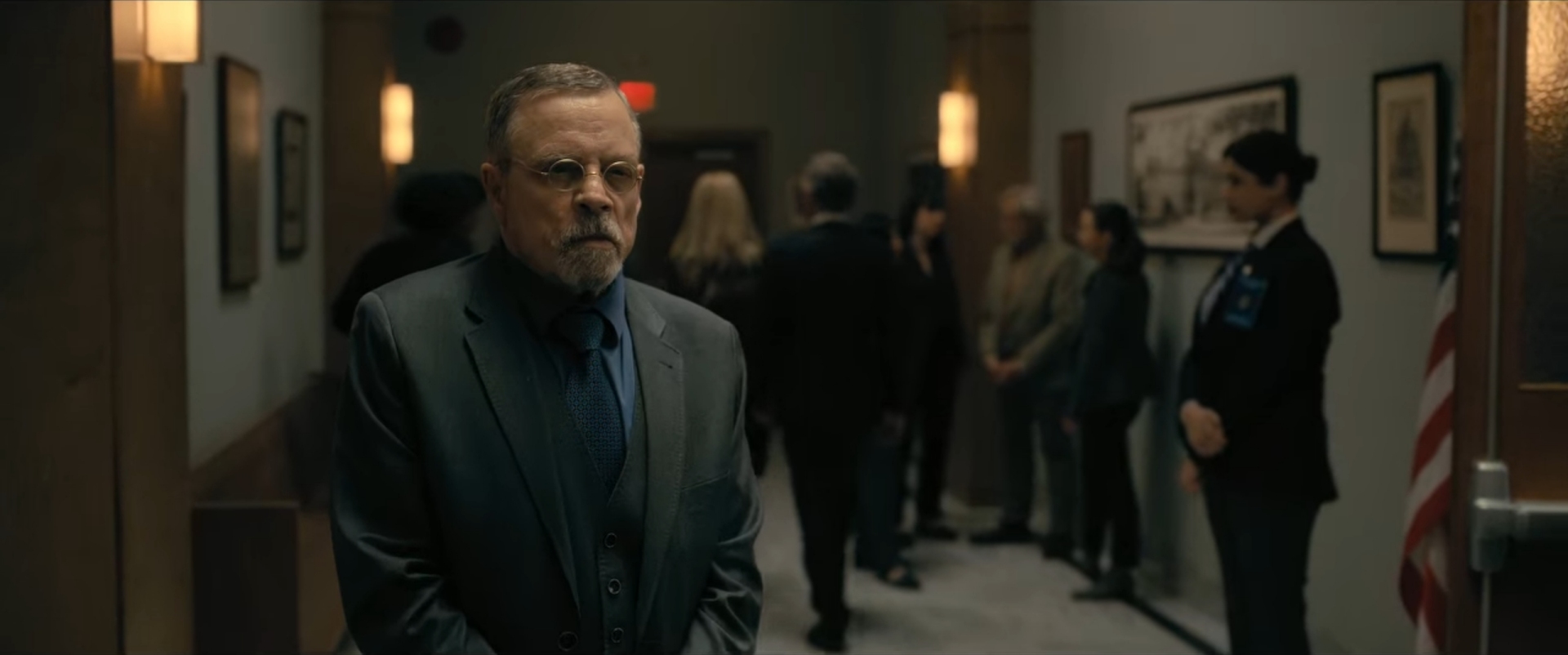
Video Streaming
Netflix streams The Fall of the House of Usher in 4K HDR with Dolby Atmos audio, and this show excels at both. The 2.39:1 widescreen image is very sharp, detailed, and vivid. It puts the extra resolution of 4K to good use. Colors are strong, and the series has excellent HDR grading. As a horror story, this is of course a rather dark show, but the picture is never dim. The dark end of the scale is rich and deep without crushing shadow detail, and brighter highlights are well balanced.
I wish every Atmos soundtrack were as dynamic and immersive as this one. The track is loud, but not gratingly so. It has hard-hitting, punchy bass and very startling stinger scares. Music sounds full-bodied and expansive. The mix makes very aggressive use of the entire three-dimensional listening space through every surround and overhead speaker you may have. Episode 6 in particular features a super-fun and creative scene where a character’s voice circles all around the room as if begging to be used as a home theater show-off demo.
 The Video File Blog