
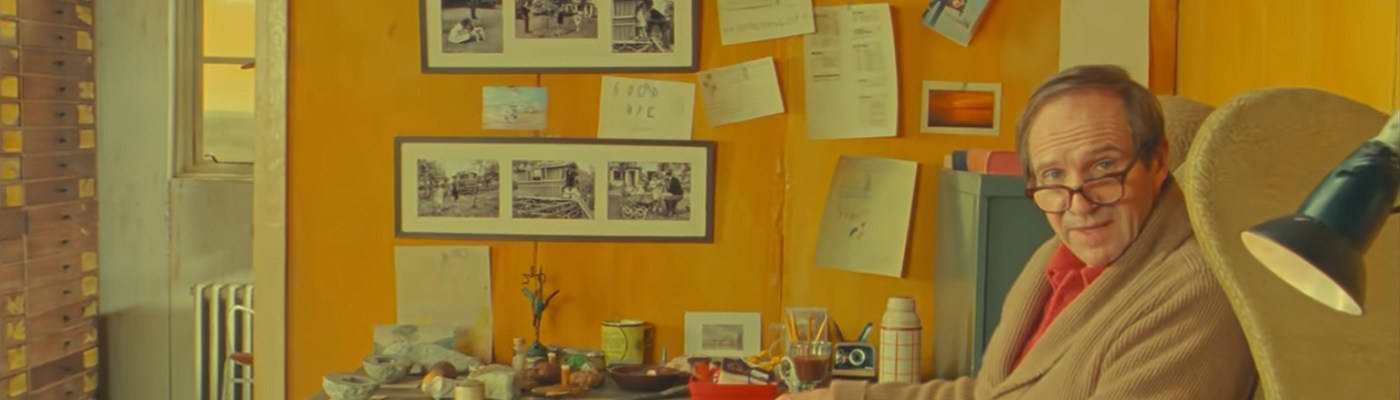
Wes Anderson has had a quite productive year. Just a few months after the theatrical release of his latest feature Asteroid City, the director has now also delivered no less than four new short films to Netflix. All based on stories by Roald Dahl (from whom Anderson had previously adapted 2009’s Fantastic Mr. Fox), The Wonderful Story of Henry Sugar, The Swan, The Rat Catcher, and Poison arrived on the streamer last week with little notice or fanfare. If not the filmmaker’s best or most important works, all four shorts should still have some qualities that his fan base will appreciate.
At this point in his career, Anderson has seemingly retreated to a stage where he caters mainly to those existing fans with little concern for a broader audience. His last couple movies had way more focus on craft and style than story or characters, which Anderson seems decreasingly interested in bothering to develop. That’s true of some of these shorts as well. Fortunately, his style and craft remain fascinating. The advantage to the short film format is that the length of these pieces is brief enough that they’re over before most viewers will get too tired of them.
| Titles: | The Wonderful Story of Henry Sugar The Swan The Rat Catcher Poison |
| Year of Release: | 2023 |
| Director: | Wes Anderson |
| Watched On: | Netflix |
All four of the original short stories are among the Charlie and the Chocolate Factory author’s rare adult-leaning work. While the content in them isn’t necessarily inappropriate for children, younger viewers will almost certainly be confused and bored by them. To be honest, some adult viewers may feel that way as well, depending on their feelings for either Dahl or Anderson.
Anderson directs all four films less as adaptations than as illustrations. The stories are performed by a small group of actors playing multiple roles, most of them reciting their scripted lines directly to the camera as if reading the original Dahl text verbatim from the page. Ralph Fiennes frames all of the stories in the role of Roald Dahl himself, writing in his cottage home called Gipsy House. Characters refer to themselves in the third-person while describing things they’ve done. As is Anderson’s preference, the performances are deliberately flat, monotone, and deadpan. Meanwhile, the staging is elaborately theatrical, with ornate and cluttered sets that move into and out of place behind the actors, often with the assistance of visible stage hands running to and fro.
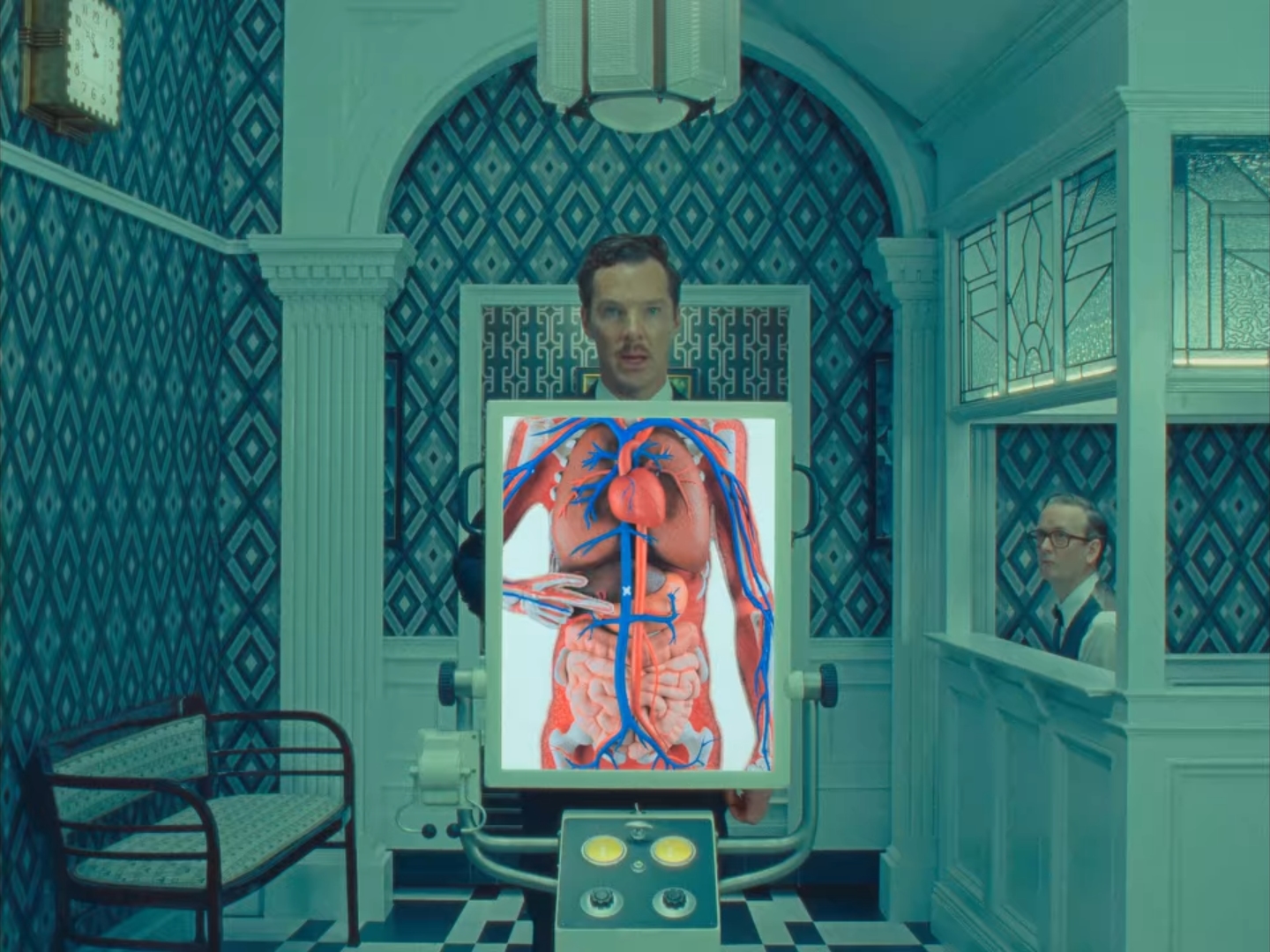
The longest of these films at 37 minutes, The Wonderful Story of Henry Sugar took me a couple viewings to warm up to. The multi-layered story-within-a-story-within-a-story is constructed like a too-complicated puzzle box. Fienne’s Dahl introduces the first level, about an elderly Indian man (Ben Kingsley) who has trained for years to develop the remarkable talent of seeing without using his eyes, which he performs in a circus act. Dev Patel and Richard Ayoade are doctors attempting to validate the authenticity of this skill and study how it could possibly work. Later, the account of those events is read in turn by title character Henry Sugar (Benedict Cumberbatch), a wealthy Brit who becomes obsessed with learning this trick himself for the purpose of cheating at gambling, until ultimately having a change of heart and putting it to more noble use.
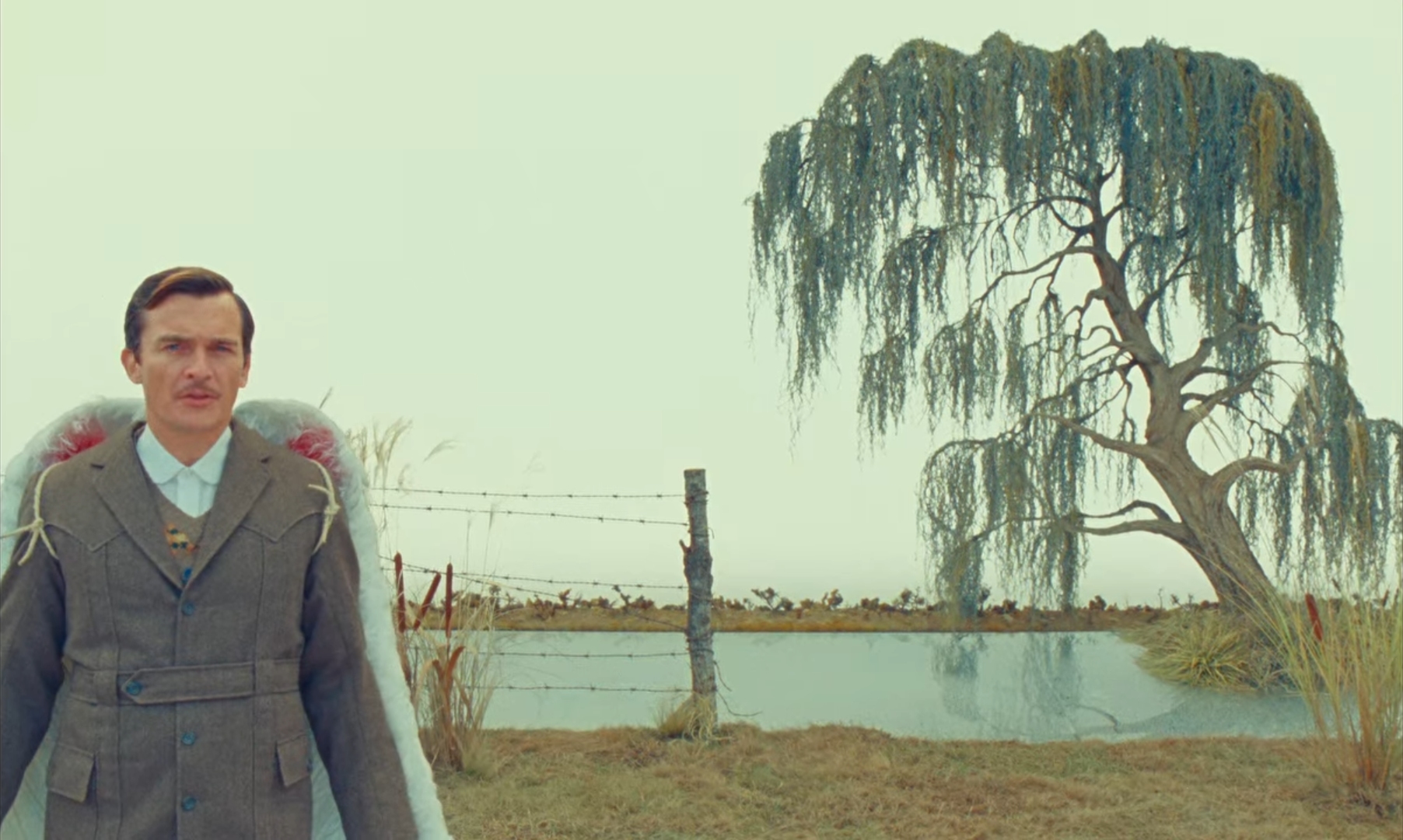
Compared to the first short, The Swan (17 min.) is much simpler in both storytelling and staging. Rupert Friend narrates the tale of a precocious young boy relentlessly tormented by a pair of abusive bullies. Despite the lack of traditional dialogue coming from any of the characters on screen (only Friend’s narrator speaks), the story is compellingly enough told to form tremendous sympathy for the boy, and it closes with an emotional wallop of an ending.
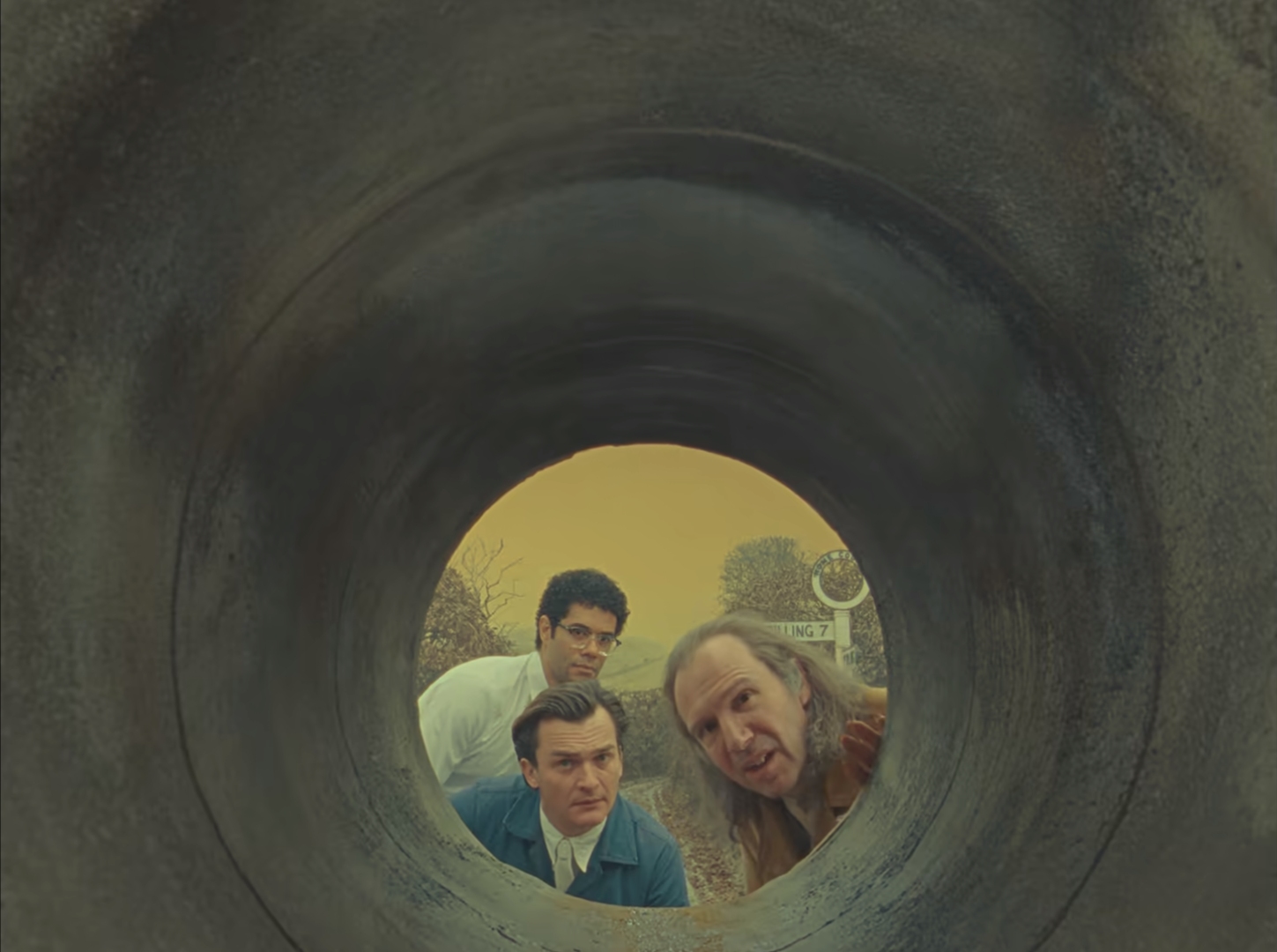
The Rat Catcher (17 min.) is mostly a character piece, about an eccentric exterminator (Fiennes) explaining the difficulties and unexpected complexities of his job to a pair of dismissive village locals (Friend and Ayoade) who find the man and his career a bit strange and repulsive. The story he tells builds in tension, and the film ends with a quite funny twist that’s so cleverly hidden in plain sight the whole time I needed to back up and watch the last couple moments again to fully grasp it.
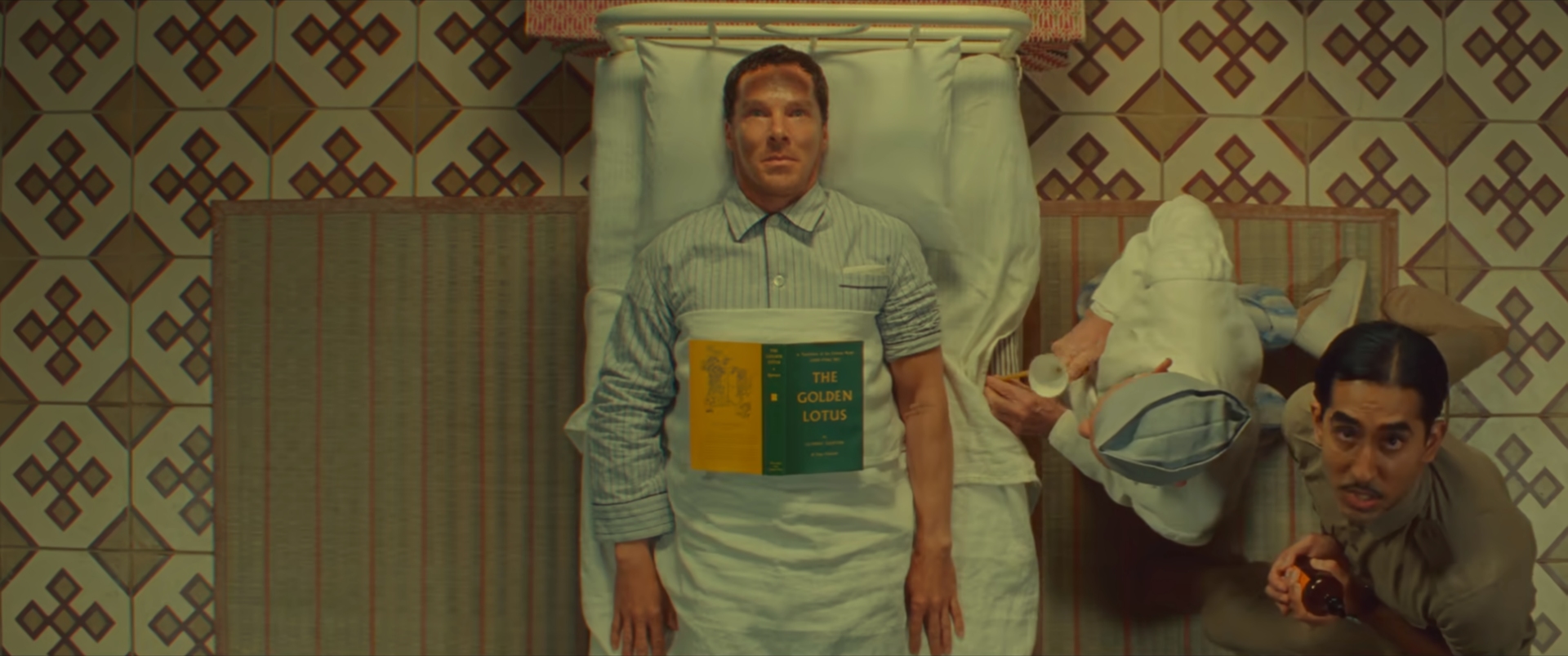
The final short, Poison (17 min.), is a surprisingly effective exercise in suspense. In this one, Cumberbatch is a man lying in bed, terrified to speak or move after a venomous snake slips under his sheets and falls asleep on top of his stomach. Patel and Kingsley are, respectively, a friend and a local doctor desperately working to remove the animal without waking it. The longer they take, the more anxious and tense the victim becomes.
I may juggle my rankings around a bit later, but at the moment, I’m inclined to call The Swan my favorite of these four shorts, because it’s the only one where I felt some measure of empathy for its character. That would be followed by Poison, then The Rat Catcher, and finally Henry Sugar in last place.
As a Wes Anderson fan, I enjoyed all four films to some degree. However, I can’t help feeling that the inherent archness of Roald Dahl’s prose may bring out some of the filmmaker’s most frustrating inclinations. All of these stories hold the characters at a distance and an emotional remove. For Henry Sugar in particular, the way the story is told seems almost willfully confusing and alienating – perhaps even more so than usual for an Anderson production.
I’d hate to call any of these shorts tossed-off efforts, given the enormously complicated technical craftsmanship and artistry with which they’re made. However, it feels to me that the screenwriter/director had way more investment in his show-offy camera tricks and other visual wizardry than he did the narrative portion of the films. Ultimately, I doubt that any of them will win over any new fans who weren’t already on the Wes Anderson bandwagon.
Video Streaming
The Wonderful Story of Henry Sugar debuted on Netflix this past Wednesday, Sept. 27th, followed by The Swan on Thursday, The Rat Catcher on Friday, and Poison on Saturday. All of the films were so poorly publicized (or promoted in the Netflix user menus) that I actually watched the first one without realizing three more had also been scheduled.
The films are photographed in similar styles. Although technically encoded in 4K HDR, the picture is heavily stylized and exhibits no traits recognizable as either 4K or HDR. In fact, the image on all of them is quite aggressively soft and looks somewhere around, if not less than, DVD quality for resolution. While the sets and costumes seem very colorful, the photography is very washed-out, with flattened contrasts and colors. All of this is entirely purposeful, I assume.
At first glance, the first three films appear to be framed at a 4:3 aspect ratio pillarboxed in the center of the screen. Looking more closely, Henry Sugar actually varies subtly in width from 1.33:1 to about 1.42:1 for some reason, though I’m sure most viewers would be hard-pressed to ever notice the transitions. The Swan is a bit wider at 1.66:1 for most of its length, with a shift back to 1.33:1 (4:3) at the end. The Rat Catcher is entirely 4:3 with no variances. The final short, Poison, is then primarily letterboxed 2.39:1 with a brief 4:3 insert in the middle that extends to the top and bottom of the screen and is not Constant Image Height safe (though it crops just fine to 2.35:1, if you’re inclined to do so). In typically idiosyncratic Wes Anderson fashion, shots are frequently framed with deliberately strange compositions where the actors will be positioned way off to the side or down in the lower half of the screen with tons of empty space around them.
The Dolby 5.1 soundtracks on all four films are almost entirely dialogue, with very little music or sound effects. I actually thought my streaming device might be malfunctioning when the first couple moments of Henry Sugar were dead silent. Dialogue is clear and discernible enough, and frequently pans directionally across the front soundstage and even into the surround speakers at times.
Related
- Wes Anderson (director)
- Roald Dahl (writer)
 The Video File Blog