
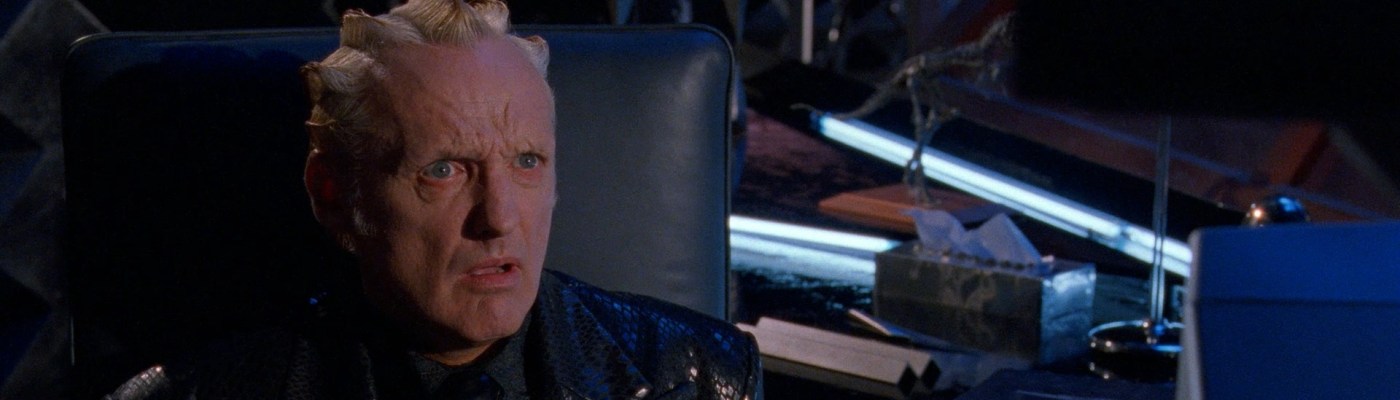
A notorious flop in its day, the 1993 live-action movie version of Super Mario Bros. is a fascinating disaster. The film feels like it was made by people who knew nothing about video games and, specifically, never had any interest in Nintendo’s smash hit Super Mario Bros. in the first place. In a strange way, that irresolvable disconnect is exactly what makes it so interesting to revisit three decades later.
Although widely hated by the target audience it was supposedly made for, the Super Mario Bros. film eventually built a small cult fandom, and still has defenders today. I’m not sure I’d go so far as to say it’s secretly a good movie, but I can understand the appeal. This thing is pretty loony.

| Title: | Super Mario Bros. |
| Year of Release: | 1993 |
| Directors: | Rocky Morton Annabel Jankel |
| Watched On: | Blu-ray |
| Also Available On: | DVD |
Movies based on video games have long had a checkered history, and for the most part, continue to even now. Back in the early 1990s, no one took the idea all that seriously, not even the parent companies that actually made the games. Yet Nintendo’s Super Mario mascot was such a worldwide phenomenon that a feature film exploiting the character felt inevitable. Of all people who might have seemed least likely to get that job, two-time Oscar-nominated filmmaker Roland Joffé (The Killing Fields, The Mission) was so keen to do it that he actually flew to Japan to pitch his wacky story concept for a movie directly to the Nintendo executives, and so charmed them that they handed him the contract despite interest from bigger Hollywood producers with more money to spend.
Joffé didn’t direct Super Mario Bros. himself. After a couple other options (including an attempt to woo Harold Ramis) didn’t pan out, that responsibility fell to the then-married team of Rocky Morton and Annabel Jankel, creators of the cult TV series Max Headroom. In its early conception, the film was to be an edgy and subversive sci-fi/fantasy adventure that skewed toward an adult audience and had little direct connection to the video games. (Morton said that he considered it the “true story” that inspired the first game.) Most of the cast were signed to that version of the project. Unfortunately, the further into development it got, the more the producers and financiers panicked and demanded that the movie be made more kid-friendly, with a softer and jokier tone, and a lot more references to the games.
Super Mario Bros. had a notoriously troubled production. The directors were torn between the movie they wanted to make and the one they were told they had to make instead. Last-minute rewrites from a variety of different writers (including Bill & Ted’s Excellent Adventure scribe Ed Solomon, who more recently penned the Steven Soderbergh miniseries Full Circle) were turned in mere moments before scenes would be shot. The turmoil infuriated most of the actors, especially Dennis Hopper, who reportedly had a huge blow-out on set over what he considered the incompetence and unprofessionalism of everyone involved. Lead star Bob Hoskins soldiered through it as best he could, but would later call accepting the role one of his biggest career regrets.

Amusingly, Hoskins is both miscast and, simultaneously, ideally cast as Mario Mario, the stocky Italian plumber from Brooklyn who gets transported to a magical fantasy world. Obviously, he’s not Italian, which seems like it ought to have been a prequisite. On the other hand, the star has an appropriate build and disposition, and was beloved for his work in Who Framed Roger Rabbit a few years earlier. Playing his amiable brother Luigi Mario is the Colombian-born John Lequizamo, a young actor on the rise who’d have a much better breakout role in Carlito’s Way later the same year. Again, the casting probably shouldn’t work, but somehow does.
Backing them up are Samantha Mathis from Pump Up the Volume as the princess they must help (here named Daisy rather than Peach) and Hopper as the evil King Koopa. I suppose the latter was meant to represent Bowser from the game, but the movie didn’t have the budget to pull off a giant turtle/dragon monster as one of its leads, so just gave Hopper a weird hairdo and let him play the character pretty much as he had his many other villain roles during the era. Fiona Shaw (later notable from the Harry Potter franchise and the TV show Killing Eve) lends further support as another antagonist named Lena invented for the film, while Fisher Stevens and Richard Edson are a pair of numbnuts “Goomba” henchmen. Lance Henriksen pops in at the end for a very brief cameo with one line of dialogue.
For all the drama involved in making it, that the final product could turn out coherent at all is a minor miracle. To be clear, it just barely does so. The script feels cobbled together from a hundred different conflicting parts. The story only resembles the original game on the most surface level. The movie spends almost a half-hour (a third of its length) in contemporary New York City before finally sending the Mario Bros. to the Mushroom Kingdom, a parallel dimension depicted in this version as a run-down urban nightmare where dinosaurs evolved into humanoid form (inexplicably complete with hair, like the mammals they detest). Furious at what he perceives as banishment to this hellhole, the tyrannical Koopa plots to invade our regular human world and take it over using a “de-evolution” weapon that can turn any target into the form of its genetic ancestor.
Needless to say, kids who’d devoted countless hours to playing Super Mario Bros. and its sequels on the NES and Super Nintendo consoles found the movie virtually unrecognizable and incomprehensible. If not exactly cyberpunk, the setting is at least cyberpunk-adjacent and has nothing to do with the cute and colorful fantasy land from the video games. Fans of the creators’ Max Headroom, meanwhile, may have been reminded of that property’s style and satirical tone, but were disappointed in the juvenile humor and silly antics.
In the end, Super Mario Bros. was a movie that satisfied almost no one. It was a huge critical and box office bomb that even many of the participants who made it would disparage and disown. As sometimes happens to such famous trainwrecks, however, the passage of time has softened much of that resentment and animosity. Looking back on it with a detached view, the film has some clever and inventive ideas, impressively elaborate set design and animatronic creature effects for a production of its budget, and – most importantly – a very appealing weirdness. From start to finish, the picture is inundated with oddball creative decisions that may have been entirely wrong for its marketability, but have helped it to endure as a cult item. In many respects, it plays like a kids’ version of Terry Gilliam’s Brazil, except with an even messier script and, regrettably, lacking Gilliam’s demented genius to hold it all together or his relentless determination to fight for his vision. It really could’ve used both.

The Blu-ray
The 1993 Super Mario Bros. has not yet, at the time of this writing, made its way to the Blu-ray format in the United States. Nor is it currently available on any streaming platform. The only DVD version came out way back in 2003. However, the film was released on Blu-ray in the UK in 2014 by Second Sight Films. More recently, Umbrella Entertainment issued a new edition in Australia in 2021. The latter is easily available on Amazon U.S. for a reasonable price. Despite a Region B logo on the packaging, the disc is region-free and should function in an American Blu-ray player.
From what I can tell, the Umbrella copy is mostly a port of the Second Sight disc, with the addition of one new, pretty significant bonus feature. Although I don’t have the UK version to compare with, the video master Umbrella is working from looks petty dated to me. The mildly letterboxed 1.85:1 image is a bit soft and noisy, with flat colors and contrast. It’s not awful, and I’ll concede that the movie’s photography probably has a lot of inherent limitations, but I’d expect that a remaster could eke some improvement out of this.
The DTS-HD Master Audio 2.0 soundtrack is also extremely thin and weak. The Alan Silvestri musical score has no depth at all.
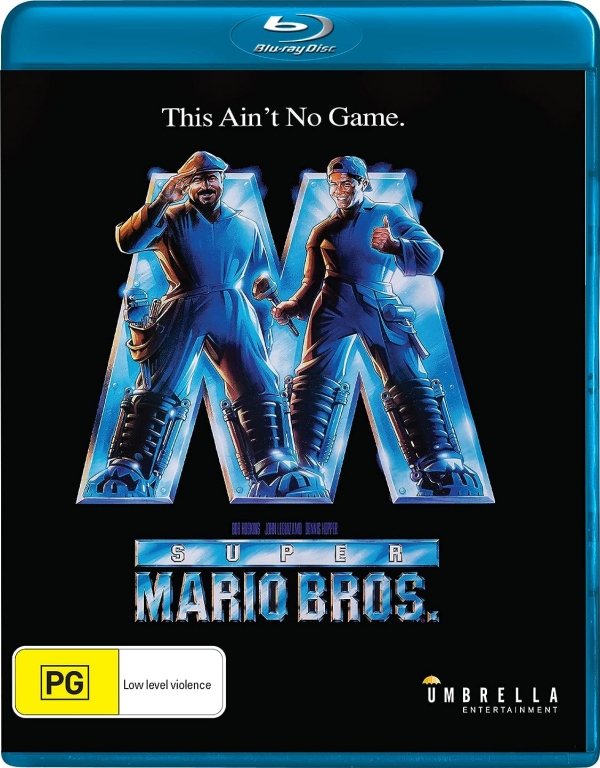
Carried over from Second Sight are a very good hour-long documentary (misleadingly labeled a “featurette” in the disc menu), an actual featurette straight out of the 1993 Electronic Press Kit, a trailer, and a still gallery of production art and photos.
Most impressively, new to Umbrella is a 112-minute alternate Workprint version of the movie that contains several additional scenes not found in the theatrical cut. A true workprint, the footage is in terrible condition, is missing some scenes that did make the final cut, and has no musical score or completed sound design. The whole thing is also encoded in standard-definition video. Thankfully, the piece has been authored with chapters that will bring you directly to the new footage so you can skip through it without having to watch the whole thing. None of the new scenes are really substantial enough to change anyone’s opinion of the movie, but fans will surely be glad to see them.
News spread recently that a supposed new “4K restoration” will play theatrically in Japan this fall to celebrate the film’s 30th anniversary. Whether that will ever circulate outside of Japan (in any manner, either theatrically or home video) remains to be seen. In the meantime, I find the Australian Blu-ray watchable enough for my needs. I don’t know that I’ll feel compelled to invest more into this particular movie.
Update
After I published this article, the SMB Archive (which helped create the extended cut found on this disc) claims that Umbrella will release a 4K edition of the film in the near future, possibly with new bonus features.
Related
- Super Mario
- Other Video Game Movies & TV
- Dennis Hopper
- Bob Hoskins
- John Leguizamo
- Lance Henriksen
 The Video File Blog